Give the narration a job
If a shot shows a fishing boat entering a harbour, the voiceover rarely needs to say, “A fishing boat enters the harbour.” Viewers have already understood that much. Narration becomes useful when it supplies something the image cannot: why this harbour mattered, what changed in the local industry, or whose experience the surviving images leave out.
Before writing a line, ask what the viewer needs in order to understand the next moment. The answer might be a place name, a distinction between two periods, or a reminder that a filmed scene represents only one part of a community’s history. If the line adds none of these, try removing it. The sequence may become clearer when the image and its natural sound have room to work.
Separate what is visible from what is known
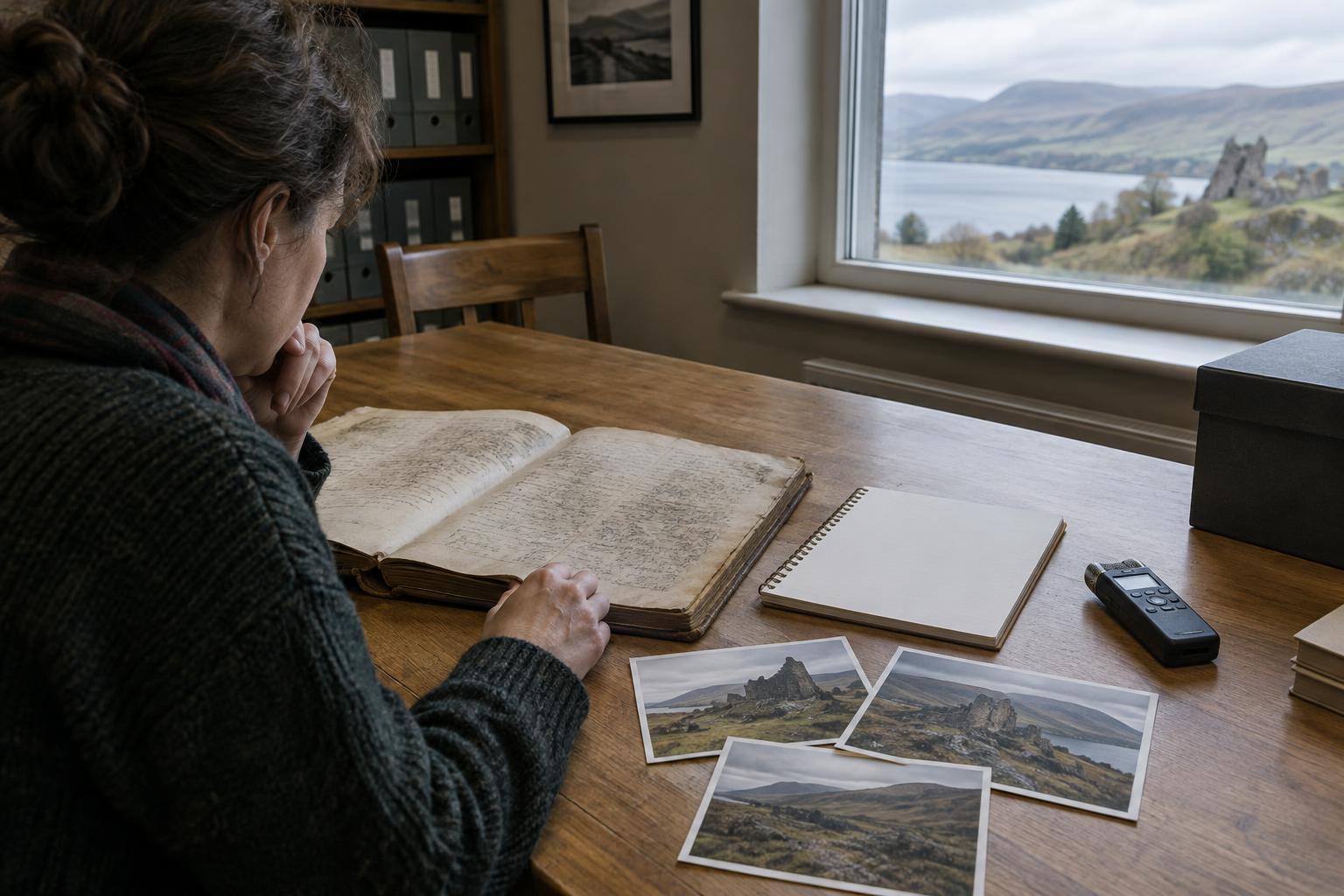
Historical footage can feel unusually persuasive because it appears to bring the past directly into view. Yet an image does not explain on its own when it was made, why a camera was present or whether the people shown were typical of their time. Voiceover can provide that frame, but it should not turn a plausible interpretation into an established fact.
Imagine a film about a Scottish mill town that includes footage of workers leaving a factory. The pictures may show a crowd, clothing and the building’s exterior. They do not, by themselves, reveal what each worker earned or felt about the work. A careful script can distinguish a documented fact about the factory from a broader account of industrial life. If the footage is illustrative rather than a record of the particular event being discussed, make that relationship clear instead of implying an exact match.
This distinction matters with photographs, maps and recreated scenes too. A map can establish geography; it cannot prove how someone travelled. A reconstruction can help viewers picture a process; it should not be allowed to masquerade as newly discovered archive film. Precise language protects both the story and the audience’s trust.
Write with the edit, not ahead of it
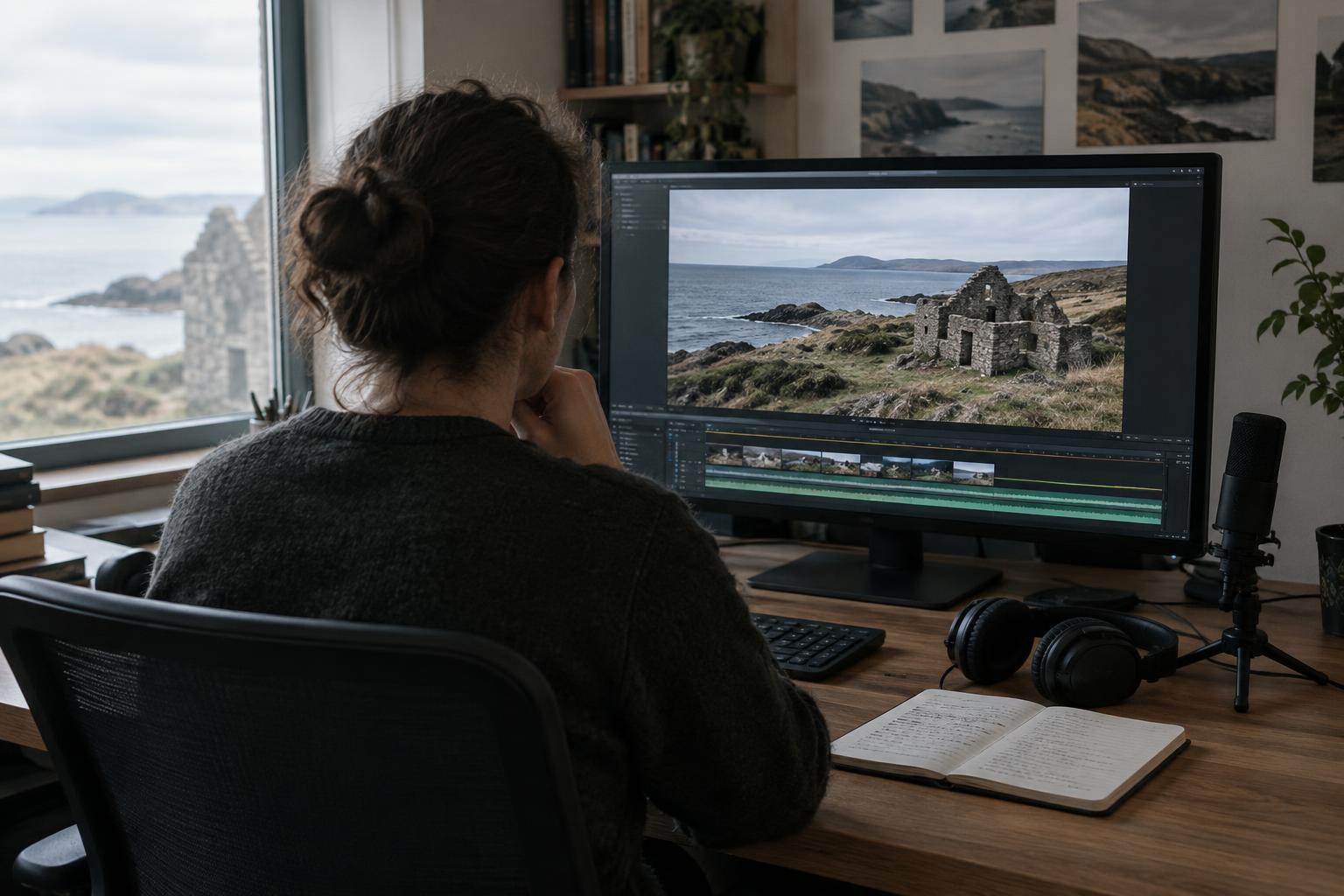
A voiceover script is easier to judge against a rough sequence than against a list of intended visuals. Watch a cut without narration first. Note where a viewer may lose the thread and where a gesture, location sound or change of shot already communicates enough. Then write for the gaps rather than covering every second.
Keep individual lines simple enough to follow while looking at the screen. A sentence packed with dates, place names and qualifications may read well on a page but compete with a detailed image. Divide complex information across shots, or move some of it into an interview or a clear on-screen caption if those forms suit the film. Read the draft aloud at a measured pace; pauses are part of the writing, not empty space to be filled.
Listen for repetition as well as excess. If an interviewee explains a point vividly, the narrator need not introduce it, restate it and then summarise it. Voiceover can instead prepare one essential piece of context before the interview, or connect the speaker’s account to a larger question afterwards.
Use contrast to deepen a scene
Images and words can do different work at the same time without contradicting each other. A quiet present-day view of an empty railway platform, for example, might accompany a concise explanation of the journeys that once connected neighbouring communities. The narration gives the place a historical dimension; the contemporary image lets viewers consider what remains and what has changed.
Contrast needs restraint. Poetic language can create a mood, but it should not supply emotions to people whose inner lives the record does not reveal. When a photograph shows a family outside a home, it is safer to explain what is known about the place or period than to declare what that family hoped or feared. Specific, grounded context often carries more feeling than an invented personal story.
Make a final pass for clarity and trust
Once the sequence is assembled, review each line with three questions: Does this tell the viewer something useful? Can the available material support it? Is narration the best way to convey it? This pass may uncover a claim that needs qualification, a caption that would be clearer, or a stretch where silence would make the scene stronger.
Good voiceover is not measured by how much history it can fit into a film. Its purpose is to guide attention while allowing evidence to retain its texture and limits. When the narration names what can be known, acknowledges what cannot and leaves viewers time to observe, it becomes a partner to the images rather than a running description of them.