Start with a question, not a close-up
Historical objects invite the camera closer. A worn tool, a handwritten letter or a piece of clothing can make a distant period feel tangible. But an object is not a complete account of the people who made, used or kept it. Before planning a shot, decide what question it helps the film explore. Is a tool useful for showing how a task was done? Does a letter reveal one person’s view of an event? Is an item’s survival itself part of the story?
Write a brief description of what is known about the object and how that knowledge was established. Include its maker, date, place of use and chain of ownership only where those details can be supported. Then note what remains uncertain. This preparation helps prevent a camera move or a confident voiceover from turning an attractive object into stronger evidence than it is.
Plan access and handling before planning shots
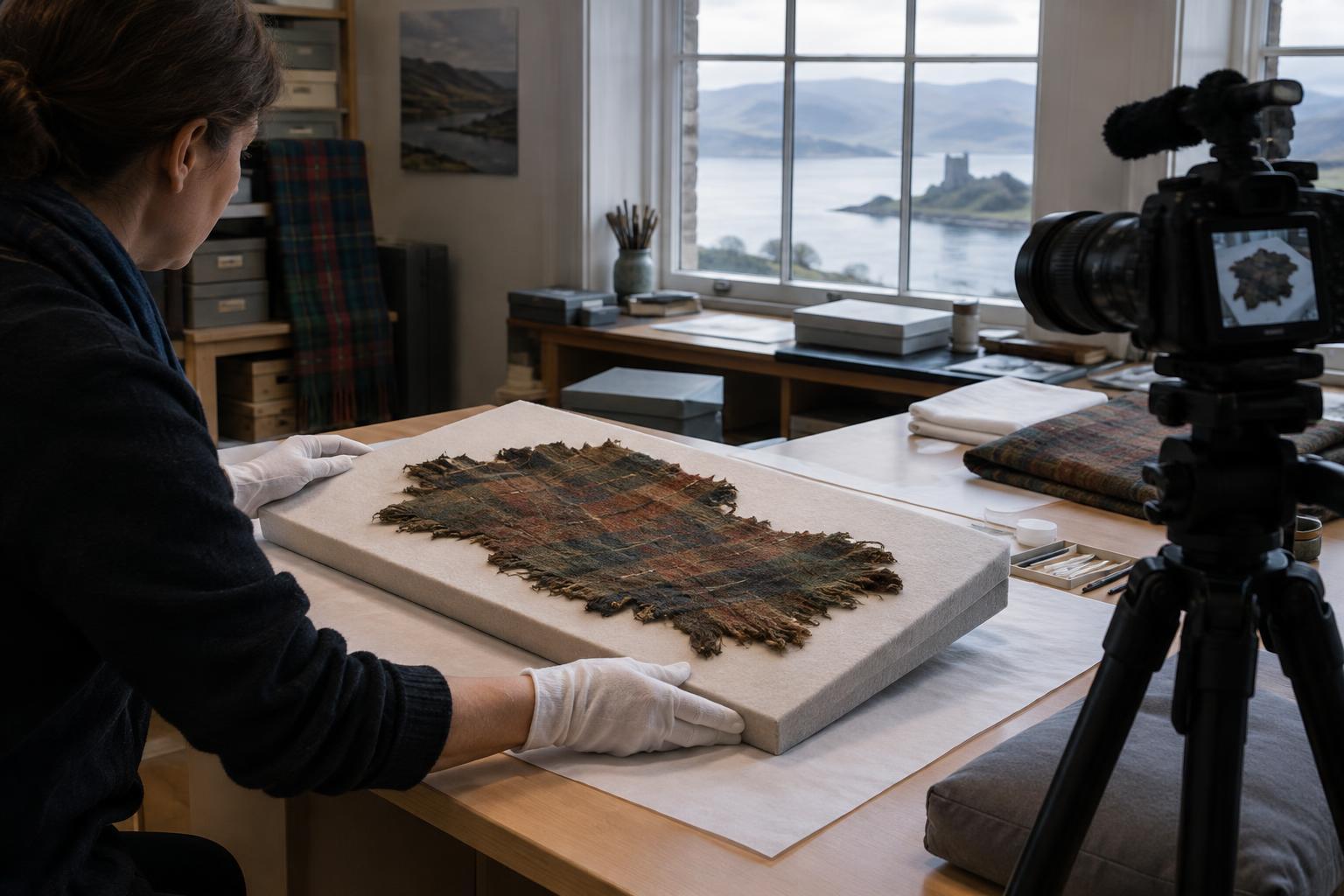
The most useful filming plan begins with the person or organisation responsible for the object. Ask what access is possible, whether a case can be opened, what lighting and equipment are permitted, and who may handle the item. A sequence that depends on unfolding a fragile document or lifting an object from storage may not be possible or appropriate. Build an alternative around its visible surfaces, its setting and an informed explanation.
Keep the object’s identity clear in your production notes. If you film several similar items, record which shots belong to which one so that an editor does not accidentally combine details from different objects. A modern replica can demonstrate scale or use when the original cannot be handled, but identify it as a replica in the film. Do not cut between replica and original in a way that makes them appear to be the same item.
Show details in relation to the whole
Begin with a view that lets viewers understand the object’s overall form. Then move to details that answer the film’s question: a repair, an inscription, a fastening or a sign of wear. Give each close-up enough time to be seen. A sequence of beautiful, very tight images may create intrigue, but it can also leave viewers unsure what they are looking at or how large it is.
Choose light and camera movement for clarity rather than automatic drama. Reflections on glass, deep shadows and rapid movement can conceal the feature a speaker is discussing. If a mark is difficult to see, an accurately labelled still image or a simple graphic may explain it better than another camera angle. Keep a wider reference shot available in the edit so that viewers can reconnect each detail to the object as a whole.
Separate visible features from interpretation
An inscription may be visible on screen; its meaning may still require interpretation. Wear on a surface can show that an object changed through use or handling, but the image alone may not establish who used it, how often or why. Let the narration make that distinction. Phrases such as “the surviving mark shows” and “one possible explanation is” do different jobs, and the film should not blur them.
This matters especially when one object stands in for a wider Scottish story. A household item from a particular place and family cannot, by itself, describe every household in that region. Use it as an entry point, then introduce other evidence or perspectives before making a broader claim. If accounts differ, the object can help frame the question without being presented as the final answer.
Make the object’s journey part of the story when it matters
How an object reached the camera may be relevant to its meaning. It might have been kept in a family, collected later or preserved while comparable everyday items were discarded. These circumstances affect what survives for a documentary to film. When the information is available and useful to the story, a short explanation of where the object is held and what is known about its history can give viewers a better sense of its limits.
In the edit, test the sequence without music or voiceover. Can viewers recognise the object, follow the important detail and understand why they have been shown it? Then add only the explanation the images cannot supply. The aim is not to make every object feel like a revelation. It is to let a specific surviving thing illuminate a specific historical question, while leaving room for everything it cannot tell us.