Why the distinction matters
A documentary caption is small, but it carries considerable authority. Viewers may read a place name, date or description as a verified account of everything on screen. Yet a photograph can establish some details more readily than others. It may show a crowd outside a building while leaving open why people gathered, how they felt or what happened after the camera stopped recording.
This matters when telling stories about Scottish history, where an image may be used to explore work, migration, protest or changes to a neighbourhood. Those larger themes can be valuable, but they should not be passed off as facts established by one frame. A useful caption lets the viewer see both the evidence and the filmmaker’s reading of it.
Start with what you can identify
Before writing a caption, make a short list of what is supported by the item and its accompanying records. That might include the medium, a named location, a documented date or date range, and the creator if known. Then list what comes from visual observation: a street sign, clothing, machinery or the apparent activity in the scene. Keep those two lists separate. A catalogue description and a visible detail are both useful, but they do not always answer the same question.
Avoid filling gaps with a story that merely seems plausible. A person carrying a case might be travelling, arriving at work or posing for a picture. If their identity and purpose are unknown, “a person carrying a case” is more accurate than “a worker leaving for a new life.” Specificity is helpful when it is earned; restraint is helpful when it is not.
Give interpretation its own language
Interpretation need not disappear from captions. It can help a viewer understand why an image has been included. The key is to mark it as interpretation with wording such as “may suggest,” “has been read as” or “the film uses this image to explore.” These phrases should lead to a clear idea, not serve as a blanket excuse for an unsupported claim.
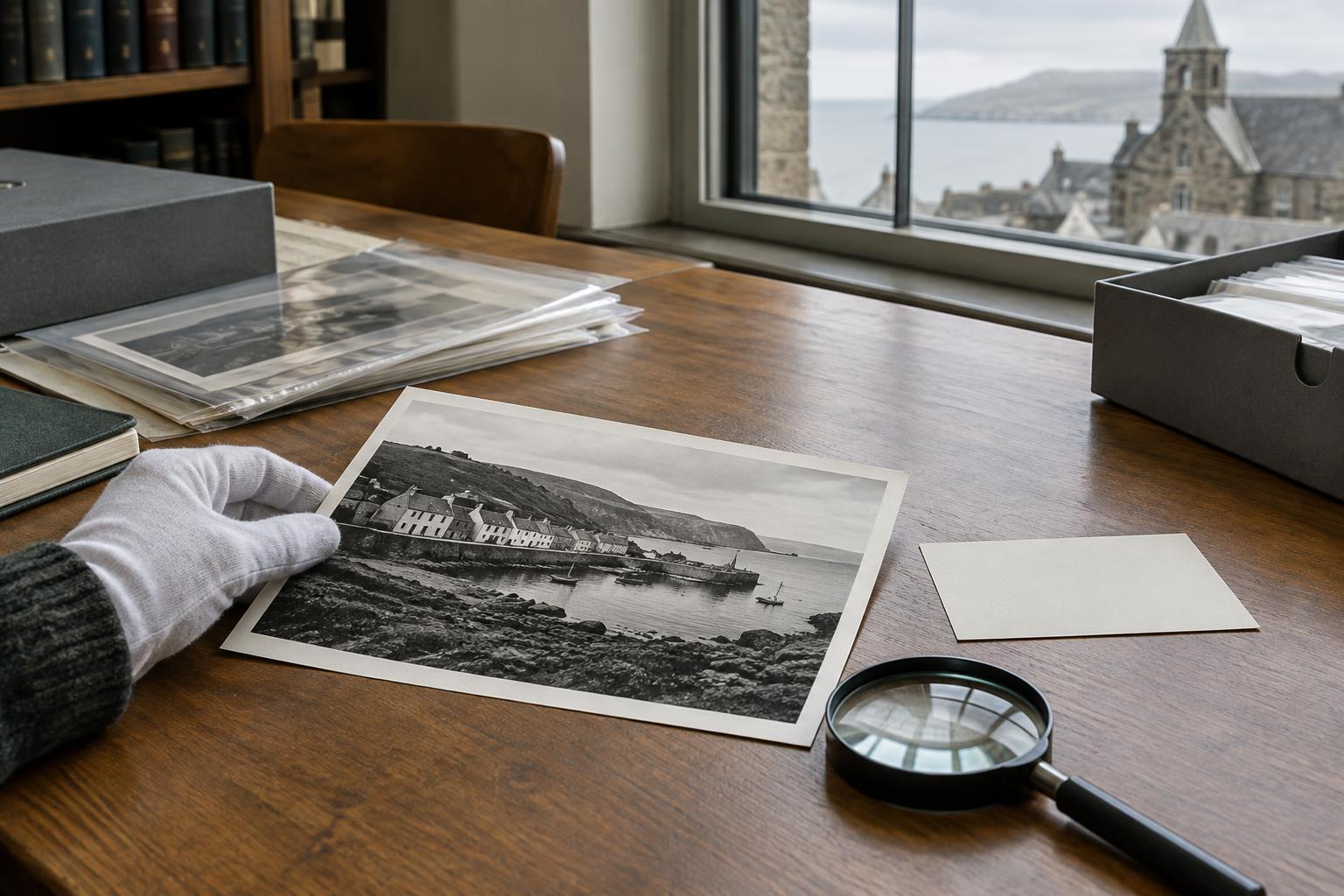
For example, consider a hypothetical image of people beside a harbour, with its location and year verified. One caption might read: “People stand beside the harbour at [verified location], [verified year].” A second sentence could add: “In this film, the scene introduces questions about the town’s relationship with maritime work.” The first sentence identifies the image; the second explains the documentary’s use of it. The bracketed details are placeholders, not a description of an actual archival item.
Make uncertainty visible without making captions cumbersome
Not every image arrives with a complete record. If a date is approximate, say “circa” or give the supported range. If a location is a reasonable identification rather than a confirmed one, use “believed to be” and, where space allows, explain why. If an attribution is disputed or comes from a later catalogue entry, do not silently turn it into an established fact.
A caption does not need to contain the whole research trail. It does need to avoid hiding a consequential doubt. Consider whether uncertainty changes how a viewer would understand the scene: an unclear year might matter greatly in a film about a particular event, while an unidentified bystander might not. When a short on-screen caption cannot hold an important qualification, place it in accompanying narration, a longer image note or the film’s credits.
Review captions alongside the edit
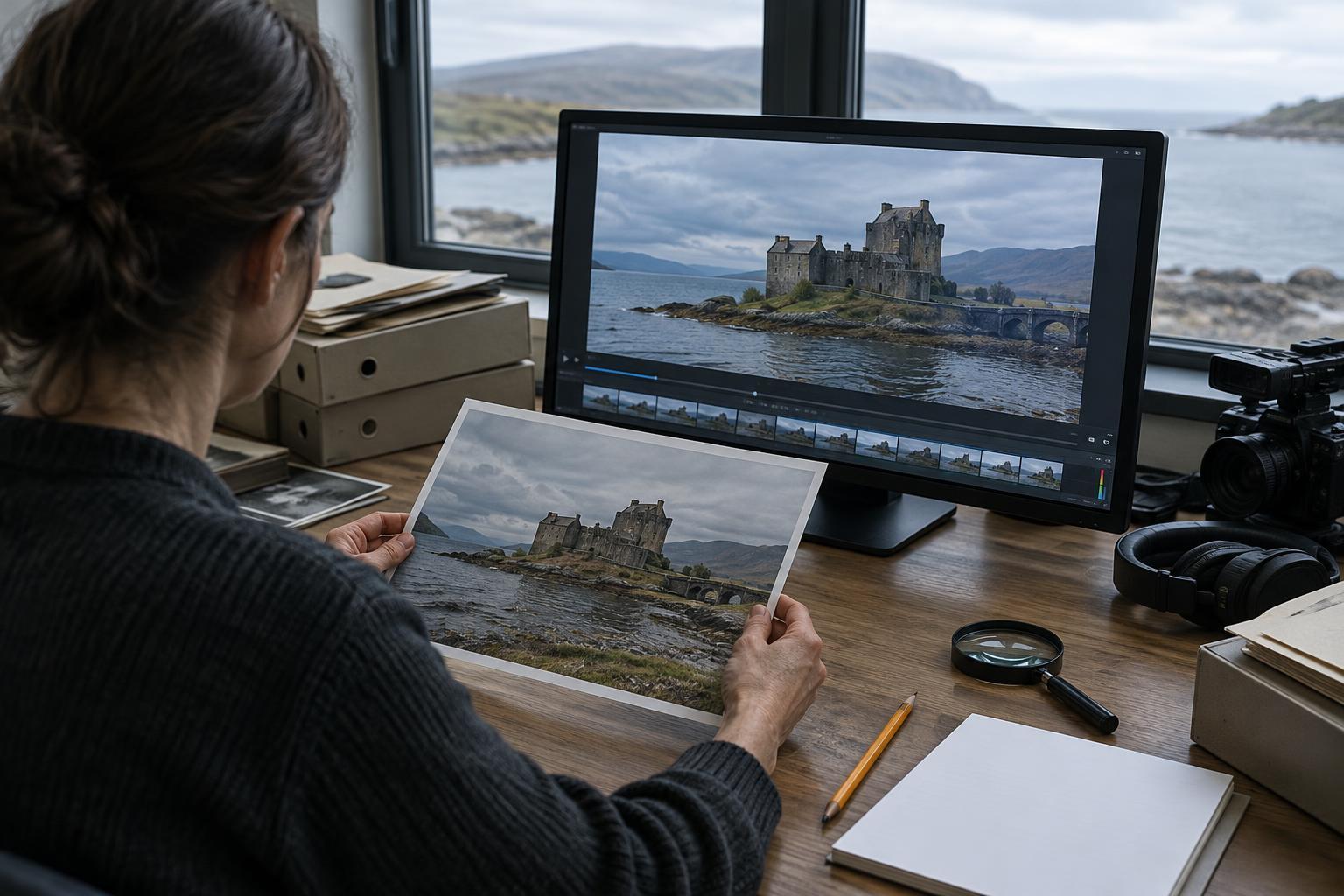
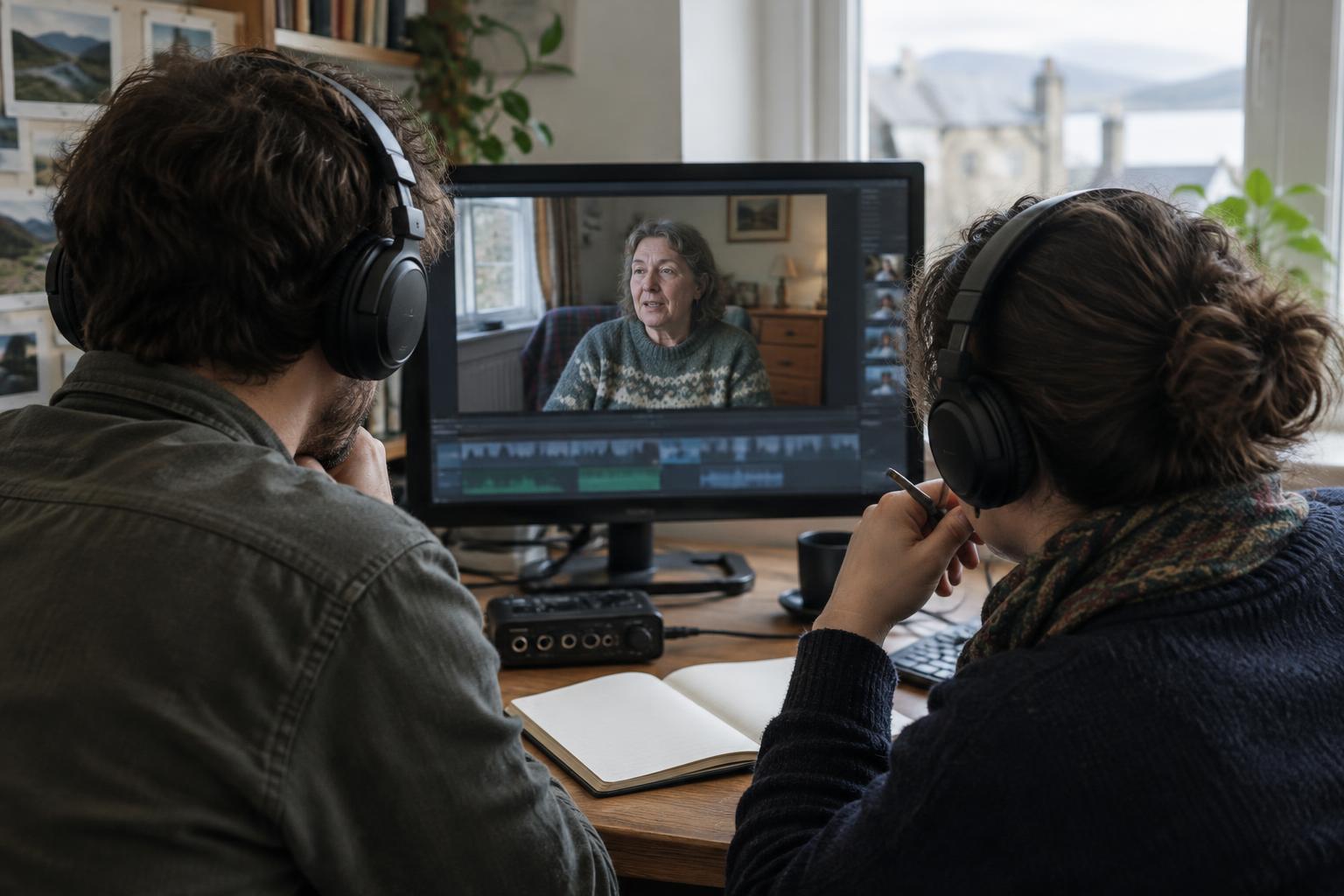
Captions do not work alone. Music, sequencing, cropping and voice-over can make an ordinary scene feel like evidence of celebration, hardship or conflict. Read each caption while watching the finished sequence, not only beside a still image. Ask whether the surrounding edit implies more than the caption can support, and whether an image from one place or period might be mistaken for a direct record of another.
A final check can be simple: underline every factual claim and identify what supports it; circle every interpretive claim and make sure it is presented as a reading rather than a discovery. Check names, places and dates against the available record, and keep notes on decisions that may need revisiting. The result should be more than a cautious label. A strong caption gives viewers a reliable point of entry while leaving them free to think about what the image can—and cannot—tell them.