An age of asking how society works
The Scottish Enlightenment is the name given to a period of intellectual activity, especially in the eighteenth century, when thinkers in Scotland examined how people know things, how societies change and how public life might be improved. It was not a single movement with a membership list. It was a network of conversations carried on in universities, clubs, correspondence, books and everyday institutions.
David Hume wrote about human understanding and history; Adam Smith explored moral judgment and political economy; Thomas Reid examined the foundations of knowledge. Their subjects differed, but they shared an interest in testing inherited assumptions against observation and argument. The Enlightenment was about more than famous philosophers: medicine, science, education and the study of language also formed part of its intellectual world.
Where did the conversations happen?
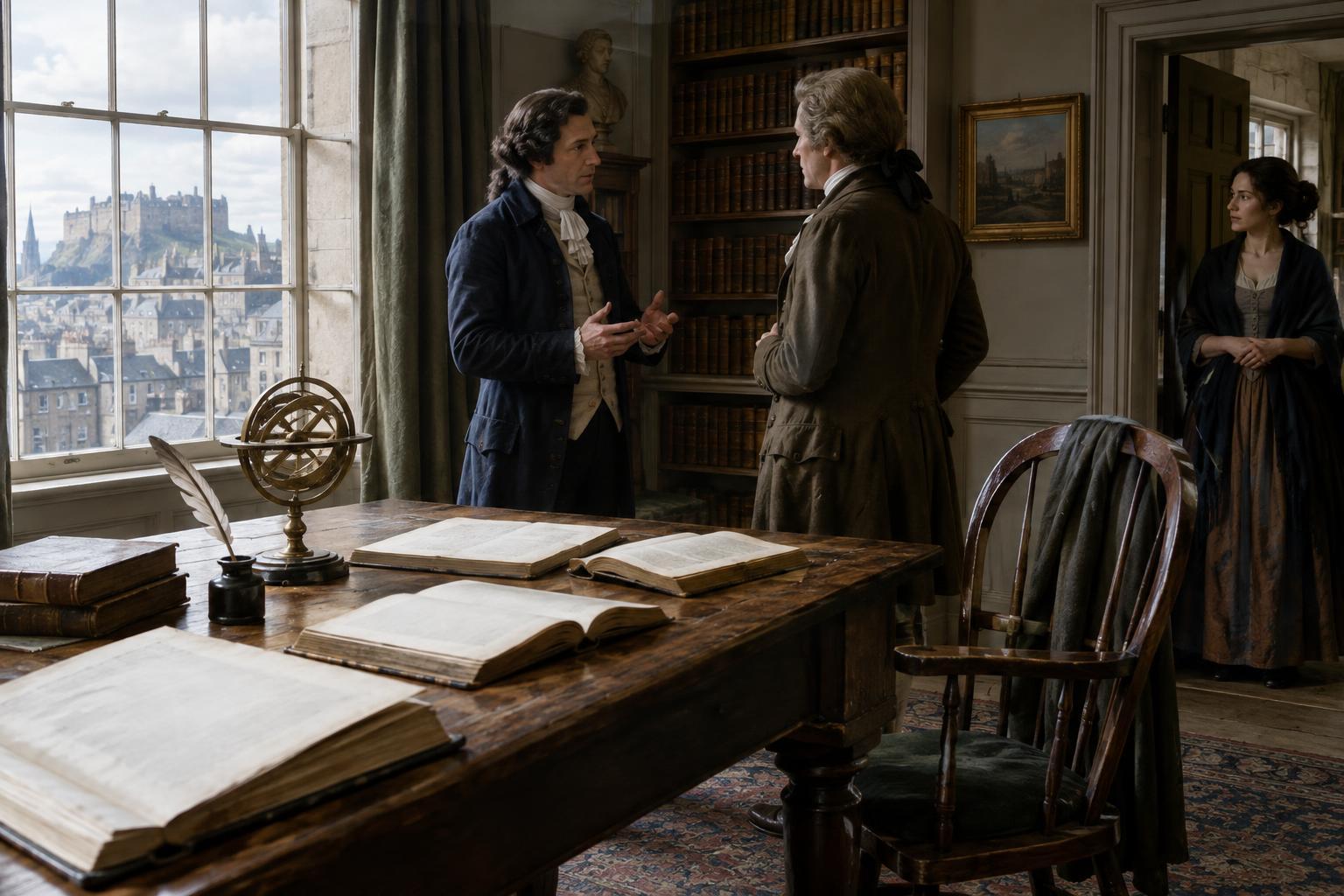
Edinburgh is often treated as the movement’s centre, yet Glasgow and Aberdeen were important too. Universities gave scholars places to teach and debate. Printing helped ideas reach readers beyond a lecture room, while societies and informal gatherings offered opportunities to question a speaker, compare evidence or develop an argument. These settings mattered because an idea could be challenged and reshaped as it moved between people.
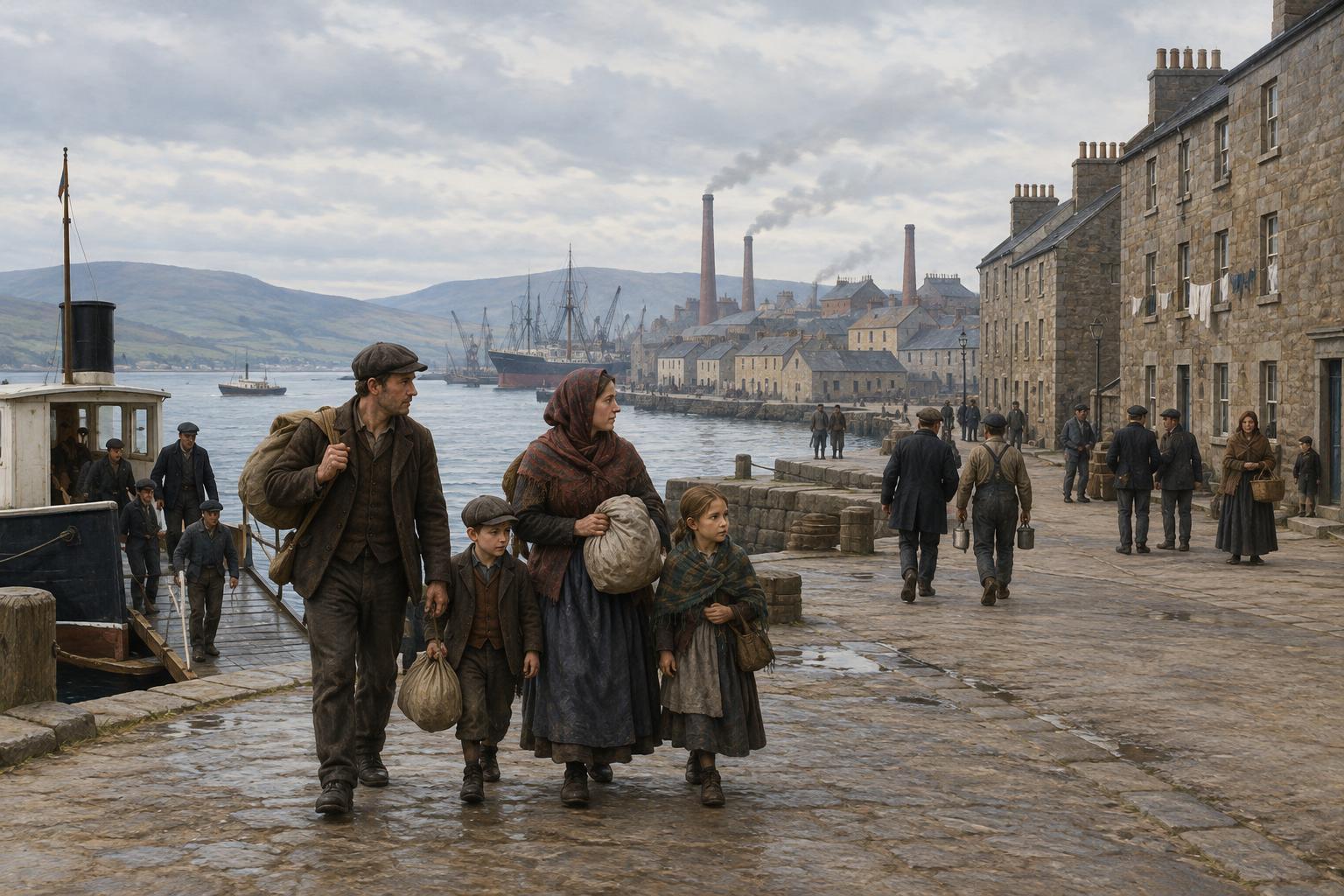
The routes connecting Scotland to the wider world mattered as well. Books, letters, commerce and travel brought new questions into Scottish discussions and carried Scottish writing outward. That does not mean every participant saw the world from the same position. A merchant, a professor and someone whose labour supported their households could experience the same expanding economy very differently.
Who had room to participate?
The best-known circles were dominated by educated men, particularly those with the time, money and connections to study, publish or attend meetings. University access and formal learned societies were not open to everyone on equal terms. Women could read, write, host discussions and influence intellectual life, but they faced substantial barriers to the credentials and public recognition available to men. The surviving record can reinforce that imbalance by preserving prominent authors’ work more readily than the contributions of people around them.
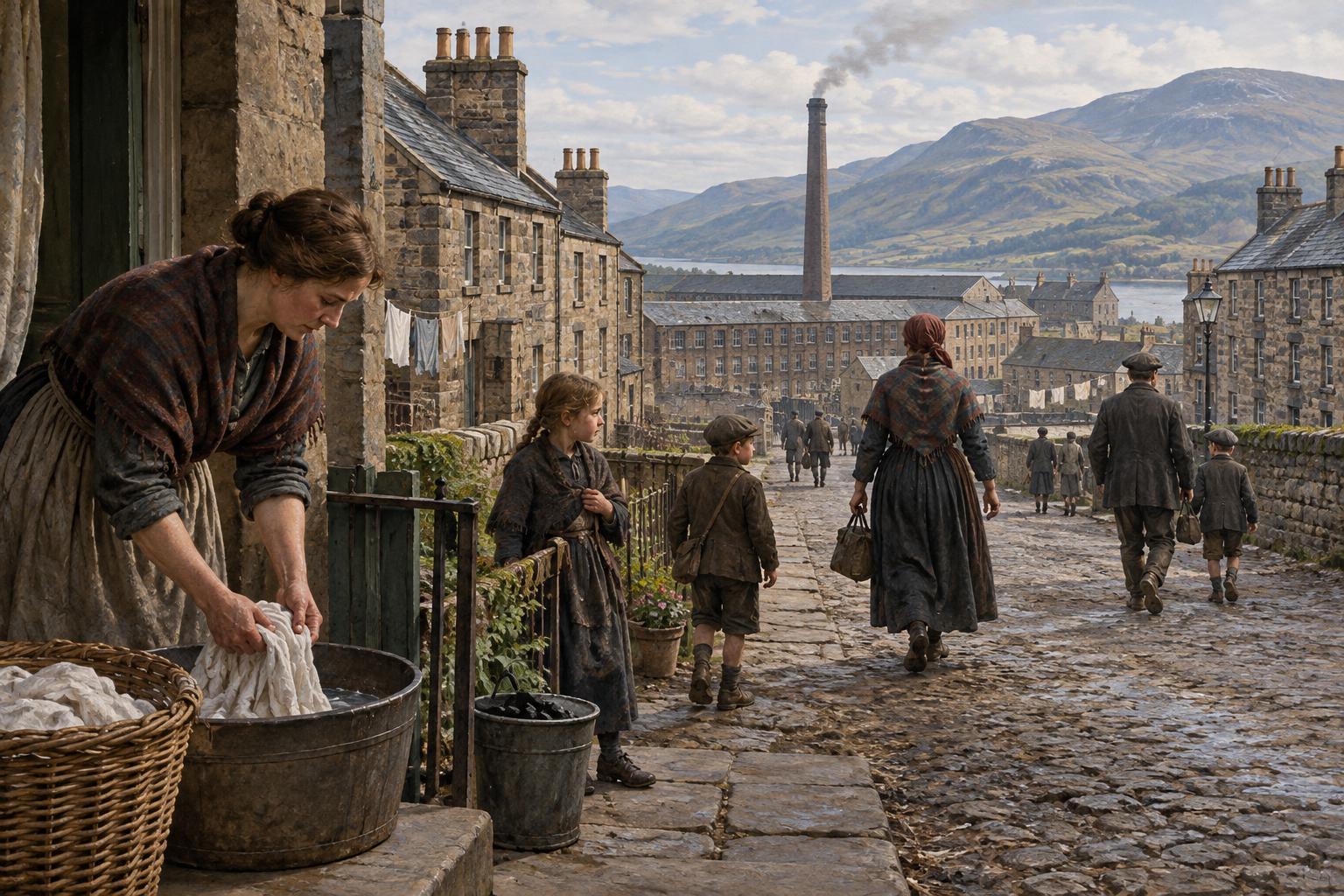
Class and language also shaped access. Literacy, books and leisure were unevenly distributed. Many people encountered debate through sermons, teaching, work or conversation rather than through scholarly publication. Gaelic-speaking communities were part of Scotland, but accounts centred on urban universities can leave their experiences at the margins. Asking who could take part therefore means looking beyond the names on book covers, while avoiding the assumption that everyone outside a university was silent or uninterested.
Ideas of improvement, and their limits
Enlightenment thinkers often discussed progress and improvement, yet those words deserve scrutiny. Improving farming, trade or government could bring benefits to some people while disrupting the lives of others. In Scotland, debates about commerce and social change took place alongside stark inequalities within the country and connections to an expanding British Empire. Some people who contributed to intellectual and economic life benefited from imperial trade, including systems built on enslavement, even as questions of liberty were being discussed.
There was no single Enlightenment position on every issue, and it would be misleading to assign one view to every thinker. It would be just as misleading to describe the period only as a triumph of reason. Its arguments are historically significant partly because they allow us to examine the gap between broad claims about humanity and the narrower circle of people able to shape public debate.
How to look for the wider story
A portrait of a philosopher or an image of an old university building can make this history feel like a story of exceptional individuals. Such images are useful starting points, but they show only part of the setting. When viewing a documentary, exhibition or archive item, ask who produced it, whose words it preserves and who appears only in the background. A printed book may reveal an author’s argument, for instance, while saying little about the labour, money and social connections that helped it reach readers.
The Scottish Enlightenment is best understood as both a set of influential ideas and a history of unequal opportunity to develop and share them. Holding those two perspectives together does not diminish the work of its celebrated thinkers. It makes the picture more useful: a story about how knowledge is made, whose voices become authoritative and what may be missed when a period is remembered through its most familiar faces.