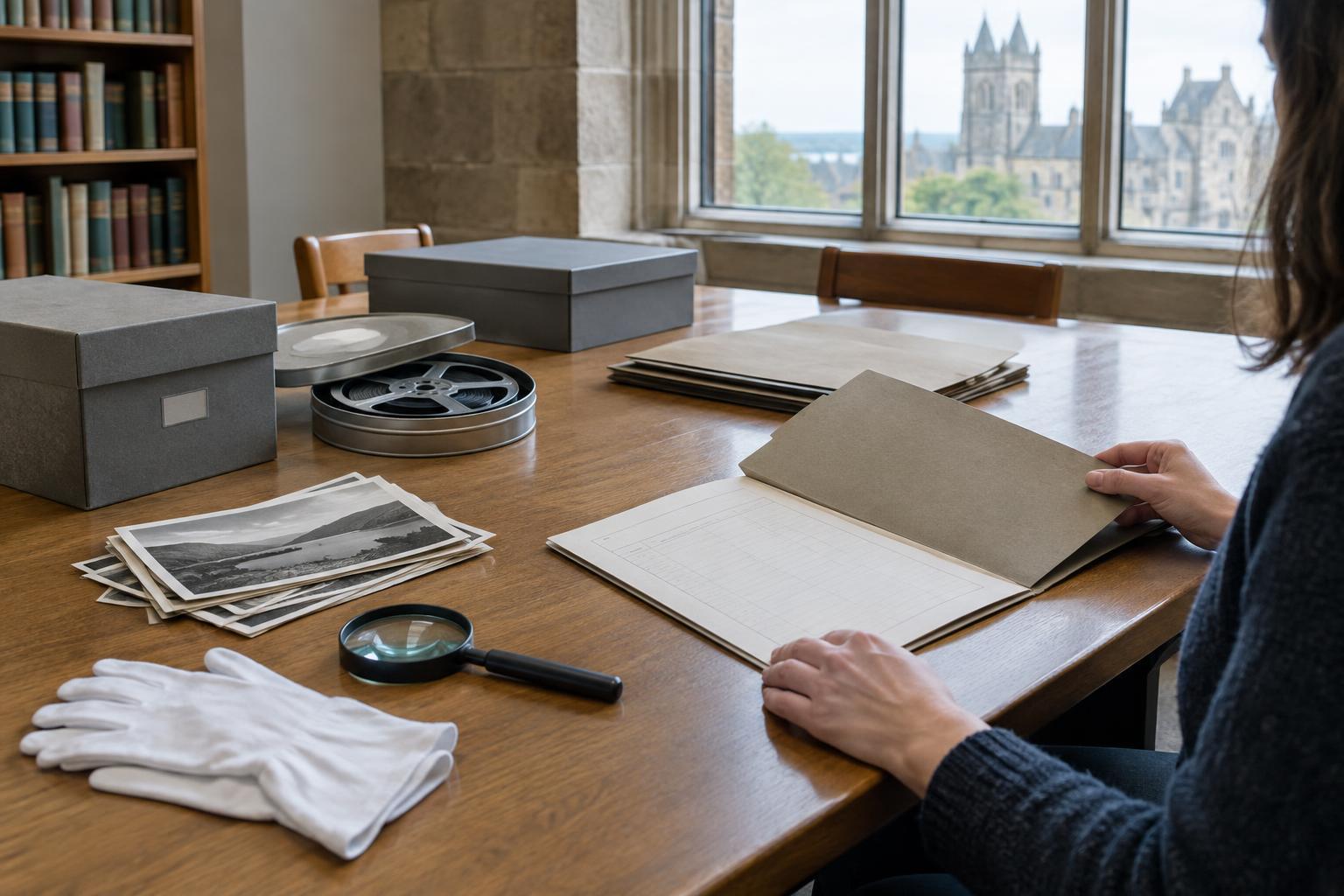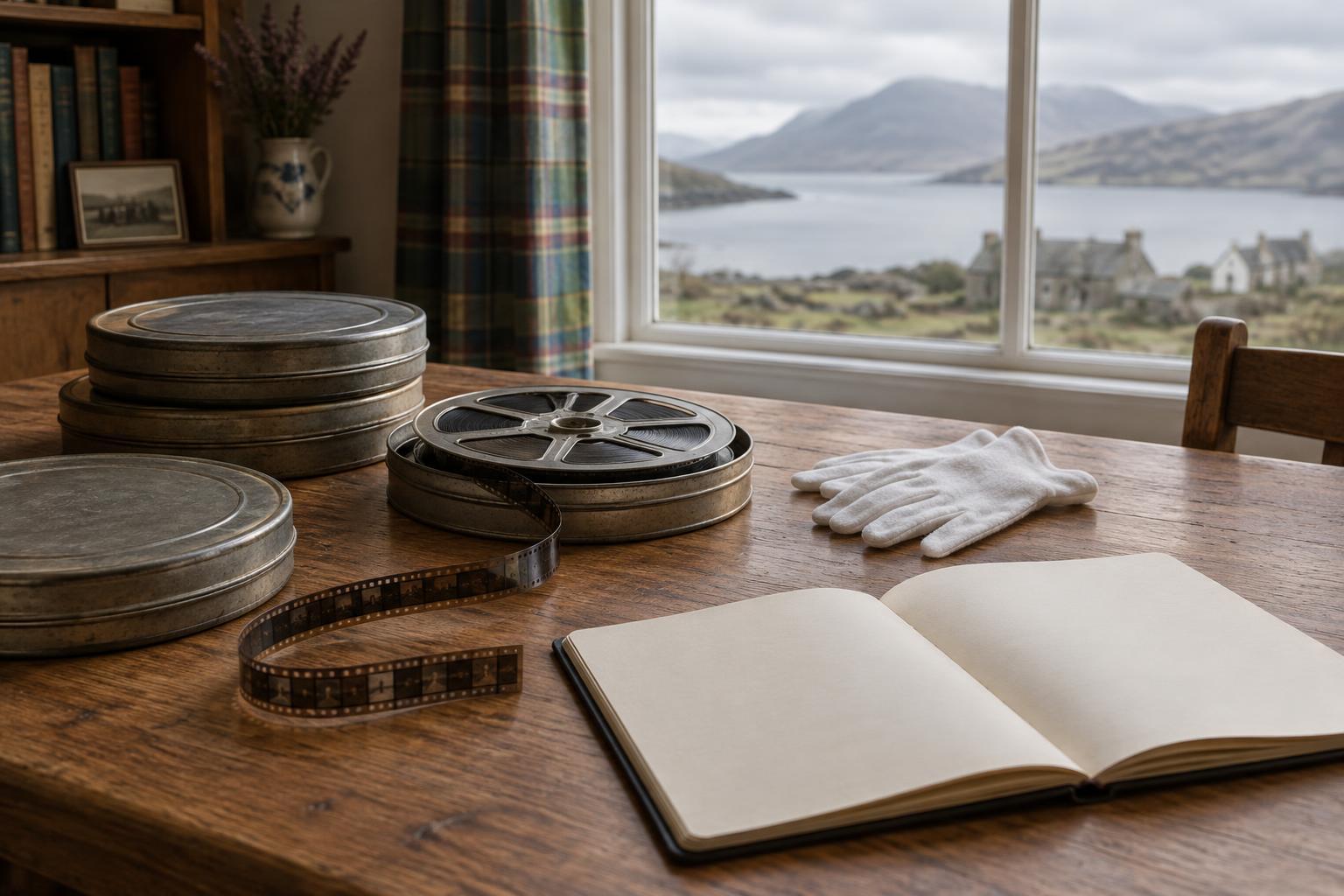
Start with the collection as you found it
Family films often arrive in a mixture of tins, cardboard boxes, envelopes and later video copies. Before rearranging anything, give the collection a name and record where it came from, who passed it on and when it entered your care. Photograph the boxes and their contents in place. The order may reveal which reels were stored together, even if nobody remembers why.
Give each physical item a simple, unique identifier, such as a number written on a separate tag. Use that identifier in your catalogue and in file names for any digital copies. Record the wording on tins, labels and enclosed notes exactly as written, including spellings that seem mistaken. Keep your own interpretation in a separate field. A tin marked “Auntie’s holiday” is evidence of a label; it does not, by itself, establish who appears in the film.
Describe the item without guessing
For each reel, tape or digital file, note what it is and what you can observe safely. Useful details include the format if known, colour or black and white, whether it appears to have sound, the approximate running time and any visible damage. If you cannot identify a format confidently, describe the object instead of forcing it into a category. Do not run an old reel through a projector simply to fill a gap in the catalogue; brittle or shrunken film may need specialist assessment.
Keep distinct records for an original and its copies. A video transfer might contain several reels joined together, while an online clip might show only a short extract. Note which item each copy came from, who made the transfer if known, and whether titles, music or narration were added later. This helps future viewers distinguish what the camera captured from what someone added during editing.
Capture people, places and dates with a confidence level
The most valuable information may live outside the film. Ask relatives what they recognise: a face, a shopfront, a ferry, a school uniform or the layout of a street. Record who supplied each identification and when they shared it. If one person remembers a scene as Oban and another thinks it is Ullapool, retain both accounts rather than choosing the tidier answer. A catalogue can say “possibly” or “unidentified.”
For dates, separate what is written on the container from what is inferred from the images. “Label dated 1962” and “thought to show the early 1960s” are different statements. Be as specific about location as the evidence allows: “Scotland” is better than an unsupported street name. For a Scottish family collection, local details such as a harbour, village hall or annual gathering may help someone recognise a scene later, even if you cannot identify it now.
Record the story around the footage
A brief description of what happens on screen makes a collection easier to explore. Write in a sequence that another person can follow: “children playing in a garden; procession passing a church; adults boarding a bus.” Note significant changes of scene and any titles visible in the footage. Avoid assigning motives or relationships from appearances alone. Someone standing beside the camera operator’s partner is not necessarily a relative.
Add context where it can be traced to a person or document. A relative might explain that a holiday film was shown at family gatherings, or that the camera belonged to a neighbour. Such memories deserve a place in the record, clearly attributed and separate from the visual description. The aim is not to produce a perfect account of the past. It is to preserve useful clues so later generations can revisit your conclusions.
Make the catalogue useful for care and access
Finally, record where each item is stored, whether a viewing copy exists and whether it needs attention. Simple condition notes such as “loose film at start of reel” or “tape case cracked” can help you decide what to inspect first. Keep the catalogue backed up separately from the films, and update it when an item moves or a new identification comes to light. Preserve original labels and notes even after their information has been transcribed.
Before sharing footage publicly, note any known permissions, restrictions or family concerns. Home movies can include living people and private moments that were never intended for a wide audience. You can catalogue a scene without publishing it. A good family film record makes the collection easier to find, understand and protect, while leaving room for uncertainty and for the people in it to be treated with care.