Why the recording needs a companion record
An oral history interview may carry a vivid account of a workplace, neighbourhood or family tradition. Years later, however, a listener may not know who made the recording, why the conversation took place or whether a place name refers to a village, a street or a former business. Digitisation protects access to the sound, but context makes that sound usable and less likely to be misread.
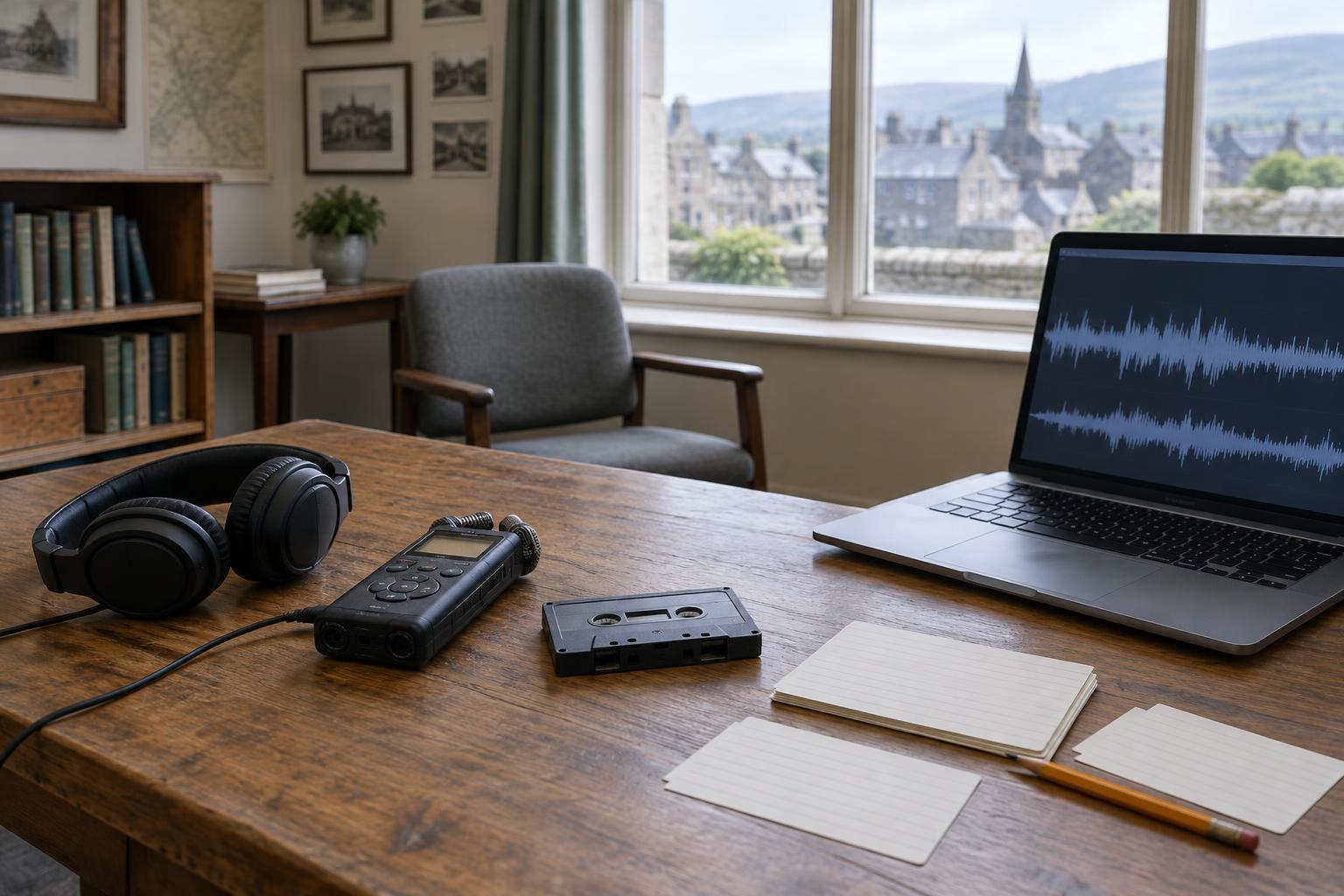
Start a companion record before transferring the audio. It need not be elaborate: a spreadsheet entry or text file linked to the digital recording can work. Give the interview a stable identifier and use it across the audio file, transcript, notes and storage records. Keep the source recording and any labels or paperwork together until their details have been captured. If the original carrier has limited space for writing, photograph its label rather than trying to improve or replace it.
Identify the people and the occasion
Record the interviewee’s name as they want it represented, the interviewer’s name and the names of others whose voices are heard, where known. Note when and where the interview happened, or state clearly when those details are uncertain. A town or region can be useful, but so can the immediate setting: a kitchen conversation may sound different from an interview conducted at a public event. Record the broad purpose of the interview and the collecting project or organisation, if there was one.
Separate information supplied by a participant from information inferred later. For example, “interviewee describes the mill as being near the harbour” is different from an archivist identifying a particular building. Spellings, dates and identities may change as people check them; preserve the earlier record and note the correction. In a Scottish regional collection, local names may have Gaelic, Scots and English forms. Recording the form spoken in the interview, alongside any verified alternative used for finding it, helps preserve both meaning and searchability.
Describe the source and the digitisation
Future users should be able to tell what was digitised, not just what file they have received. Record the source format, any markings on the carrier, its apparent condition and whether the transfer covers the whole interview. If a tape contains a blank stretch, an abrupt ending or a second conversation, note it. Do not silently join separated segments or remove a passage from the access copy without documenting that change.
Keep a simple account of the transfer: who carried it out, which source was used, the date of transfer, the resulting file format and any processing applied. Distinguish an unedited preservation copy from a cleaned-up listening copy. If the voice is hard to hear, resist turning a guess into a definitive transcript. A time-marked note such as “place name unclear” tells a later listener where to check while leaving room for a better interpretation.
Record access decisions with care
An interview can contain personal information about the speaker and other people. Store any consent forms or correspondence securely and record the practical access decision beside the interview: whether it may be listened to, quoted, transcribed or shared online, and whether any agreed restriction applies. Do not assume that permission to record also means permission for every later use. If the position is unclear, mark it as unclear and seek guidance from the collection’s responsible staff before making the material public.
A short subject description can help people find the interview without exposing sensitive details in a public catalogue. Describe broad themes—such as ferry work, tenement life or changes to a town centre—rather than repeating an intimate story in searchable metadata. If access to one passage is restricted, retain a private record of what was changed, who authorised the decision and which version a user is hearing. The aim is to protect participants while keeping the history of the recording intelligible.
Leave a trail others can follow
Memory is evidence of experience and perspective, not an automatic verification of every event described. Context notes can help listeners recognise that distinction. Record significant uncertainties, such as an approximate interview date or an unidentified speaker, without filling gaps with plausible-sounding details. Where a transcript exists, link it to the recording and indicate whether it is a close transcription, a summary or an edited text. Time references for major topics make it easier to return to the speaker’s own words.
Before considering the task finished, ask whether someone unfamiliar with the project could answer four questions: What am I listening to? Where did it come from? What has changed during digitisation? What may I do with it? A modest, honest record that answers those questions is more valuable than a polished description that conceals uncertainty. It gives a voice from the past a clearer path to future listeners without pretending the recording speaks entirely for itself.