Start with the shape of the coast
Fife’s East Neuk is a stretch of coastal settlements where harbours sit close to houses, narrow streets and open water. St Monans, Pittenweem, Anstruther, Cellardyke and Crail are close enough to invite a journey between them, but each is worth time on foot. Rather than treating the villages as a checklist of picturesque views, begin at the waterfront and ask a simple question: what did this place need in order to work?
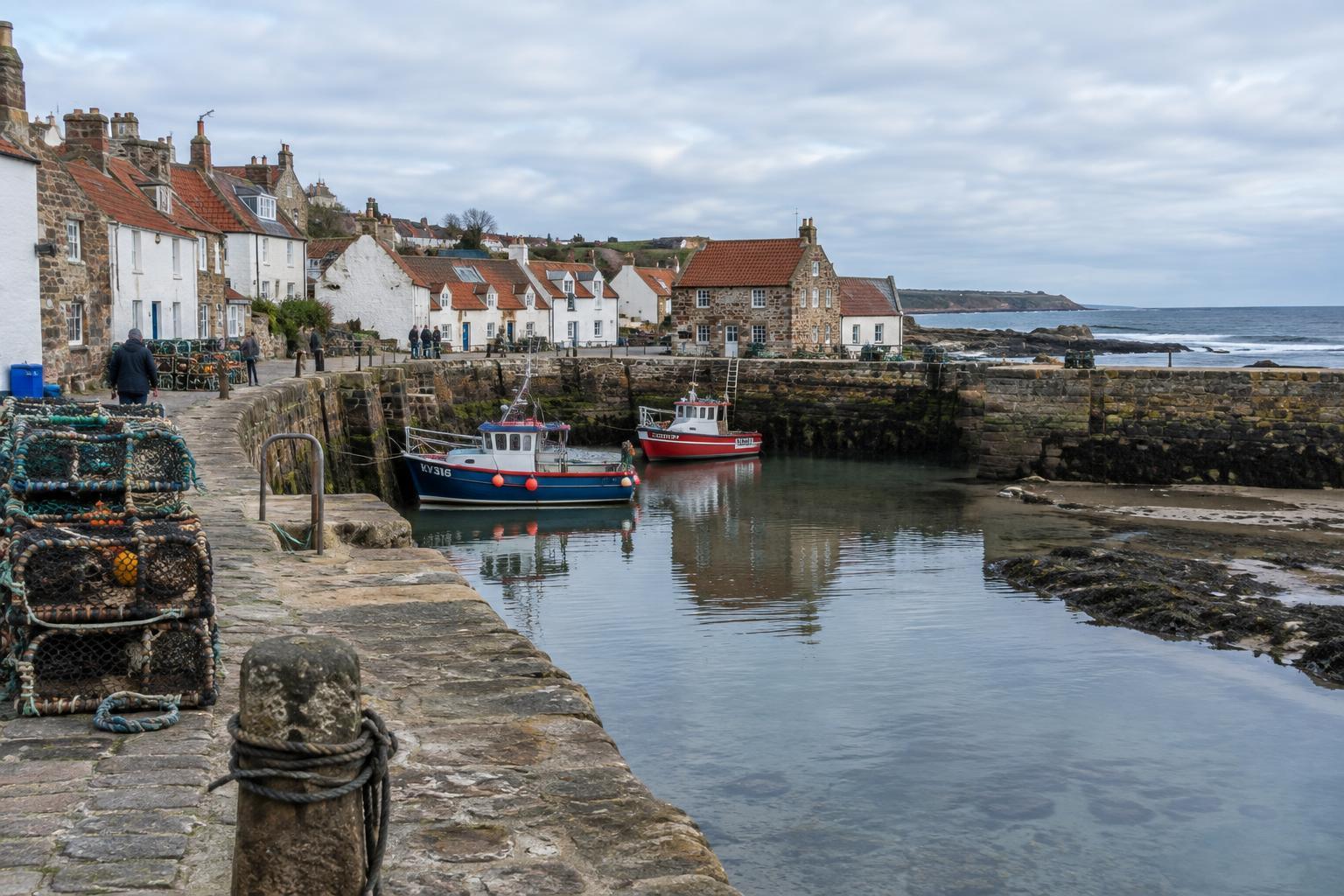
Harbour walls, sheltered basins, slipways and routes up from the shore help answer it. Fishing required places to land a catch, maintain boats and move goods onward. Buildings beside the harbour could serve changing purposes over generations, so appearances alone cannot tell you exactly how any one was used. Look for the relationship between water, street and settlement; it is often more revealing than a single landmark.
Read each harbour at walking pace
St Monans makes a good starting point for noticing how closely the village meets the sea. Walk the harbour edge, then turn inland to see how quickly the waterfront gives way to residential streets. At Pittenweem, the harbour remains part of a working environment. Depending on when you visit, you may see boats, equipment or routine activity, but a quiet quay is part of the story too: working life does not arrange itself for visitors.
Anstruther has a larger waterfront and makes a useful pause before continuing through neighbouring Cellardyke. Walking between the two gives a sense of how village boundaries can be less obvious on the ground than they appear on a map. Farther east, Crail’s compact harbour is especially suited to a slow circuit: look from the shore up toward the streets, then walk back down by a different route. Changes in viewpoint help you see how steep ground and limited space shaped movement around the harbour.
Make room for the people behind the view
Fishing heritage is not only about boats. A catch depended on labour ashore as well as at sea: preparing gear, handling fish, repairing equipment, selling produce and sustaining households. That wider work is easy to miss when attention settles on colourful waterfront buildings. Streets leading away from a harbour are worth exploring because they suggest how closely everyday domestic life and maritime work once overlapped.
It is also important not to describe every village as a preserved fishing community. Industries change, buildings find new uses and residents have lives beyond the history visitors come to see. Avoid assuming that a boat’s presence proves how it is used, or that an old-looking doorway has a particular story. When you cannot verify a detail, let it remain a question to take into a museum rather than turning it into a confident caption.
Use museums to deepen what you notice
The Scottish Fisheries Museum in Anstruther is a natural stop for understanding fishing beyond the harbour view. Allow time to follow its interpretation rather than looking only for objects that resemble what you have just seen outside. Tools, vessels, images and accounts can prompt more precise questions about work, risk and change. Exhibitions and access arrangements can vary, so check practical details before building a day around a visit.
Smaller local displays, heritage spaces and information panels may add another layer when they are available. Read labels for dates and context, and distinguish between an image of a particular village and a broader illustration of fishing life. If you photograph displays for your own notes, record the caption as well as the image; later, it is surprisingly easy to remember a compelling picture more clearly than what it actually showed.
Plan a considerate coastal day
You can spend a full day in one or two villages or make a longer trip along the coast. Walking sections of the Fife Coastal Path can connect the places at a pace that keeps the landscape in view, but check the route, weather and your return transport before setting out. If travelling by bus or car, leave room to wander rather than trying to fit every harbour into a brief stop. Museum opening times, local services and transport arrangements may change.
Harbours are workplaces, not outdoor exhibits. Keep access clear for vehicles and equipment, respect signs and barriers, and ask before making close-up photographs of people at work. Take care on uneven or wet surfaces, especially near the water. A thoughtful visit leaves space for both sides of the East Neuk: its history as a coast shaped by fishing and its present life as a place where people still live and work.