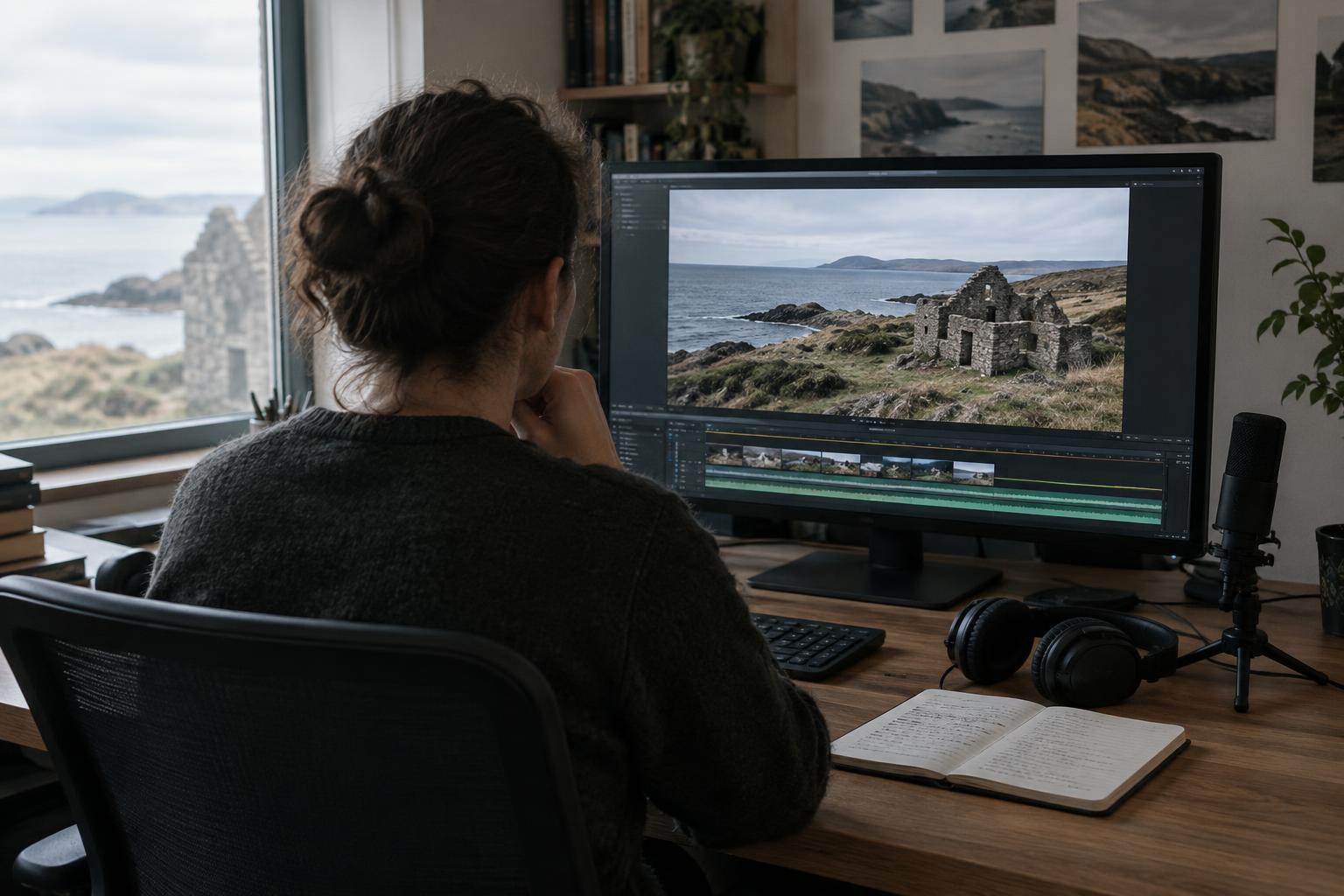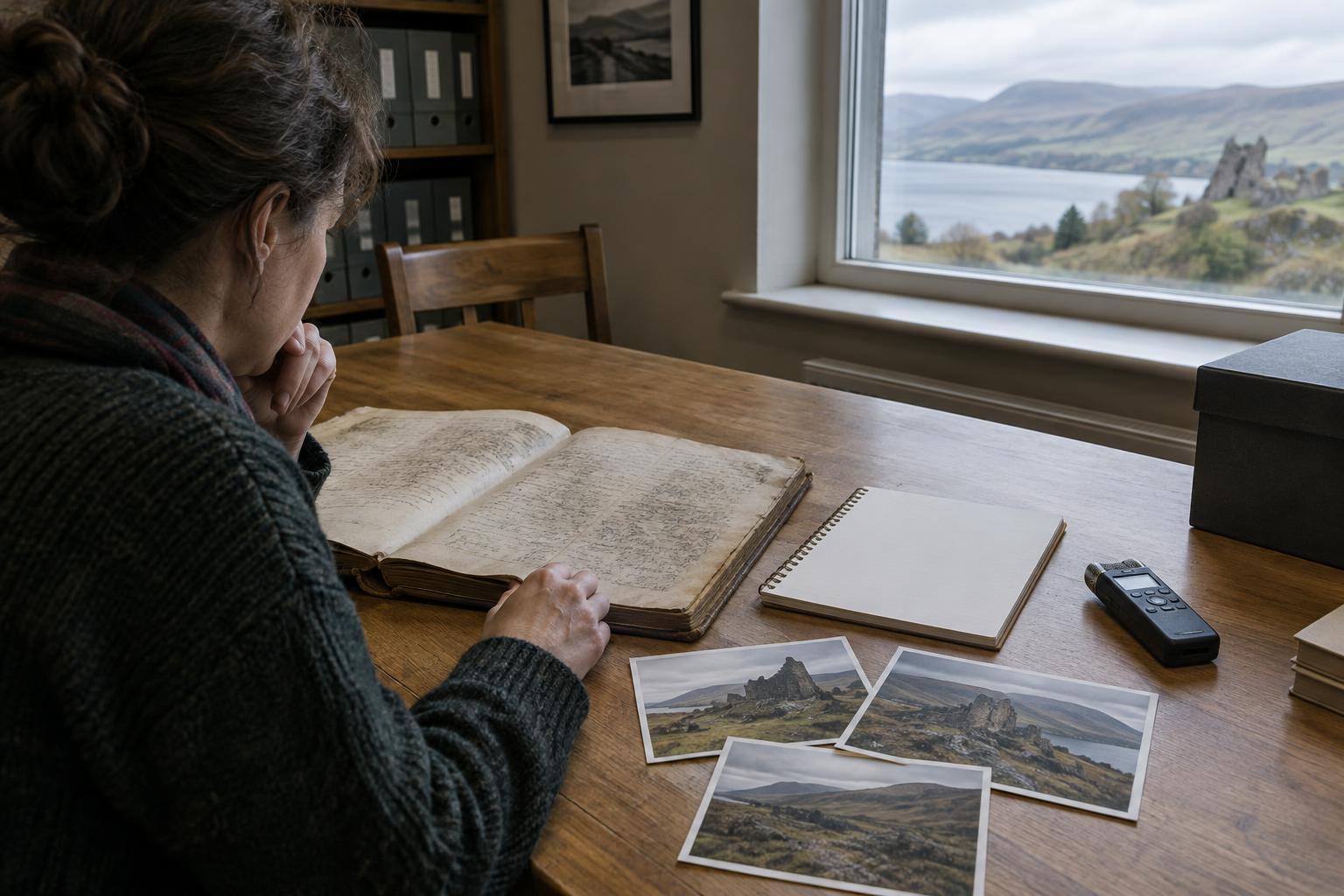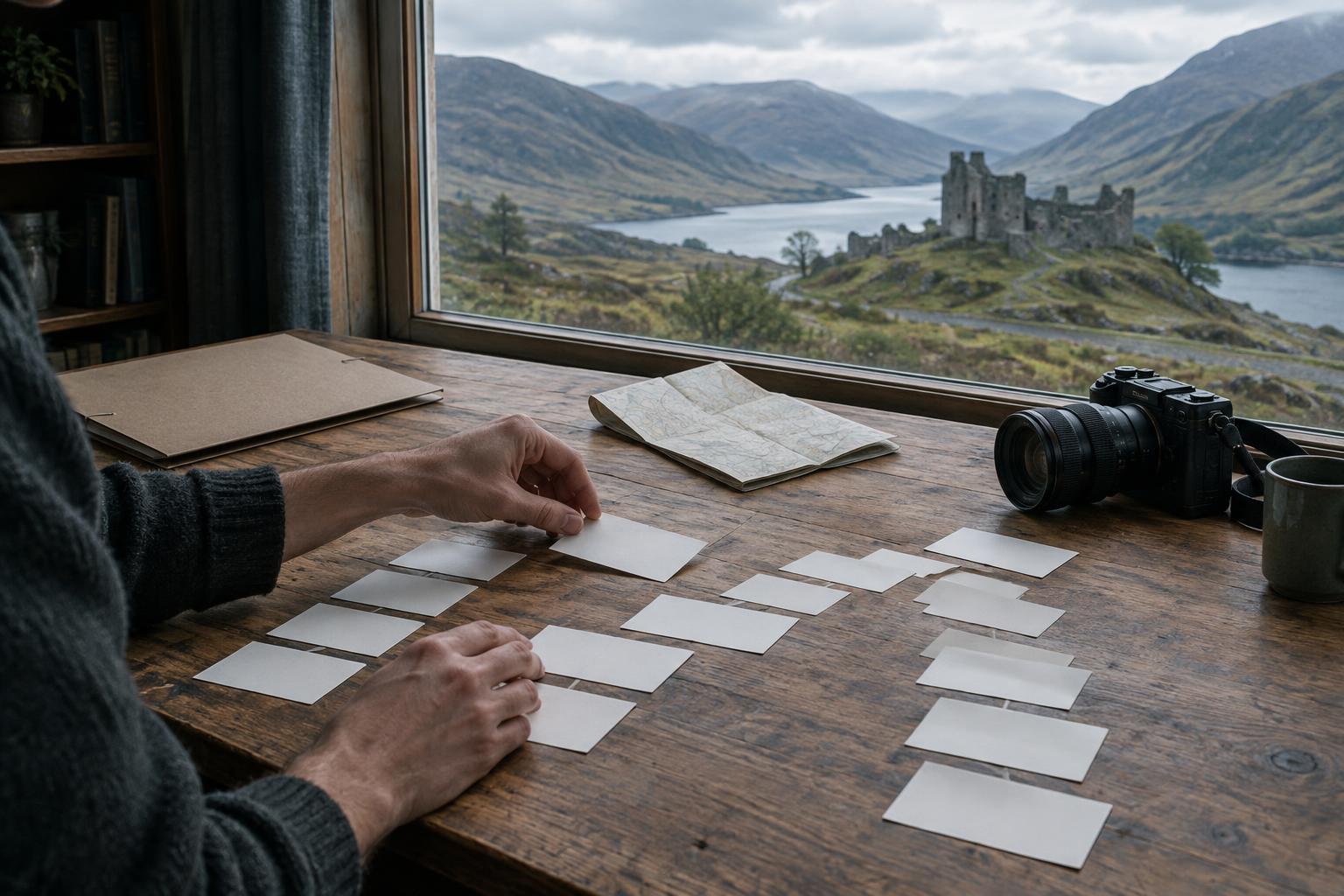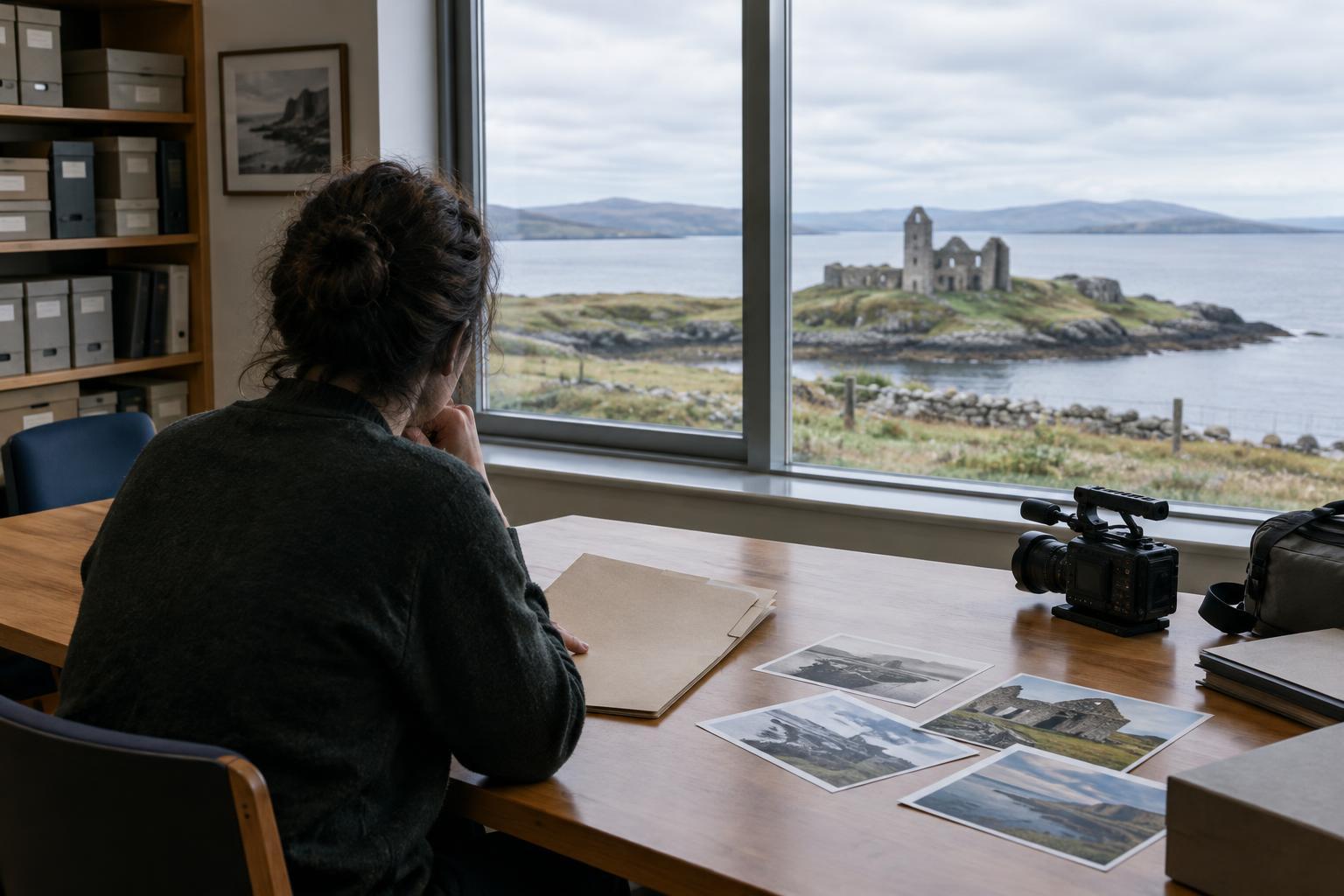
Start with a question the film can investigate
“What was life like in the Highlands?” is a starting interest, but it is too broad to guide a short documentary. A more useful question asks about a particular place, practice or change: “How did the closing of a local railway station alter the way people reached the nearest town?” It suggests people to speak with, records to seek out and locations to film. It also leaves room for an answer you did not expect.
Before writing a script, put the question in one sentence and test its boundaries. Where does the story take place? What period matters? Whose experience might differ? A question about a fishing harbour, for example, could involve crews, families, merchants and people who now use the waterfront differently. You do not need to cover every perspective equally, but you should know which ones your chosen scope leaves out.
Find the story in the search for an answer
A documentary needs more than a sequence of facts. Give viewers a path to follow: an initial assumption, evidence that complicates it and a clearer understanding by the end. The turning point need not be dramatic. It might be a map that shows a route changed earlier than expected, or an interview that reveals why a familiar local account means different things to different residents.
Keep a working distinction between what you know, what someone remembers and what you are trying to establish. A recollection can convey the texture of experience without proving that an event happened exactly as described. Likewise, a photograph may show a street at one moment without explaining how everyone used it. Let each source do the work it can genuinely do; the gaps between sources can become part of the story rather than problems to hide.
Choose images that carry meaning
Scottish landscapes and historic buildings can establish a sense of place, but attractive footage alone may not advance the argument. For each planned scene, ask what the viewer will learn by seeing it. A walk along a former industrial route might reveal the distance between workplaces and homes. A close view of a building’s altered entrance might make a change in use easier to grasp than narration would.
Make a visual plan alongside your evidence plan. List present-day locations, relevant objects, maps, photographs and documents, noting what each can and cannot establish. Check permissions and usage terms before building an edit around archival material. If an image is illustrative rather than a view of the specific event under discussion, identify it as such. Avoid treating a contemporary shot, reconstruction or generic archive image as direct proof of the past.
Sound can carry meaning too. The noise of a working ferry or the quiet around a disused platform may help viewers attend to a place as it is now. Neither soundscape should be presented as a recording of its historical counterpart. Used carefully, present-day sights and sounds can help a film ask what remains, what has changed and what cannot be recovered on camera.
Build a structure without forcing a conclusion
A workable outline has three movements. First, introduce the place and the question in concrete terms. Next, follow two or three strands of evidence, allowing them to confirm, challenge or refine the opening idea. Finally, return to the place or person introduced at the start and explain what the investigation has made clearer. This structure gives the film direction without requiring every uncertainty to disappear.
Write narration after you have identified the strongest material, not as a set of claims the footage must decorate. In the edit, give interviews and documents enough context to be understood. If two accounts conflict, explain what each is based on rather than cutting between them merely to create suspense. A modest, well-supported conclusion is more satisfying than a dramatic answer the evidence cannot sustain.
Make your choices visible to the viewer
Every documentary selects voices, places and moments. Be clear about those choices, especially when telling a story tied to community memory. Ask contributors how they would like to be identified, confirm details you can check and give sensitive recollections appropriate context. When a film cannot include a relevant viewpoint, a brief acknowledgement may be more honest than an implied claim to completeness.
Before finishing, watch the film with the original question in mind. Can viewers tell which images are archival and which were filmed now? Can they distinguish a documented fact from an interpretation? Does each scene help them understand why the question matters? A good Scottish history documentary does not simply illustrate an answer. It invites viewers to follow the evidence, see a place with greater care and understand the limits of what a film can know.