Begin with the harbour as a working place
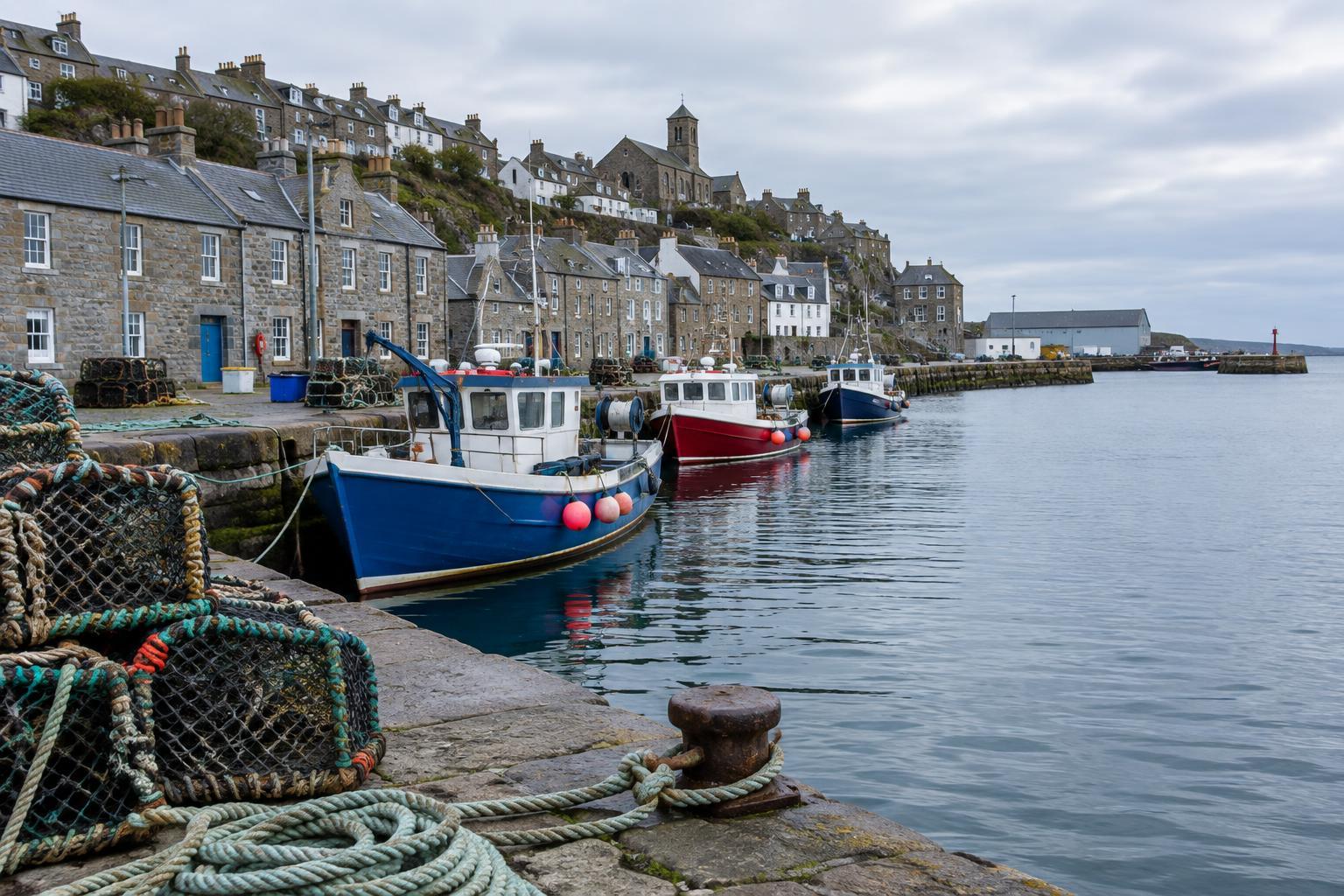
A harbour can look like a ready-made historical scene: stone buildings, boats against the quay and open water beyond. In Shetland, it is more useful to see the waterfront as a place that has changed while continuing to serve people. Fishing, trade, passenger journeys and the movement of supplies have all shaped island harbours. The vessels and facilities visible today may serve different purposes from those of earlier generations, but they still help explain why access to the sea matters.
Lerwick makes a practical starting point. Walk the public waterfront and notice how streets, piers and buildings meet the shore. Which spaces seem designed for loading, shelter or movement between land and boat? Treat those observations as questions rather than conclusions: the appearance of a quay alone cannot tell you when it was built or how it was used. Lerwick is also a working port, so stay in public areas and follow local signs rather than treating operational ground as a heritage trail.
Use museums to add context to what you see
The Shetland Museum and Archives in Lerwick offers a way to place waterfront impressions within a broader island history. Objects, photographs and records can help connect boats and harbours to the people who built, used and maintained them. Look for details that a harbour walk cannot reveal on its own: tools, materials, working routines and the links between life at sea and life ashore. A museum visit is especially valuable before heading to smaller settlements, where little interpretation may be visible on site.
Compare displays with the view outside, but be careful about making one image stand for all of Shetland. A photograph captures a particular place and moment; an exhibited boat represents particular skills and uses. Read labels closely and note what is known, what is inferred and whose experiences are represented. If you plan to photograph collections or consult archival material, check the museum’s current access and photography guidance first.
Look beyond Lerwick for local perspectives
A journey to Scalloway gives the itinerary a different centre of gravity. Its harbour setting and local museum offer another perspective on how communities relate to the sea. Rather than trying to collect every maritime landmark, spend time comparing the shape and setting of each waterfront. Where are boats sheltered? How close are homes and other buildings to the shore? Such questions make regional differences visible without assuming that every harbour followed the same path.
Further north, Unst Boat Haven at Haroldswick provides a focused opportunity to think about traditional boats and the knowledge involved in making and using them. Visiting smaller museums can reveal how local volunteers and communities care for material that might otherwise be overlooked. Opening times and transport connections may be limited or seasonal, so check them before setting out. Allowing time for a slower visit is often more rewarding than planning a route around distant stops.
Read the gaps as well as the surviving objects
Maritime heritage is not confined to vessels on display. A boat depends on people who prepare gear, repair equipment, process catches, keep accounts and maintain households while others are away. As you move between a harbour and a museum, look for how these less visible kinds of work enter the story. A caption, a household object or a remembered place name may open up a richer account than a dramatic view of the sea alone.
There are limits to what any surviving collection can show. Boats may be altered or lost, buildings repurposed, and photographs preserved unevenly. When an exhibit leaves a question unanswered, let it remain a question. That habit makes a visit more interesting: instead of searching for a single definitive image of Shetland’s maritime past, you can notice how evidence from objects, archives and the landscape fits together—and where it does not.
Travel with attention to the present
A heritage trip works best when it leaves room for Shetland as it is now. Ferries, fishing activity and harbour access are part of present-day life, not a performance for visitors. Keep clear of working equipment, ask permission before photographing people closely and avoid blocking quays or entrances. Weather and transport can affect plans, so build flexibility into any route between islands and check current visitor information directly before travelling.
If you make photographs or a short film, pair attractive harbour views with accurate captions. Record where an image was taken and distinguish a contemporary working boat from a historic vessel or replica. Museums can help provide context, but they should not be used to imply that every object came from the harbour outside their doors. The strongest travel story follows a simple thread: observe a place, test your impressions against its collections, and leave space for the people who keep its maritime connections alive.