Start with a gentle inventory
Home movies may arrive in a biscuit tin, a carrier bag or a carefully labelled box. Resist the urge to screen everything at once. Begin by counting the reels, cassettes and loose items, then give each one a simple number. Photograph containers, labels and any notes before separating them. A name scrawled on a reel box, even if it seems vague, may be the only clue to who filmed a scene or where it was taken.
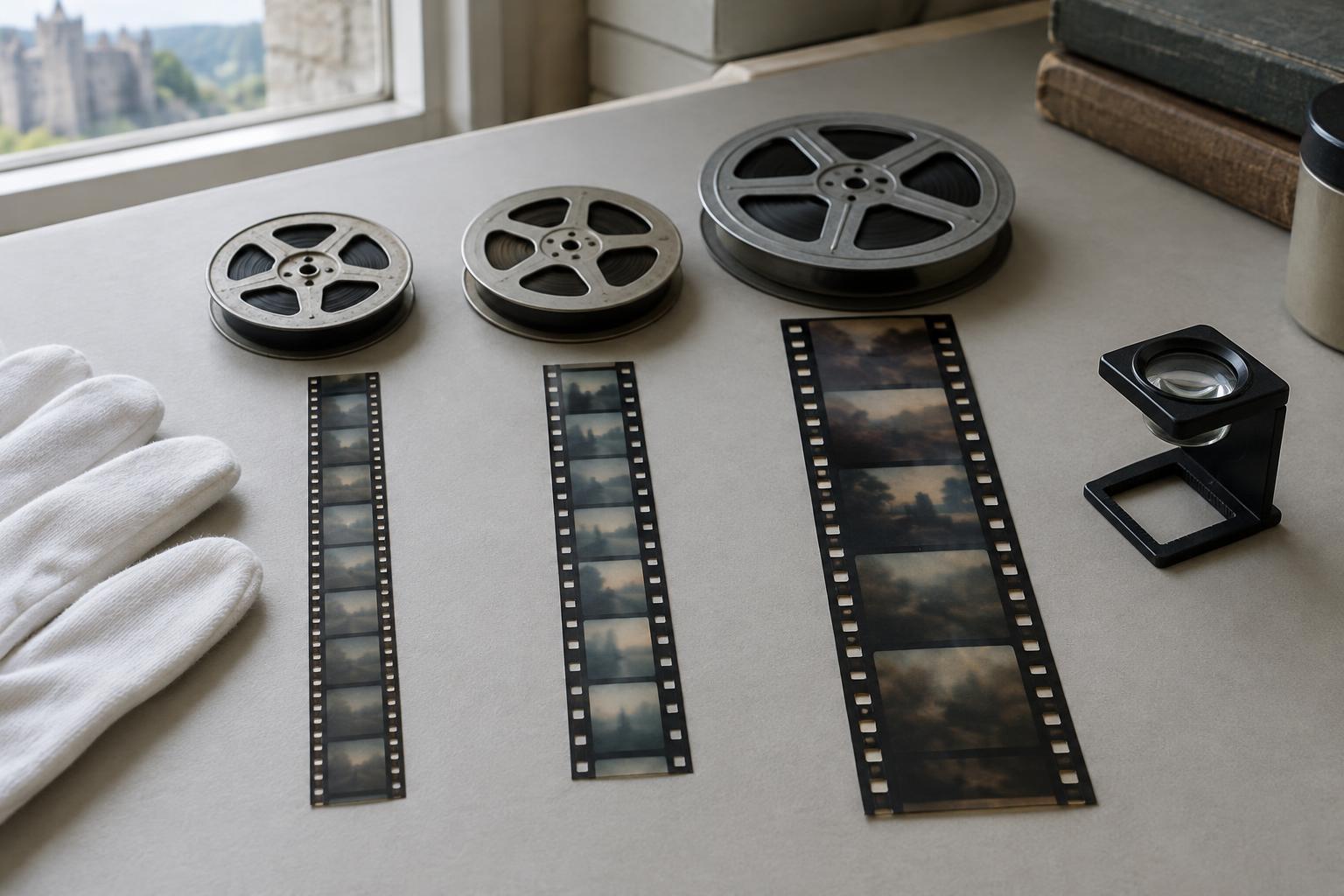
Record what you can see without guessing. Note the format if it is marked, the approximate size of a film reel, and whether a cassette has a label. If you do not know whether a film shows a holiday in Ayrshire or a visit to relatives elsewhere, write down both possibilities rather than turning a hunch into a fact. The same care matters for dates: an approximate decade is more useful than a precise but unsupported year. Keep your inventory with the collection so a transfer specialist can match each digital file to its original.
Handle the originals as little as possible
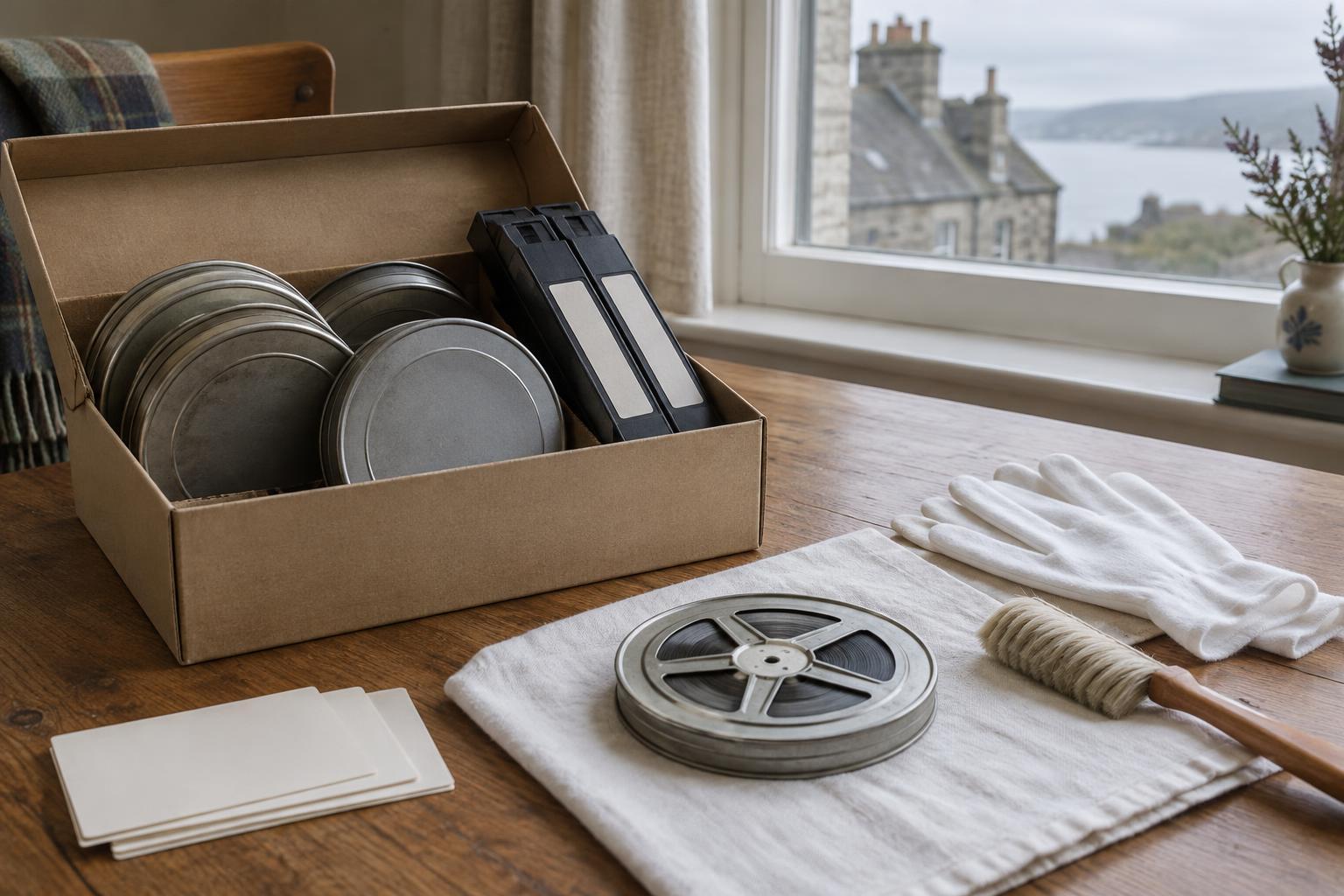
Clean, dry hands and a clear work surface are a good starting point. Hold film reels by their edges or hub, and avoid touching the film surface. Do not pull out lengths of film to inspect them or attempt to repair broken joins with household tape. Keep loose pieces together with their reel, but do not force them back into place. For videotapes, leave the cassette closed and protect its openings from dust.
An unfamiliar projector or player is not a harmless test. A poorly maintained machine can snag fragile film or damage a tape. If you notice a strong vinegar-like smell from film, visible mould, sticky surfaces, warping or brittle material, stop handling that item and tell the transfer provider what you have found. Keep visibly affected items separate from the rest of the collection while you seek advice. A professional can assess whether special cleaning or equipment is needed before playback.
Choose a stable place while you wait
Before transfer, aim for a clean, dark and reasonably stable storage space. Avoid lofts, sheds, garages, damp cupboards and spots beside radiators or windows, where conditions can swing between cold, heat and moisture. A dry interior room is generally a better temporary choice. Store reels and cassettes in suitable cases or boxes that protect them from dust without crushing them; keep heavy objects off the collection.
If the movies are in old paper sleeves or boxes, do not discard that packaging simply because it looks worn. It may carry useful handwriting or show how the collection was organised. You can photograph it and keep it alongside the item. If a box is damp or falling apart, ask a preservation specialist about safe rehousing rather than sealing the material in a plastic bag. Avoid trying to clean film with water or household products.
Preserve the story around the footage
A digital file may show a street, a procession or a family gathering without explaining its significance. Ask relatives what they remember, if they are willing, and record their recollections separately from what the images themselves establish. Who owned the camera? Were the reels arranged in viewing order? Do particular buildings or landmarks help identify a location? Such details can make footage of a Scottish town or rural community far easier to understand later.
Keep captions modest and specific. “Possibly a school outing near Inverness” leaves room for correction; “Inverness school outing, 1962” implies evidence you may not have. Note who supplied each identification and whether they recognised someone directly or heard the story from another person. If you plan to share transferred footage publicly, consider whether living people appear in personal or sensitive scenes. Preservation and publication are different decisions.
Prepare a clear handover for transfer
When contacting a transfer provider, share your inventory and describe any signs of damage before sending or delivering the originals. Ask which formats they can assess, how they handle fragile or mould-affected material, and whether they return the reels and cassettes. Explain your priorities: perhaps the complete contents matter most, or perhaps a few labelled reels need attention first. Avoid rearranging the collection just to make it look tidy; its existing order may tell part of the story.
Ask how the finished files will be identified and delivered, and consider keeping a high-quality copy for preservation as well as smaller copies for easy viewing. Once the transfer is complete, check that files open and correspond to your inventory. Make more than one copy and keep them in different places. Digital transfer makes footage easier to watch and share, but it does not make the originals worthless. Retain them, with their labels and notes, in stable storage where future viewers can revisit both the images and the evidence surrounding them.