Begin with a connection you can define
“Scotland and Atlantic slavery” names a broad history, not a single relationship. A Scottish-born person might have owned a plantation overseas, supplied goods to a colonial market or inherited wealth connected to enslaved labour. A business based in Scotland might have traded with slaveholding colonies without owning enslaved people. These connections matter, but they are not interchangeable. Before searching, turn a broad question into a narrower one: What was this person’s role? Where did a particular investment come from? How did an institution acquire its property?
Be equally precise about place. A person born in Scotland could conduct business abroad; a firm operating in a Scottish port could have partners elsewhere. Calling either case simply “Scotland’s involvement” may be useful as an introduction, but a fuller account should identify who acted, where and when. That precision makes a difficult history clearer, not smaller.
Follow the records, then check their limits
Start with the claim you want to test and look for records that could support or challenge it. Wills, estate inventories, correspondence, business accounts, shipping papers, property records and institutional minutes may reveal different parts of a connection. Records concerning slaveholder compensation can help identify people who claimed ownership after emancipation in British colonies. They document claims and payments to slaveholders, not payments to the people who had been enslaved. No single type of record tells the whole story.
Follow people and businesses across borders rather than stopping at a Scottish address. A will might identify property overseas, while correspondence might clarify how it was managed. Conversely, the presence of colonial goods in a household inventory does not, by itself, establish that the household owned enslaved people or that those particular goods came from enslaved labour. Ask what each document records directly, what you infer from it and what other explanation might fit.
Keep names, dates and identities in view
Common names can make a tempting connection unreliable. Before treating two records as references to one person, compare dates, occupations, relatives, addresses and business associates. Watch for changes in spelling and for records created long after the events they describe. If a match remains plausible but unconfirmed, say so. A family connection is not automatically a business connection, and shared membership in an institution does not prove that its other members knew about or benefited from an individual’s activities.
The records are uneven in another way: they often say much more about owners and merchants than about enslaved people. A ledger may reduce a person to a first name, a price or a line of labour. Do not mistake that narrow view for the full extent of a life. Where an individual can be identified, preserve the name and context the evidence permits; where they cannot, explain the gap rather than filling it with an imagined biography.
Write claims at the strength the evidence allows
A useful test is to separate three levels of statement. A document may establish that a named person owned a specified property. Several records together may support an interpretation that profits from that property helped fund a later purchase in Scotland. Without accounts showing the transfer, however, the stronger claim that the purchase was paid for by those profits may remain unproven. Phrases such as “the records show,” “this suggests” and “the connection is not yet clear” help readers see the difference.
The same care applies to buildings, street names and collections. A building’s association with a slaveholder is historically significant, but its construction date and funding may require separate evidence. A surname shared by a Scottish family and people in an overseas record is a lead to investigate, not proof of a relationship. Avoid turning an absence of records into proof that no connection existed; archives preserve some activities far better than others.
Make the history visible without inventing certainty
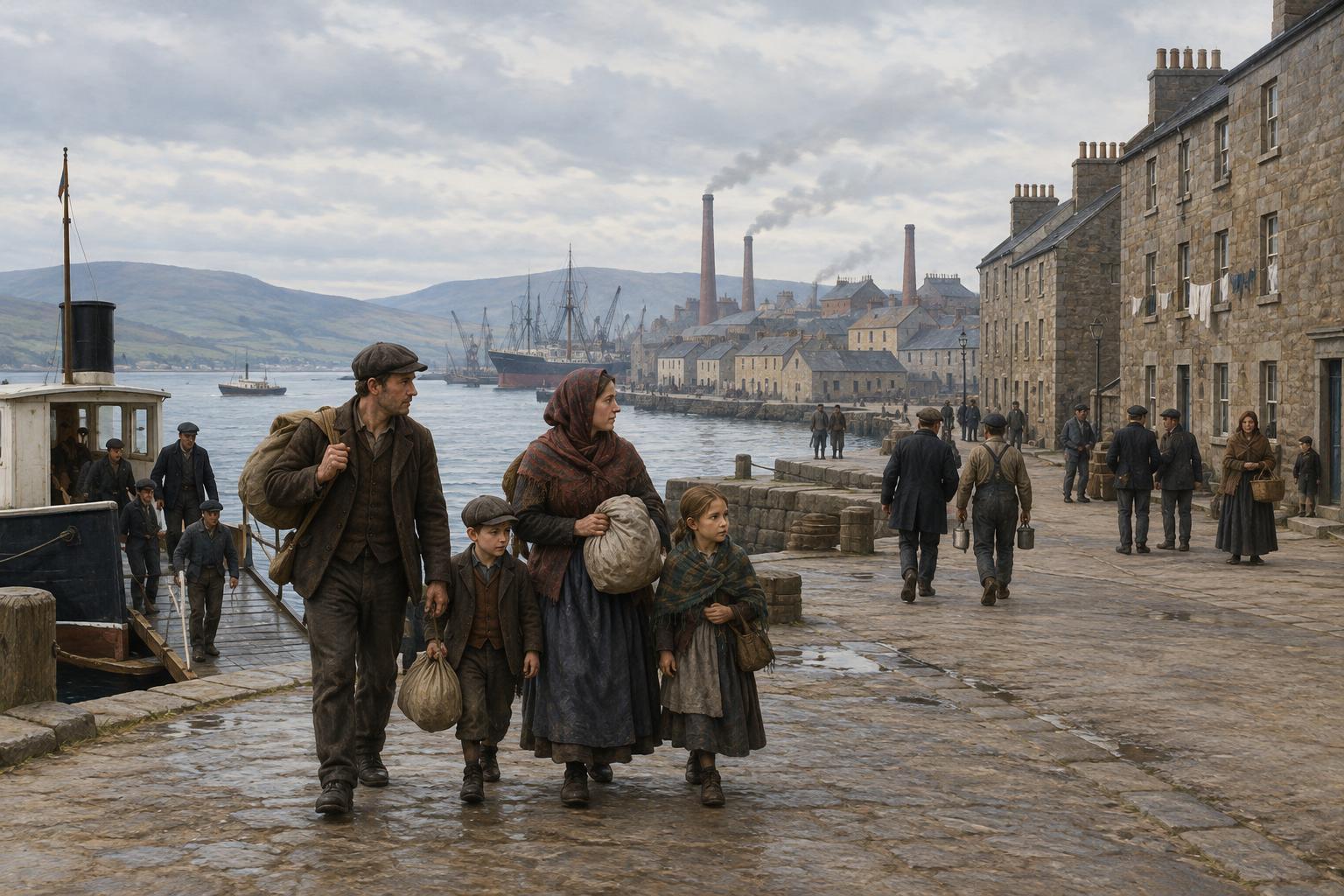
Film and visual storytelling can help viewers grasp distances that written records conceal: between a Scottish house and an overseas estate, or between a merchant’s account and the people whose labour it recorded. Show documents as documents, with enough context to explain who created them and why. If you use a present-day landscape, make clear that it shows the place now, not the conditions people experienced in the past. A reconstruction should be labelled as one, never presented as archival footage.
End by telling readers what remains open. A careful account can establish a meaningful connection while acknowledging that a transaction, an identity or a route by which wealth travelled is unresolved. That is not a failure of the story. It gives the people affected by Atlantic slavery, and the surviving evidence about them, more respect than a tidy claim the records cannot bear.