Start with the document, not the equipment
A digital image can make a letter, map or register easier to read, share and study. The best way to create that image depends on the original’s size, condition and construction. A loose, sturdy page presents a different problem from a tightly bound volume or a creased poster. Before choosing a scanner or camera, ask whether the document can be moved safely, whether it will lie reasonably flat and which details the copy needs to show.
For a Scottish local-history project, a transcription of a council minute may need crisp, legible text. A photograph used to discuss how a family album was assembled may also need to show page edges, mounting corners and neighbouring images. Neither method is automatically more faithful: a good copy is one that captures the evidence needed without placing the original under unnecessary strain.
When scanning works best
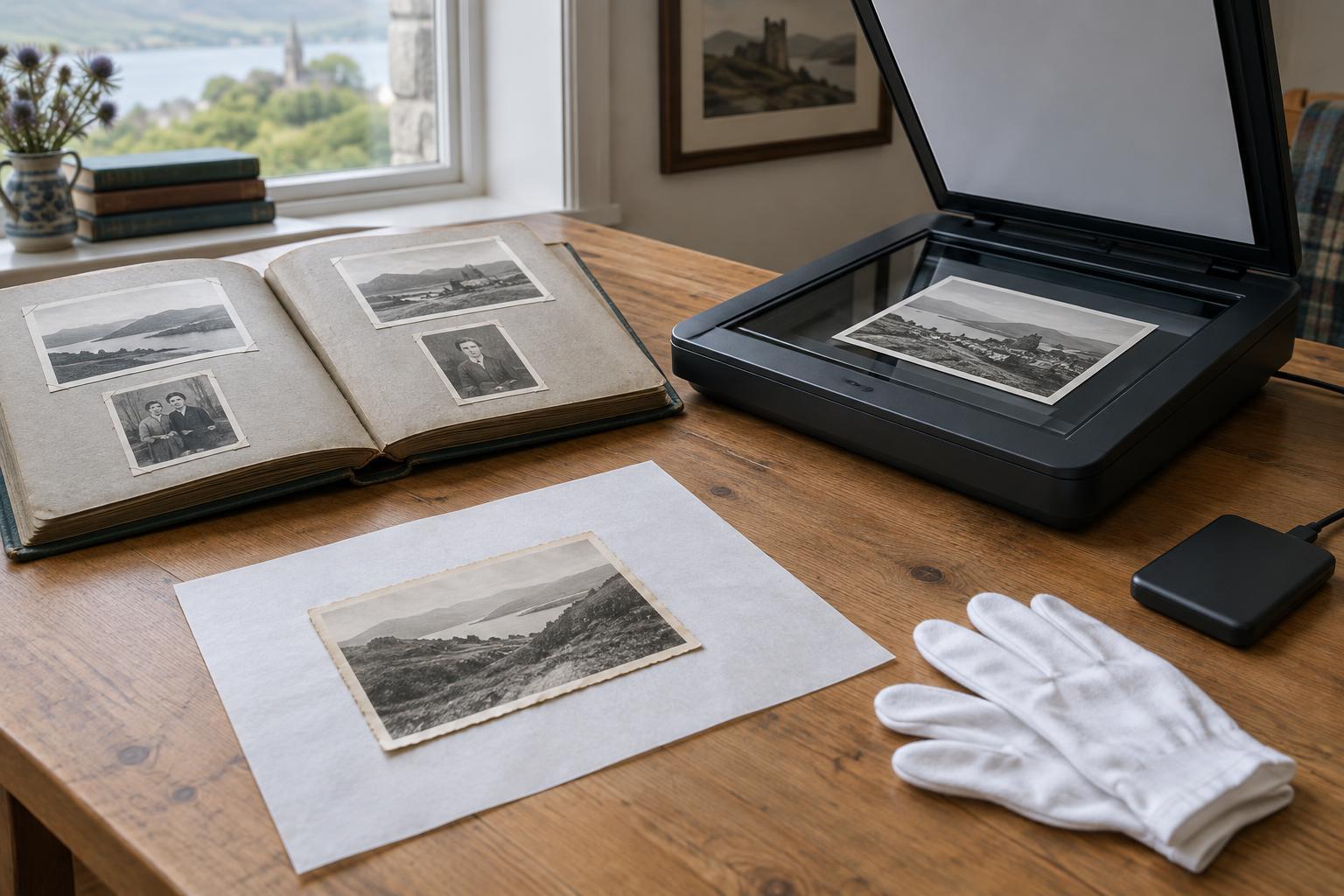
A flatbed scanner is well suited to loose, reasonably flat documents that fit on its glass. It holds the page in a fixed position and provides even illumination, making it straightforward to capture consistent copies of correspondence, leaflets and small photographs. A useful scan includes the whole item, including margins or handwritten notes near an edge. Check a test image at full size before processing a stack; faint pencil, embossed marks and pale paper can be easy to miss.
Resolution should serve the material and its intended use. Around 300 pixels per inch is often a practical starting point for readable text, while small handwriting or fine photographic detail may benefit from a higher setting. More pixels cannot restore information absent from the original. Keep an unaltered master file if possible, then make separate copies for cropping, contrast adjustments or publication.
Avoid treating every scanner as interchangeable. An automatic document feeder can catch, bend or misfeed older papers, and a flatbed lid should not be pressed down to flatten a brittle sheet. If a page is stuck, tearing or unusually fragile, stop rather than trying to make it scan.
When a camera is the better choice
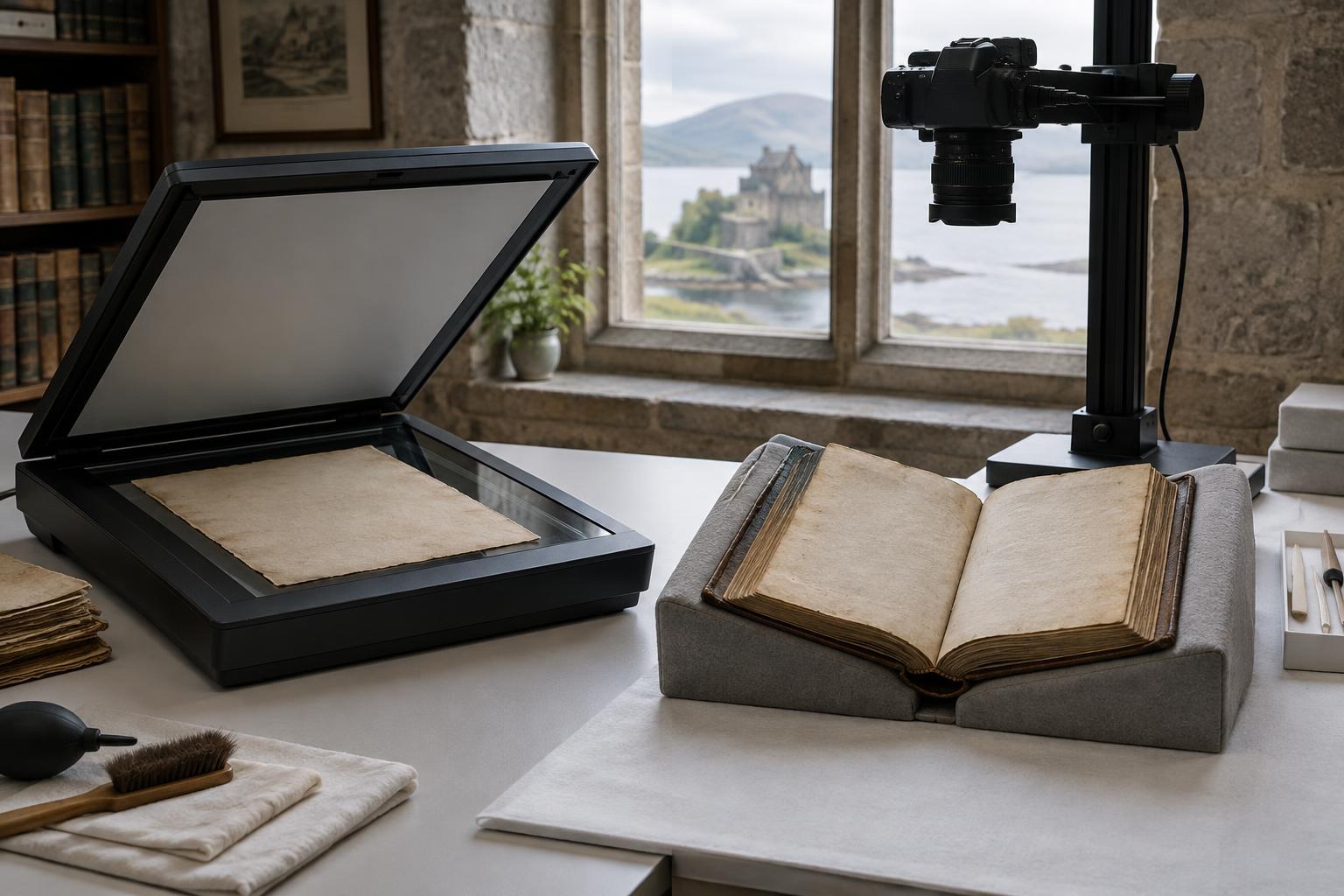
Photography is often preferable for bound volumes, oversized maps, framed items or material that should not be pressed against glass. It can capture a book while the covers remain partly open and can show features that a tightly cropped scan would hide, such as stitching, folds and annotations on a mount. It is also useful where a collection permits photography but does not provide scanning facilities.
Place the camera directly above a flat document, with its sensor as parallel to the page as practical. Support the camera so it stays still, and use even light from both sides where possible. Watch for shadows, reflections, curved pages and soft focus at the edges. For a bound item, photograph the cover and relevant page spreads as well as close views of important text; these wider images help explain where a detail belongs.
A camera offers flexibility, but consistency takes planning. Keep the framing and lighting similar across a series, and inspect images before putting the material away. If an archive has handling rules or restrictions on lighting, follow them rather than adjusting a document to suit the shot.
Protect the original and preserve its context
Whether scanning or photographing, prepare a clean, uncluttered workspace and handle items in the order set by their owner or repository. Remove food and drinks, and make sure surfaces and hands are clean and dry. Do not detach fastenings, unfold resistant creases or force a binding open simply to obtain a flatter image. Where handling is difficult, ask the collection’s staff or a conservator for guidance.
Record enough information to reconnect each file to its source: the collection or owner, an existing reference number, the item’s title or a brief description, and the page or side shown. Photographing an identifying label or a full page before close-ups can help keep a sequence intelligible, provided the label does not cover the document. Note when an image is incomplete or when an adjustment has made faint writing easier to see.
Choose for the use you have in mind
If the priority is a repeatable, detailed copy of a sound loose sheet, start with a flatbed scan. If the item is bound, large, awkwardly shaped or too vulnerable to flatten, start with a carefully supported photograph. Sometimes both are useful: a full-view photograph can document a document’s physical setting, while a scan of a separate loose insert can provide a clearer reading copy.
Finally, distinguish access from permission. Making a digital copy does not by itself establish who may publish it or how it should be credited. Check the owner’s or archive’s terms before using an image in a film, exhibition or article. A technically sharp image is most valuable when it is also safely made, accurately identified and presented with its context intact.