Start with a clear, calm workspace
An old photograph or handwritten letter can feel sturdy until a corner catches or a fold gives way. Before opening a family album or sorting a box of local records, clear a table large enough to support each item fully. Keep food, drinks, pens and cleaning products away. A clean, dry surface covered with plain, unprinted paper can make small items easier to see and lift. Set aside a separate space for bags, coats and anything that might brush against the collection.
Work with one item or small group at a time, and keep its original order where possible. The sequence of letters in an envelope or prints in an album may help explain their history. Make a note of that arrangement before changing it. If an item is stuck to another, brittle, mouldy, damp or shedding material, stop rather than trying to separate or clean it. A professional conservator or collecting institution can advise on safer next steps.
Handle edges, but support the whole item
Wash and thoroughly dry your hands before handling most paper documents. Clean hands usually provide better control than loose gloves, which can catch on tears. Hold a document by sound edges when moving it, but do not let it hang unsupported. Slip a clean, rigid support beneath a fragile sheet and move the support instead. Avoid pressing down on folds or repeatedly opening a document that resists movement.
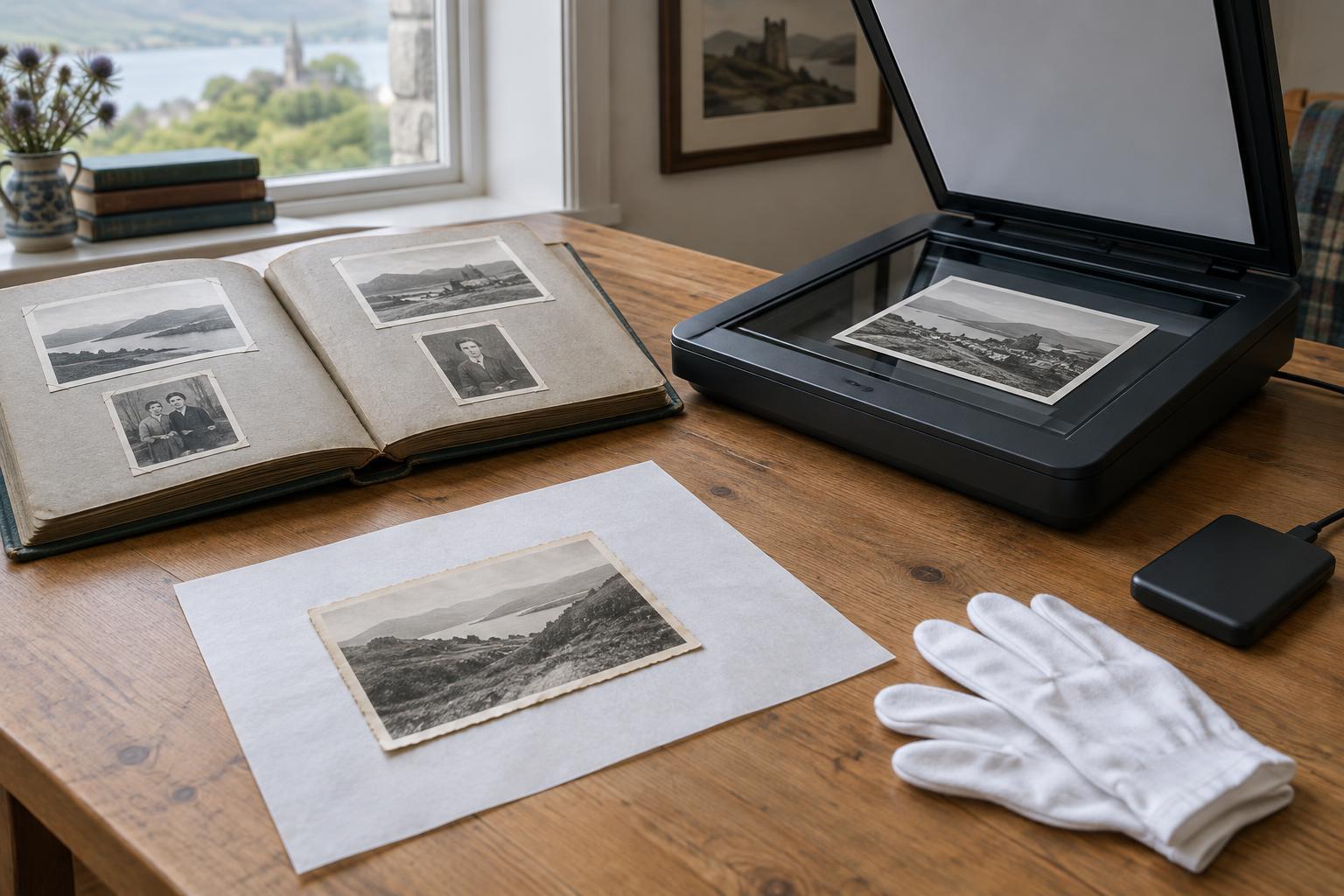
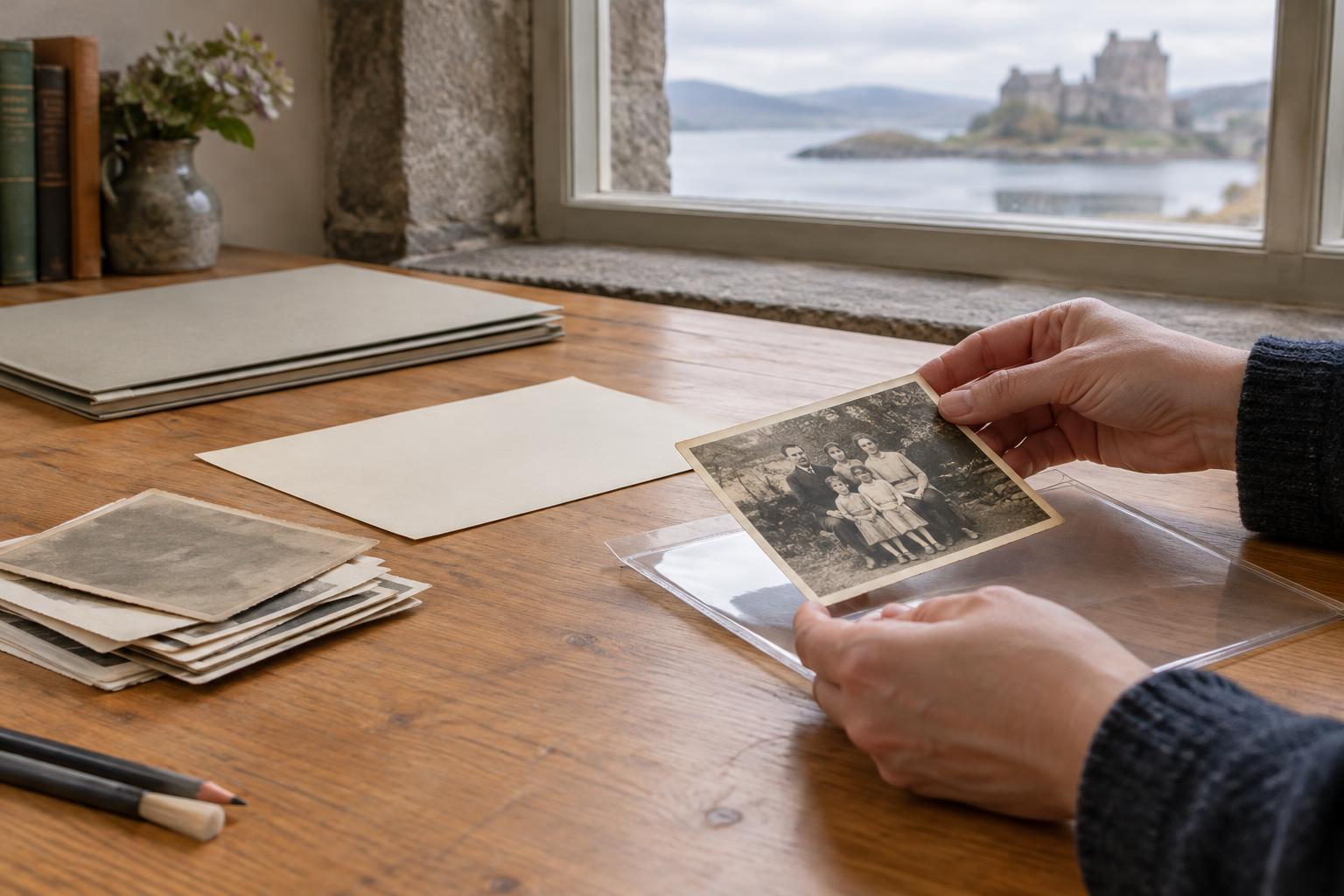
Photographs need particular care because fingerprints can mark their surfaces. Handle prints by their edges and avoid touching the image area. Clean, well-fitting nitrile gloves may be helpful for some photographic materials, but gloves do not replace careful support. Album pages, mounted prints and large documents can be heavier than they look; lift them with both hands or on a board. Never pull a photograph free from an album page if it appears firmly attached.
Read and record without adding marks
A name on the back of a print, a postmark or the order of pages may be as valuable as the image or text on the front. Look at both sides when it is safe to do so, and record any existing captions without assuming they are correct. For a community history project, note what is known, what has been passed down as a family account and what remains unidentified. That distinction helps later viewers understand the evidence.
Do not use adhesive notes, tape, staples or paper clips to organise originals. They can leave residue, indentations or rust. Instead, put identifying information on an enclosure or in a separate catalogue, using a simple reference number to connect the record to the item. If you need to photograph a document, lay it flat only as far as it naturally allows. Move the camera, not the fragile object, and avoid forcing a book or folded sheet open to capture every word.
Choose protective storage and steady conditions
For long-term storage, use enclosures intended for archival paper or photographs and sized so items do not have to be folded or squeezed inside. Separate loose photographs from documents when their formats or conditions make them likely to rub against one another. Store flat items flat where practical, with boxes supporting their contents rather than leaving sheets to slump. Keep any labels on the enclosure, not on the original.
A cool, dry, reasonably stable place is generally preferable to a damp cellar, hot attic or sunny windowsill. Light can fade images and inks, so display copies when an original would otherwise remain exposed. Check stored material occasionally for water leaks, pests or changes in condition. Storage improvements need not happen all at once: a clean box in a suitable room and a clear record of what it holds are useful first steps.
Make access copies without risking the original
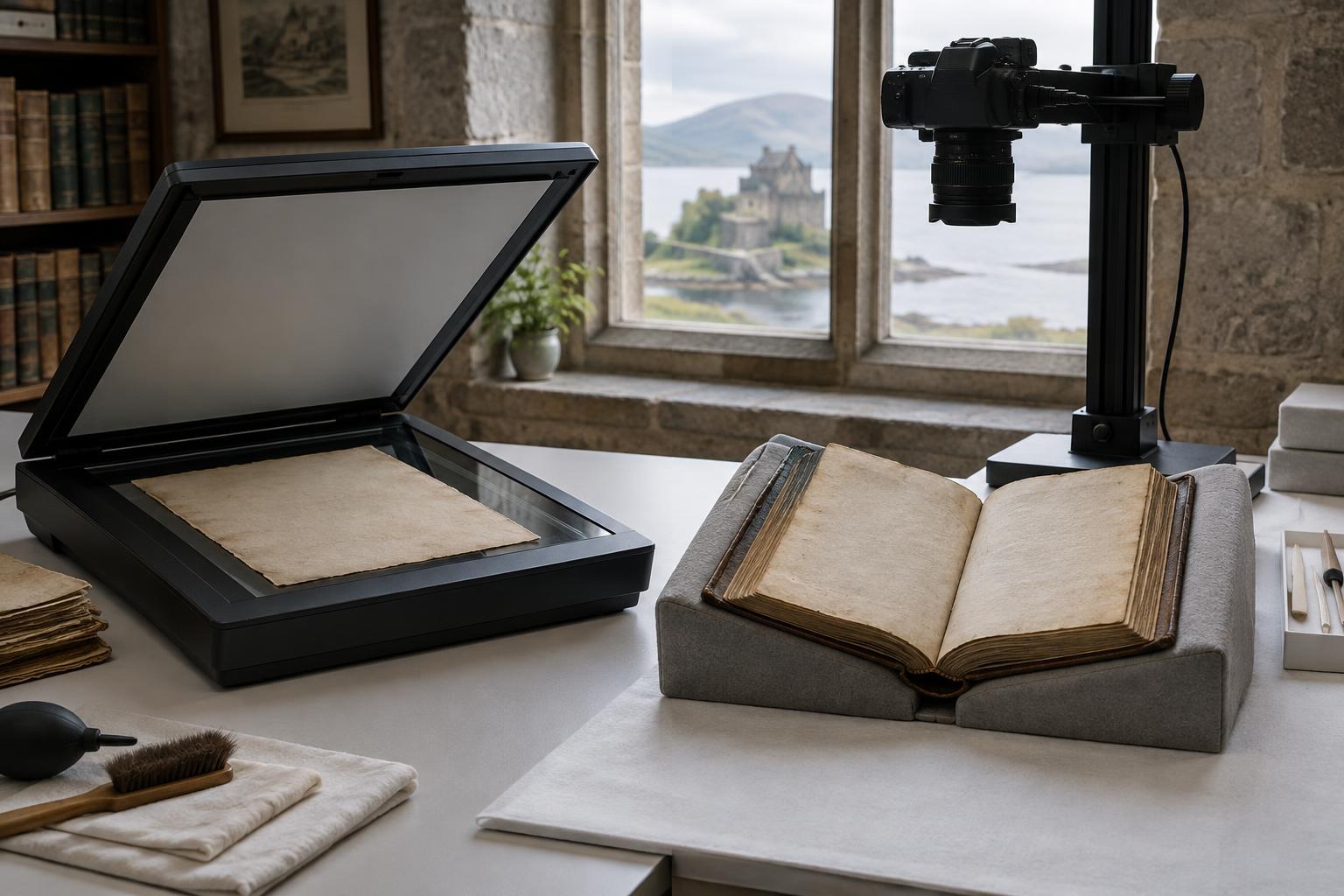
Digital photographs can reduce repeated handling and make a collection easier to discuss with relatives or local heritage groups. Capture the whole item first, including its edges, then take closer views of details and any writing on the reverse. Keep filenames or accompanying notes linked to the physical item. A digital copy is useful for access, but it does not replace the original, whose paper, surface and construction may hold information a camera misses.
If material is severely damaged or historically significant, limit handling while seeking appropriate guidance. Preservation is not about making every object look new. It is about avoiding preventable harm while keeping the evidence available for future readers, filmmakers and communities. A steady workspace, gentle support and good notes can make a meaningful difference even when a collection is small.