What makes a market town?
A traditional market town was a place where people from a wider area came to buy, sell and meet. Farmers and craftspeople might bring goods in; residents could find supplies and services that were less readily available in smaller settlements. In Scotland, many such towns were also burghs, communities with particular civic and trading rights. But the terms are not interchangeable: a town’s legal status, the activities held there and its importance to the surrounding district could change over time.
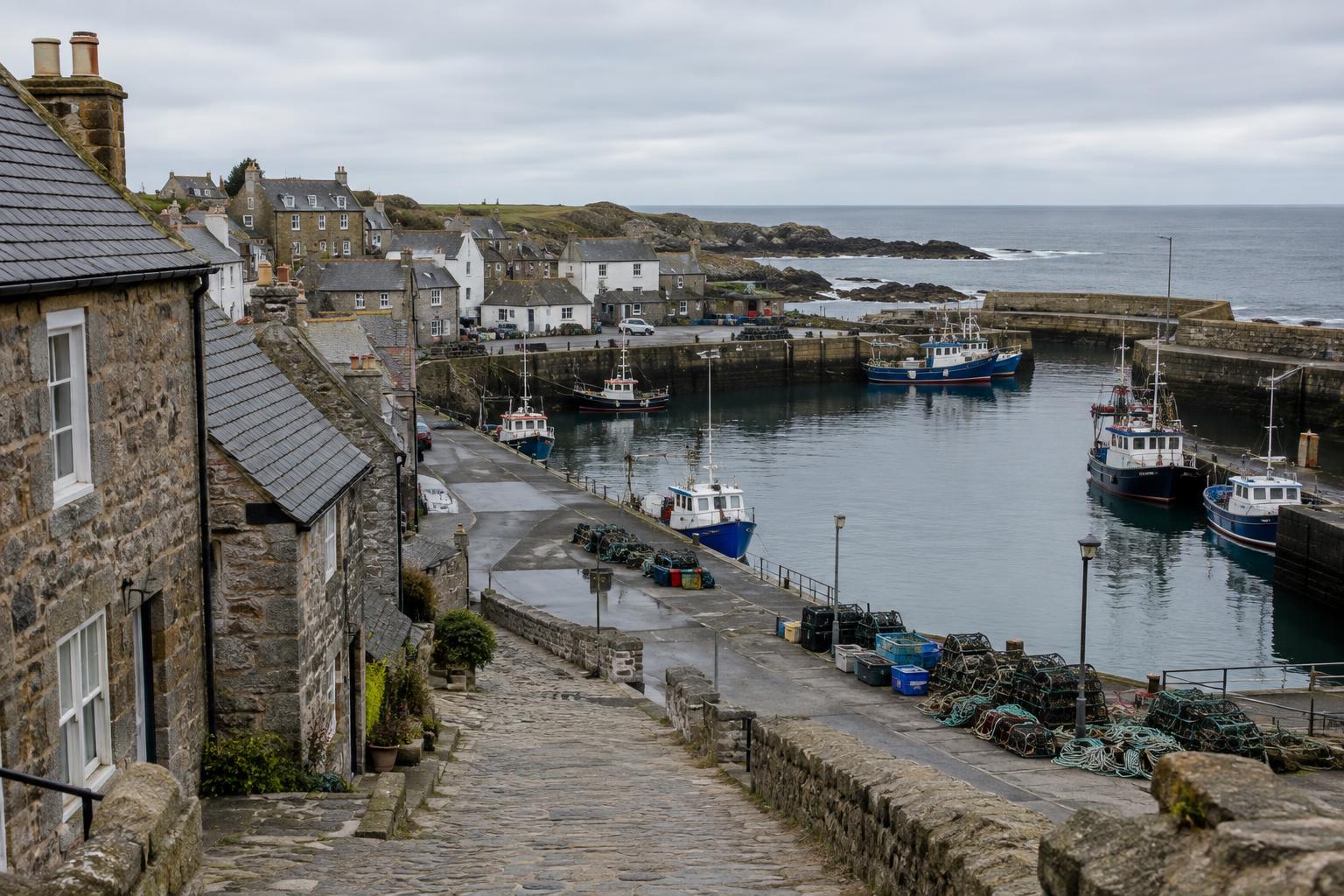
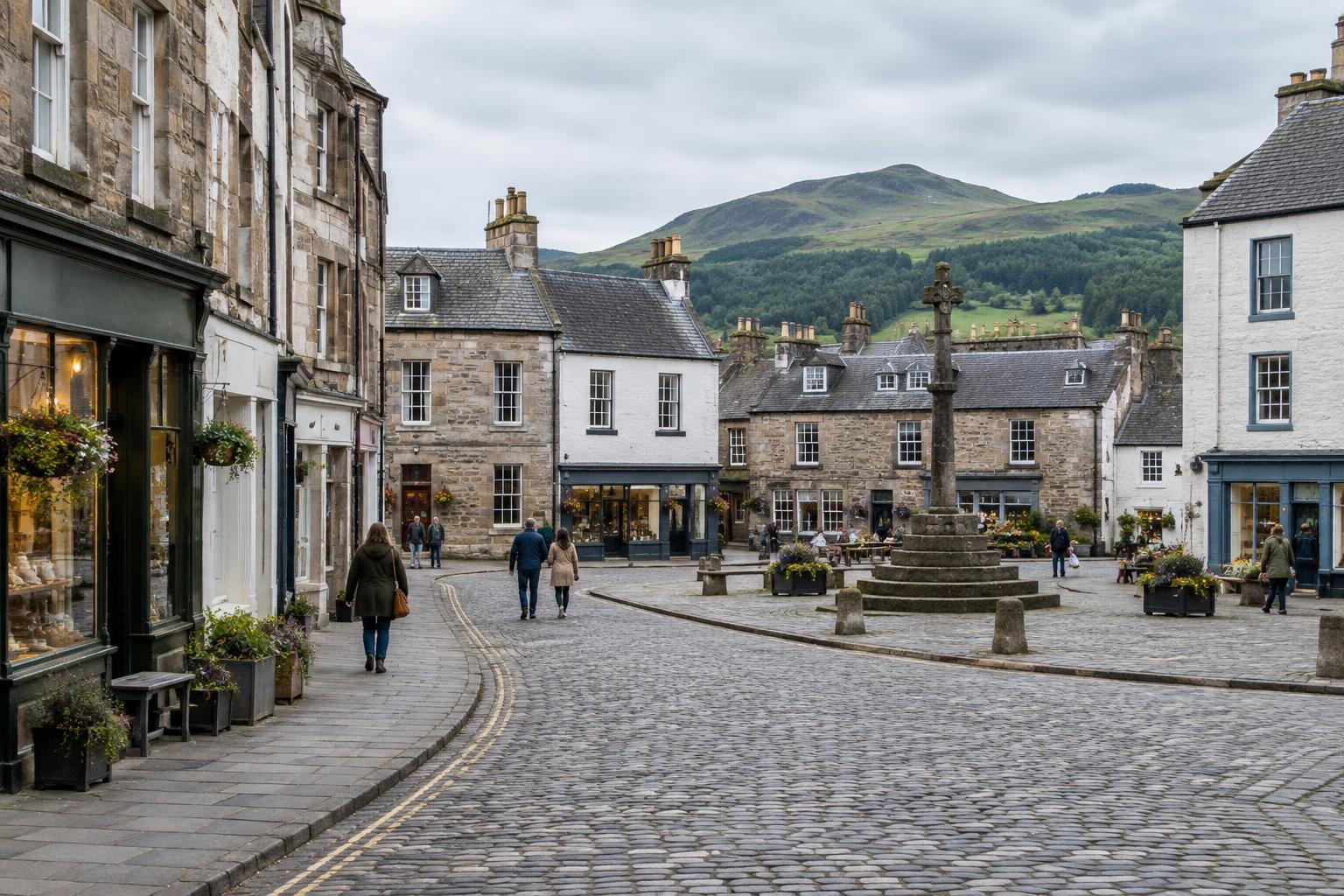
There is no single Scottish market-town layout. Some centres developed around a broad street or open space suited to stalls and gatherings. Others grew beside a bridge, harbour, church or crossroads. Geography mattered: a town serving farms inland faced different demands from one linked to fishing or coastal trade. Rather than looking for a perfect historic model, it is more useful to ask what brought people together in a particular place and how they moved through it.
The town centre as a record of everyday life
A walk through a town centre can reveal the practical side of market heritage. A wide main street may have provided room for trading and traffic, while narrow lanes connected it to yards, workshops or homes. Older buildings can show how public commerce and private life shared limited space: a shopfront at street level might have rooms above or working areas behind it. Later alterations are part of the story too. A changed doorway or enlarged window may suggest a building adapted to new uses, though its precise history needs evidence.
Civic buildings, churches, inns and meeting places can help explain why a town drew visitors even when no market was being held. So can features that are easier to overlook, such as loading access, routes to nearby fields or the relationship between a central street and a river crossing. A market town was never just its most picturesque square. Its working edges were essential to the exchange of goods, news and skills.
Look beyond trade to understand the community
Markets connected a town to its surrounding countryside, but they also shaped social life. A visit might combine selling produce with arranging work, meeting relatives, attending worship or hearing local news. Seasonal rhythms could affect which goods appeared and how busy the streets became. Those patterns varied by region and period, so a story about one town should not be treated as a template for another.
The familiar heritage image of a bustling high street can also leave people out. The labour that supported trade took place in homes, workshops, stores and on roads leading into town. Some traders had more secure premises or influence than others; many people participated through work that left little visible trace. Asking who supplied, carried, prepared and purchased goods gives a fuller account than focusing only on prominent buildings or historic officeholders.
How to read the evidence without flattening the past
Buildings offer clues, not complete answers. A street name may point toward an older activity, but names can survive after that activity ends or acquire new meanings. Historic maps can show changes to street patterns and plots, while photographs may capture shop signs, transport and public gatherings. Local records and museum collections can add context, provided their dates and descriptions are checked. Comparing several kinds of evidence helps distinguish a plausible interpretation from a fact that can be firmly established.
Film and visual storytelling are particularly good at showing how spaces connect: a route into town, the turn onto a main street, or the distance between a former trading area and a place of worship. Yet present-day footage cannot stand in for a past market day. A thoughtful documentary can pair contemporary scenes with clearly identified archival images, maps or objects, and explain what each does—and does not—show. When a building’s former use is uncertain, saying so makes the story stronger.
Visiting a market town with fresh eyes
To explore a town, begin with its approaches rather than only its landmark buildings. Notice where roads converge, whether the centre opens into a wider space, and how side streets lead away from it. Look for differences in plot width, building height and street-level access. These observations will not date a town on their own, but they can generate useful questions to take to a local museum, heritage trail or collection of historic maps.
Market-town heritage is not a scene frozen at its busiest moment. Shops close, buildings gain new purposes and routes shift as communities respond to changing needs. Appreciating that continuity means valuing both surviving features and careful adaptation. The most rewarding question is not simply, “What did this town used to look like?” It is, “How have people used this place to connect with one another—and what traces of those connections remain?”