What provenance means for a photograph
Provenance is the record of where an item came from and how it passed between people or collections. For a photograph, that may include who made it, when and where it was made, who kept it, and how it reached an archive, family album or website. It also includes the history of copies: the print in your hands may have been made long after the image was taken.
This matters because a photograph and its caption do not necessarily share the same history. A handwritten place name might have been added decades later; a digital file may have travelled through several collections before appearing online. Tracing provenance helps you distinguish evidence attached to the object from a later interpretation. It rarely produces a perfect chain of ownership, but it can show which parts of an identification are well supported and which remain open.
Start with the item you have
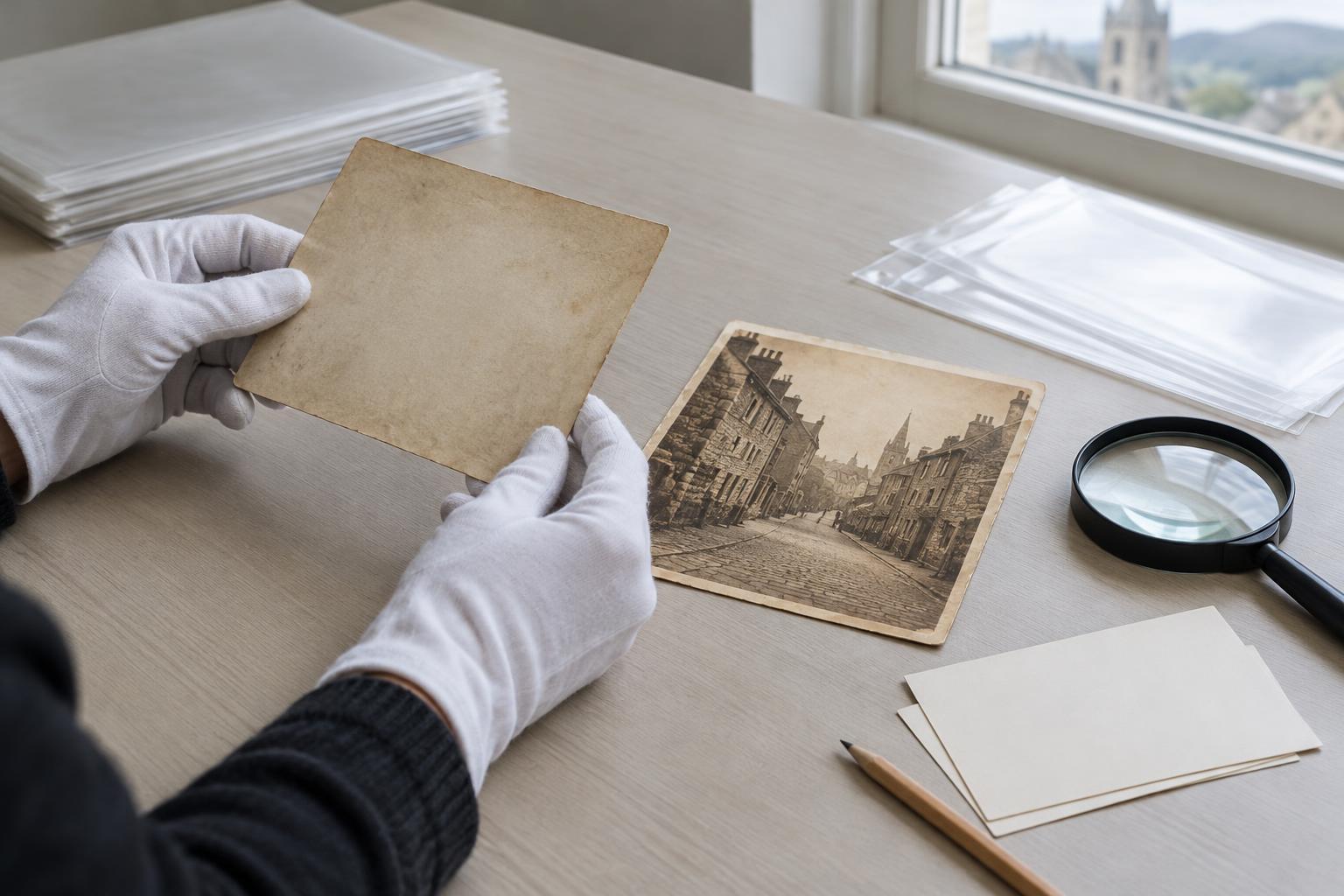
Before searching for a matching image, describe the photograph in front of you. Is it an original print, a negative, a postcard, a page from an album or a digital scan? Note its dimensions, visible marks, inscriptions and any information on the back. Record where each detail appears and, if appropriate, photograph both sides. A note on an album page has a different relationship to the image than words written directly on the print.
Keep description separate from identification. “Stone bridge with three people beside it” records what is visible; “the old bridge near Inverness” proposes a location that needs support. The distinction is especially useful when a Scottish landscape, street or building resembles others. Clothing, vehicles, signage and architectural features can help narrow possibilities, but one clue alone may not establish a date or place.
Follow the trail through people and collections
Ask how the photograph entered its present collection. A family member may know which relative assembled an album, even if they cannot identify every scene. An archive catalogue may record a donor, collection name, accession number or original filing order. These details can place the image within a group of related material, such as a photographer’s work, a household collection or a series documenting a particular area.
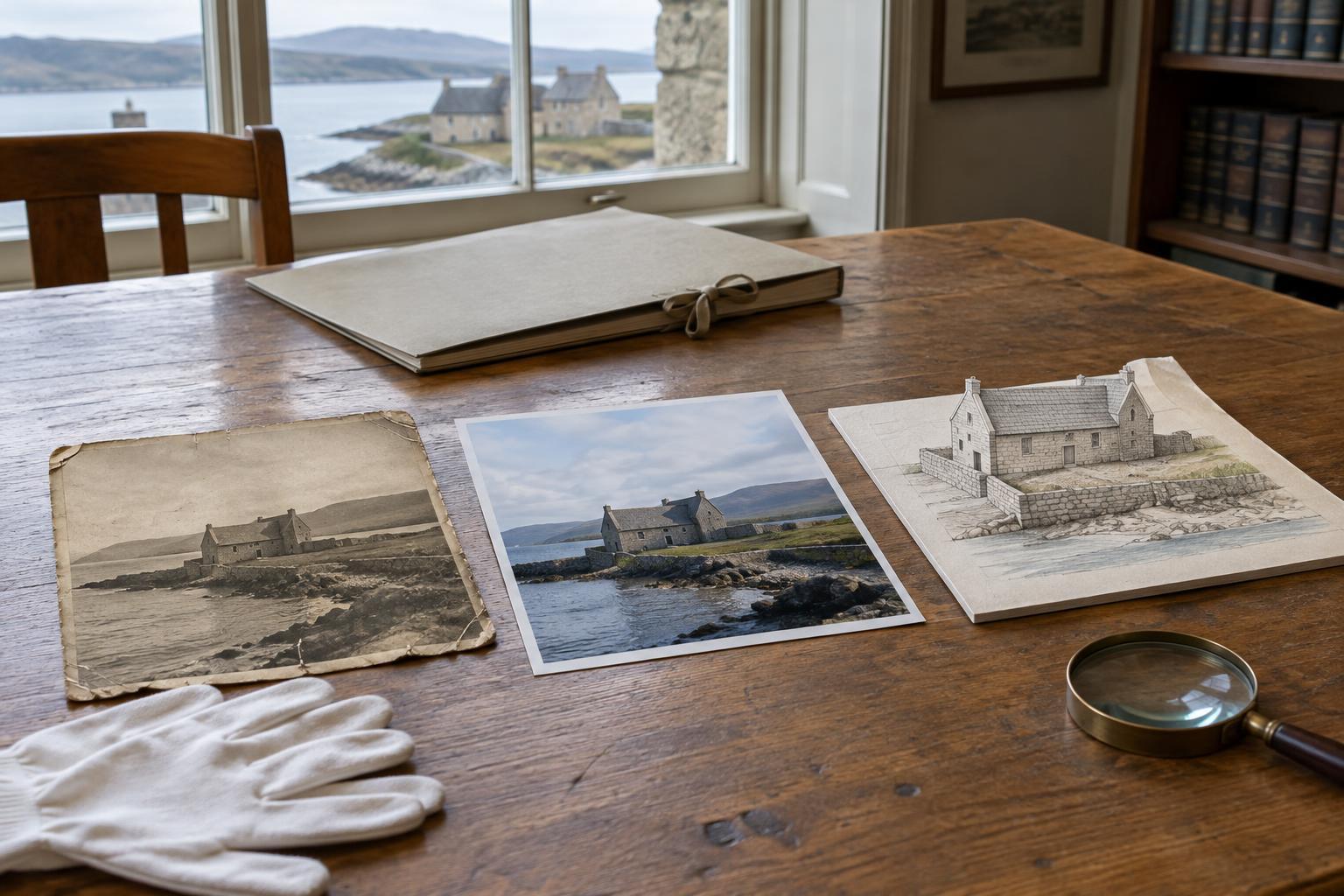
Search for other versions of the image with care. A postcard and an archive scan might show the same scene but carry different captions. Compare cropping, damage, handwriting and print details to see whether one is likely to be a copy of another. If you contact a collection holder, give enough identifying information for them to find the item and ask what their catalogue record says about its source. A catalogue description is valuable evidence, though it may itself repeat an earlier, unverified identification.
Test the caption against the image
Treat dates, names and locations as questions to check rather than facts to inherit. Does a named building match the visible roofline and surroundings? Do neighbouring photographs in an album suggest a journey or event? Could a street have changed enough to explain an apparent mismatch? Maps, local histories and records of a building’s use may help, but note exactly which feature each comparison supports. A plausible match is not the same as a confirmed one.
Write down contradictions instead of smoothing them away. If a print is labelled as one town while a collection record names another, retain both attributions until you can explain the difference. The same applies when a photograph is said to show a particular occasion but nothing visible establishes the event. You can often make a narrower, reliable statement: for example, that an image shows a harbour, while its precise location is unconfirmed.
Keep a usable record of what you know
A simple provenance note should identify the item, its present holder, any reference number, the form in which you examined it and the source of each claim about it. Record whether you saw the physical photograph or only a reproduction. If you save a digital copy for research, keep its original filename or reference alongside your working version. This makes it easier to return to the source and prevents a detached image from acquiring a confident but unsupported caption.
For a film or visual story, provenance also shapes how an image is presented. A photograph known to come from a particular family collection can be introduced that way without claiming its photographer or date is known. If the location is uncertain, a qualified caption is more useful than a precise guess. Check any conditions attached to access and reuse before publication, and credit the holding collection as requested. Careful wording preserves the photograph’s value while leaving room for future discoveries.