Start with the story you need to understand
Before writing questions, describe the film’s central enquiry in one or two sentences. It might concern how a harbour changed, why a building matters to a town, or what a former workplace meant to the people around it. This gives the interview a purpose without deciding its answer in advance. List what the audience will need to understand: the setting, the sequence of events, the people involved and any points of disagreement or uncertainty.
Next, separate questions by what each guest can reasonably know. A historian may be able to discuss records, wider patterns and competing interpretations. A local witness may describe a place they knew, work they did or stories passed down in their family. These are different contributions, not a hierarchy of value. If someone is speaking about an event they did not personally witness, ask how they learned about it and keep that distinction clear in the finished film.
Prepare more questions than you expect to use, but mark the few that are essential. An interview often becomes more revealing when there is room to follow an unexpected detail rather than work through a rigid list.
Ask historians to show how an interpretation is built
Questions such as “What happened here?” can provide a starting point, but follow them with “What evidence helps us understand that?” and “What remains difficult to establish?” These prompts invite a historian to explain their reasoning in language a viewer can follow. They may also reveal that a familiar local account and the surviving written record answer different questions.
Ask about scale and context. Was the experience of this street or island typical of a wider change, or distinctive in some way? Did conditions vary across a region or over time? For a Scottish history film, place names and local terms may need explanation for viewers who do not know the area. Ask the historian which words people at the time would have used and which modern labels might oversimplify the story.
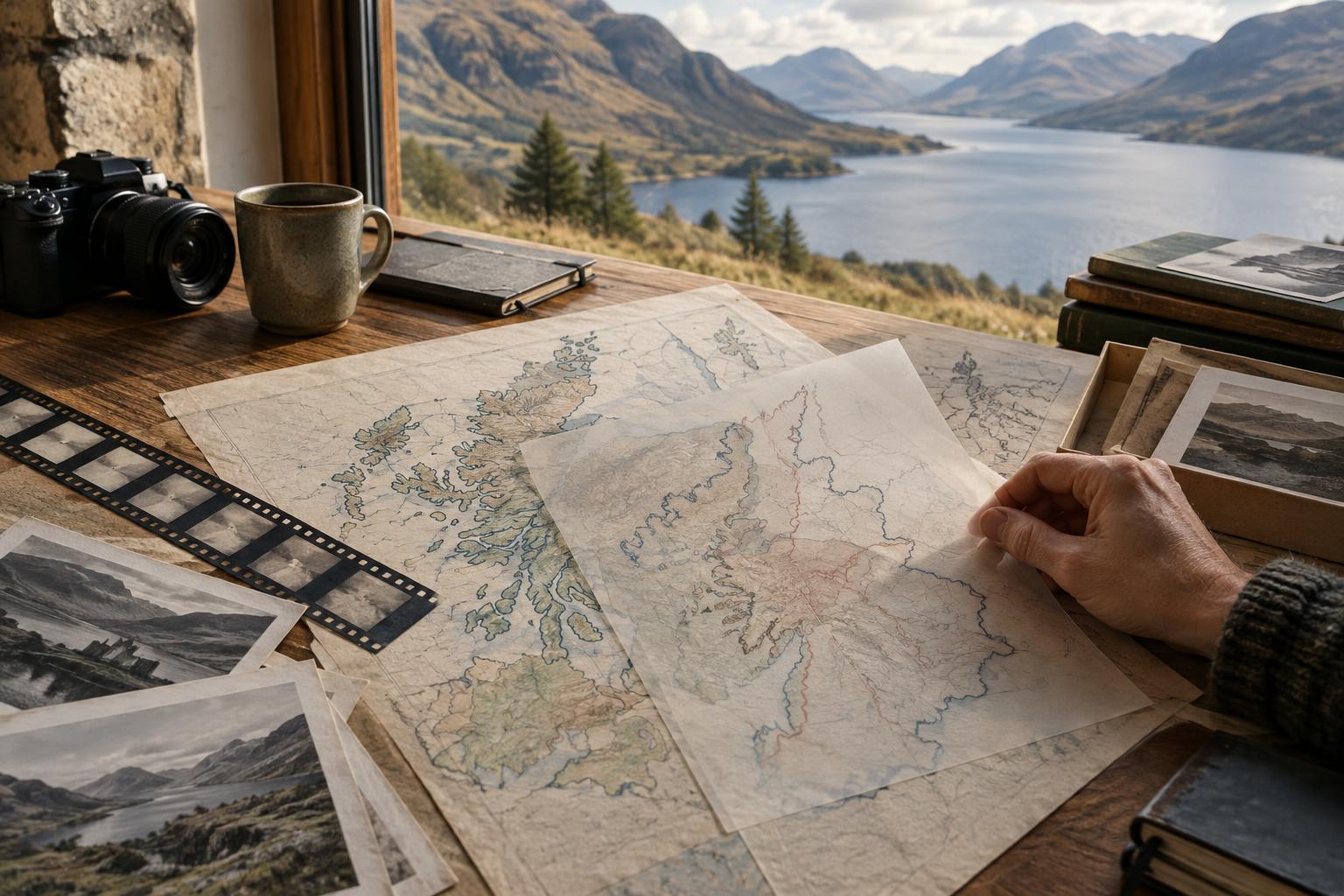
If you plan to show a photograph, map or document, ask what it can establish and what it cannot. A photograph can record what stood in front of a camera, for example, without telling us what everyone nearby thought. This helps the film use archival images as evidence rather than as decoration or apparent proof of a broader claim.
Give witnesses room to describe their own experience
Begin with questions that establish the person’s relationship to the place or subject: “When did you first come to know this street?” or “What was your connection to the mill?” Then move towards scenes and routines. “Can you take me through a typical day?” is often more useful than “What was life like?” Specific prompts about sounds, journeys, tasks and meeting places can help a witness describe what they remember without being pushed towards a particular emotion.
Keep questions open and singular. “What changed when the station closed?” leaves room for an answer; “Wasn’t the closure devastating?” supplies one. If a witness makes a broad statement, ask for an example or for the period they have in mind. Where family stories are involved, a gentle follow-up—“Did you see that yourself, or is it something you were told?”—helps preserve the story while identifying its source.
Memory is valuable even when details are uncertain. Do not treat an interview as a test that someone must pass. Let witnesses say “I’m not sure,” and make a note to check dates, names and locations separately. If accounts differ, the film can explain the difference instead of quietly choosing the most vivid version.
Plan for images, follow-ups and silence
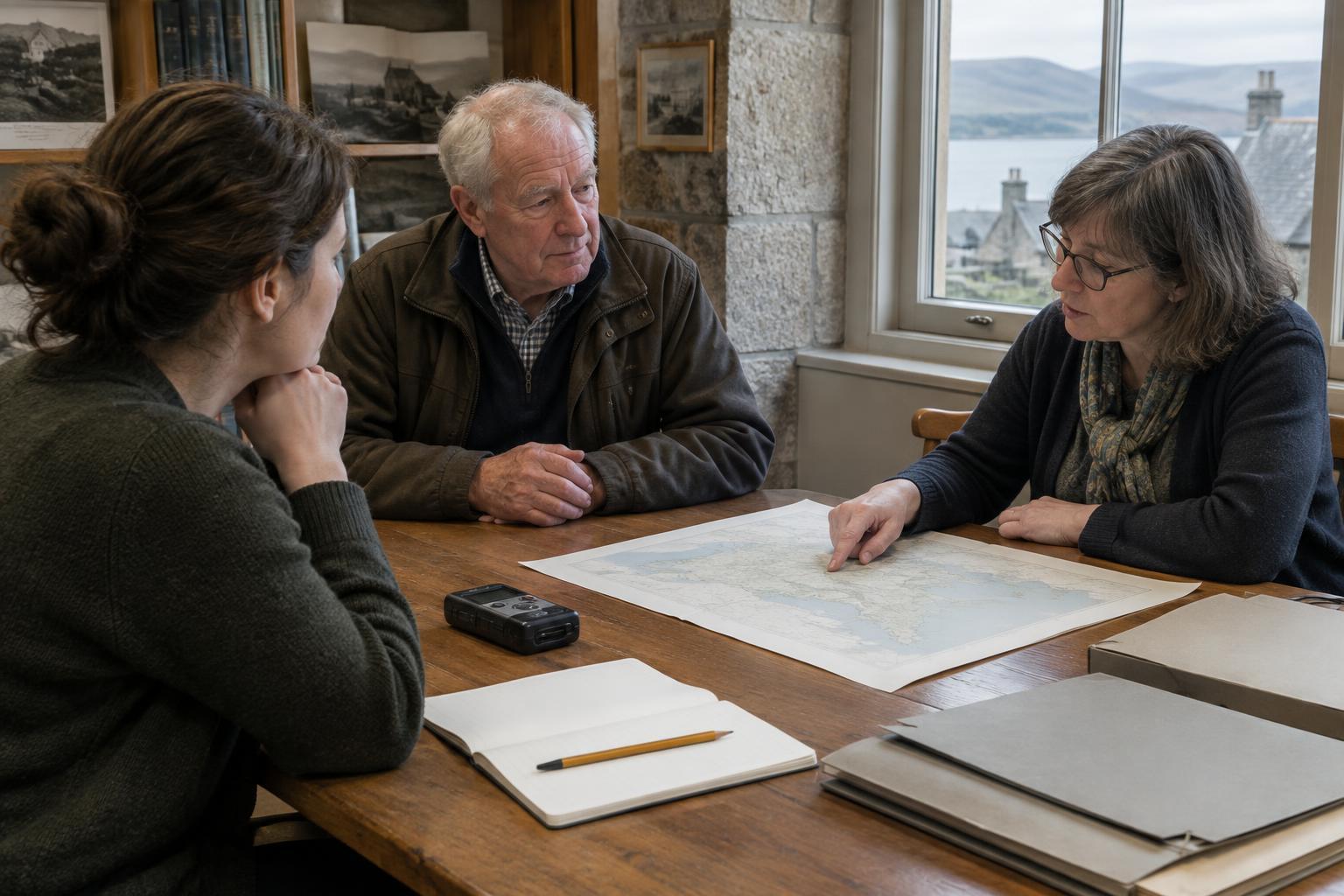
Documentary questions should help you imagine what viewers will see as well as hear. Ask a guest to point out where an event took place on a map, describe what a surviving building was used for, or explain who appears in a photograph they recognise. Do not assume that a person pictured, or a scene’s date, has been identified unless that identification can be supported. Record any uncertainty in your production notes.
During the interview, listen for words that need unpacking: a local nickname, an unfamiliar occupation, or a reference to “before it changed.” Ask “What do you mean by that?” or “Could you describe it for someone who has never been here?” A short pause after an answer can also give a guest space to add something important. Your prepared questions are a guide, not a reason to miss what the person is actually saying.
Protect trust from recording to edit
Before recording, explain the film’s subject, likely use of the interview and any practical limits on confidentiality. Check how the guest wishes to be named and whether particular topics require care. A person may be comfortable discussing a public site but not a neighbour’s private life. For sensitive memories, offer a break or a chance to move on rather than pressing for a stronger scene.
Afterwards, keep clear notes on names, spellings, places and claims that need checking. Label recordings and transcripts so a witness’s recollection is not mistaken for a documented fact or a historian’s interpretation for a settled consensus. In the edit, preserve the meaning of an answer: a short quotation should not lose the qualification that followed it. Good preparation makes interviews more vivid, but its deeper purpose is to let each person’s contribution remain recognisable, careful and fairly represented.