Begin with the experience you want
A historic-site visit does not have to mean reaching every room or climbing every tower. You might want to see a castle’s setting, study its architecture, hear the stories attached to a place, or spend time in a museum or garden. Deciding what matters most makes it easier to choose a site and plan a visit that works for you, rather than trying to follow a standard tour at any cost.
Accessibility is personal and can involve mobility, stamina, sight, hearing, sensory needs or the availability of a quiet place to pause. If you are travelling with others, talk about priorities before booking. A shared plan might include different routes through a site, a meeting point and enough time for everyone to explore at a comfortable pace.
Check the route, not just the entrance
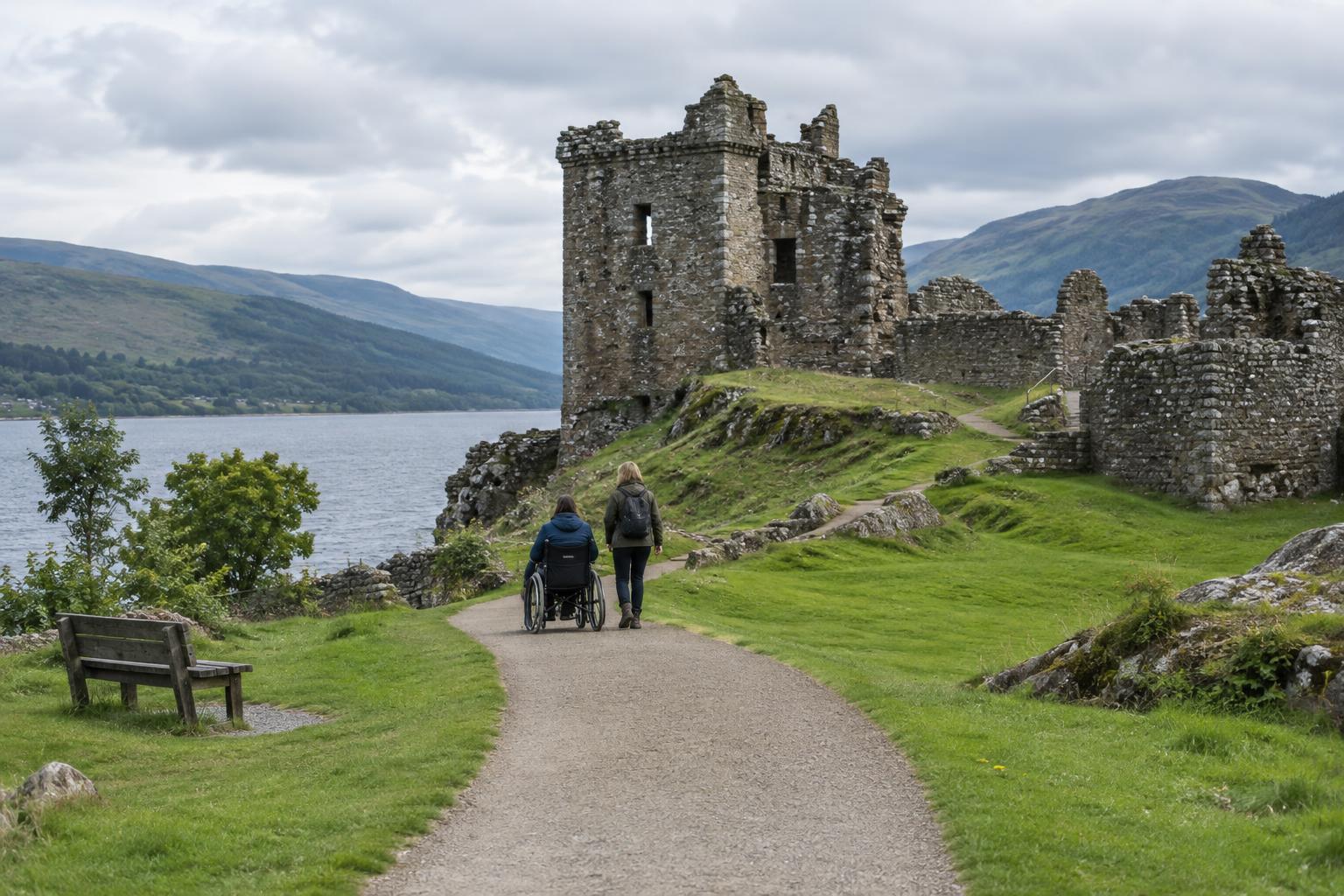
Castles and ruins can have steep approaches, uneven stone, narrow passages and changes of level. A step-free entrance, where one is available, does not necessarily mean every part of the property is step-free. Look for the site operator’s access information and check the route from the nearest parking area or transport stop to the parts you hope to visit. Details worth checking include gradients, surfaces, doorways, lifts, seating and accessible toilets.
If the published information leaves questions unanswered, contact the site directly. Ask about the particular route or facility you need rather than relying on a general description such as “accessible.” It may help to ask whether any areas are reached only by stairs, whether a lift serves all visitor floors, and whether a companion can take an alternative route. Conditions and arrangements can change, so check again shortly before travelling.
Build in time, weather options and breaks
An ambitious itinerary can turn small obstacles into major frustrations. Consider one main historic site for the day, with another stop as an option rather than an obligation. Allow time for the journey between transport and the entrance, for queues or orientation, and for rests. If you are relying on public transport, look at the whole journey: a convenient stop may still leave a difficult final stretch.
Scottish weather can affect how comfortable an outdoor visit feels, particularly on exposed ground or paths that become slippery when wet. Bring clothing suited to the forecast and have an indoor or shorter-route alternative in mind. Before you set off, check opening arrangements and whether any facilities essential to your visit are available. A café, visitor centre or nearby town can offer a useful break, but it is better to confirm options than to assume they will be open.
Find more than one way into the story
Physical access is only one part of experiencing a place. Interpretation panels, audio guides, tactile materials, captions and guided visits may offer different ways to engage with its history, though their availability varies. Ask what formats a site provides and whether you can use them in the areas you expect to reach. For visitors who prefer a quieter experience, it can also be worth asking when the site tends to feel less busy.
A room you cannot enter need not be the end of its story. Site plans, photographs, displays and conversations with staff may help you understand how that space connects with the rest of the building. If you watch a documentary or explore archival images before your trip, treat them as context rather than a promise of what you will see on the day: historic buildings have changed, and filmed views do not always show the visitor route.
Keep the visit flexible and respectful
Historic places have often been altered over centuries, and some features cannot easily be changed without affecting the fabric that makes them significant. That does not make a lack of access unimportant. Clear information, thoughtful interpretation and workable alternatives all matter. When choosing between sites, it is reasonable to favour the one that lets you take part in the experience you value most.
Once there, give yourself permission to change the plan. You may spend longer with one view, take a shorter route or leave a demanding section to another day. A visit can still be rich when it centres on a courtyard, a landscape or a single well-told story. The best itinerary is not the one that covers the most ground; it is the one that leaves room to notice the place and enjoy being there.