Start with a purpose you can sustain
A community archive does not need to collect everything. It might focus on one village, a neighbourhood in a Scottish city, a local industry or the history of a community group. Write a short collecting statement that names the people, places, subjects and types of material the project will cover. Include what falls outside that scope. Clear boundaries help volunteers make consistent decisions and give potential donors an honest account of what the archive can care for.
Begin by asking what already exists. A local museum, library or heritage group may hold related material, and a new project can complement rather than duplicate its work. Think about how people will use the collection: for family research, exhibitions, documentary films, walks or school projects. Those uses can guide priorities, but they should not become a reason to accept fragile material without a realistic plan to look after it.
Record the story of each item
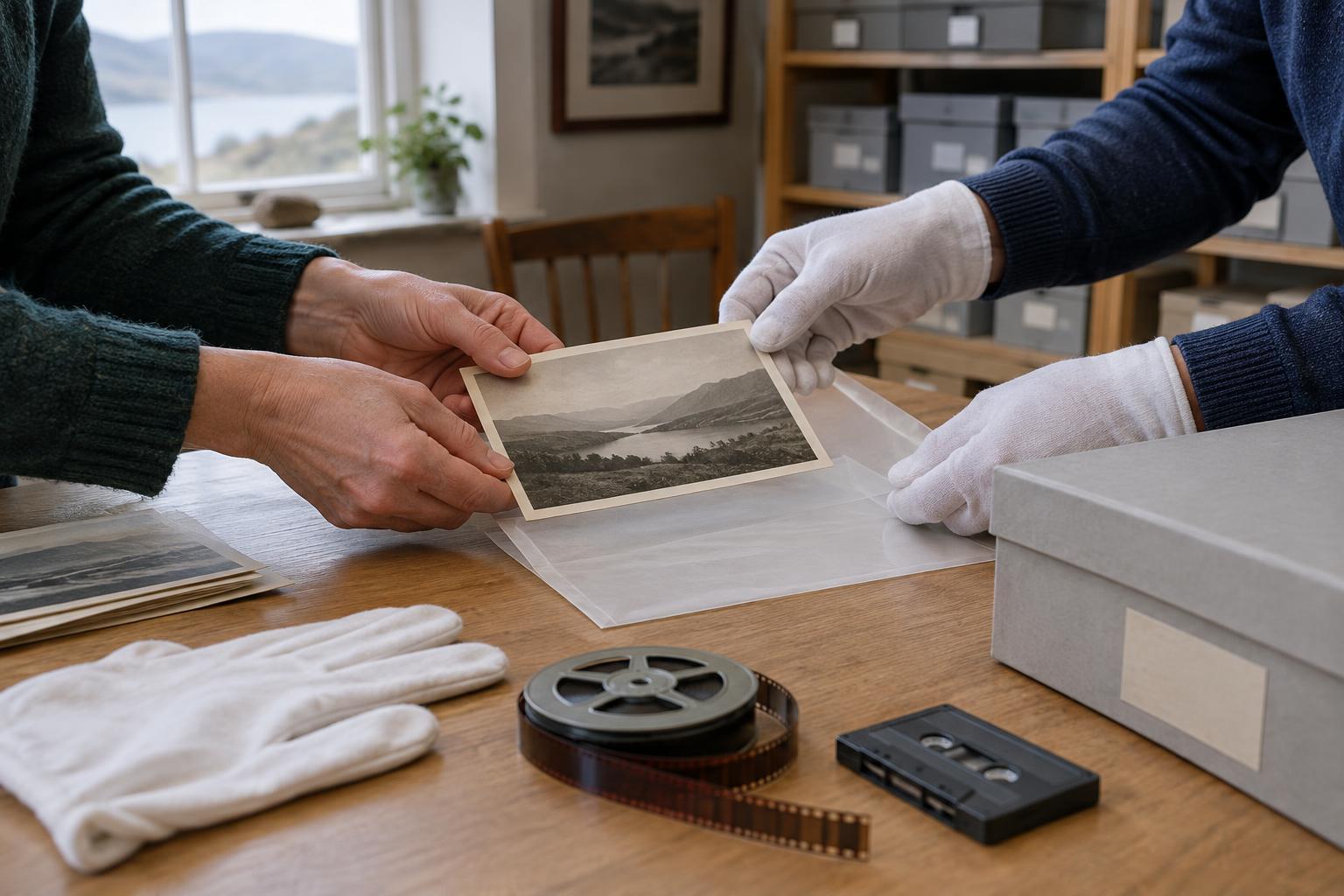
A photograph without a date, place or known creator can still be valuable, but its meaning is harder to recover. When material arrives, assign it a unique reference and record who provided it, what they know about it, when it was received and whether it is a gift or a loan. Keep the donor’s account separate from details the project has independently confirmed. If a place or person is uncertain, label the identification as uncertain rather than letting a guess become an archival fact.
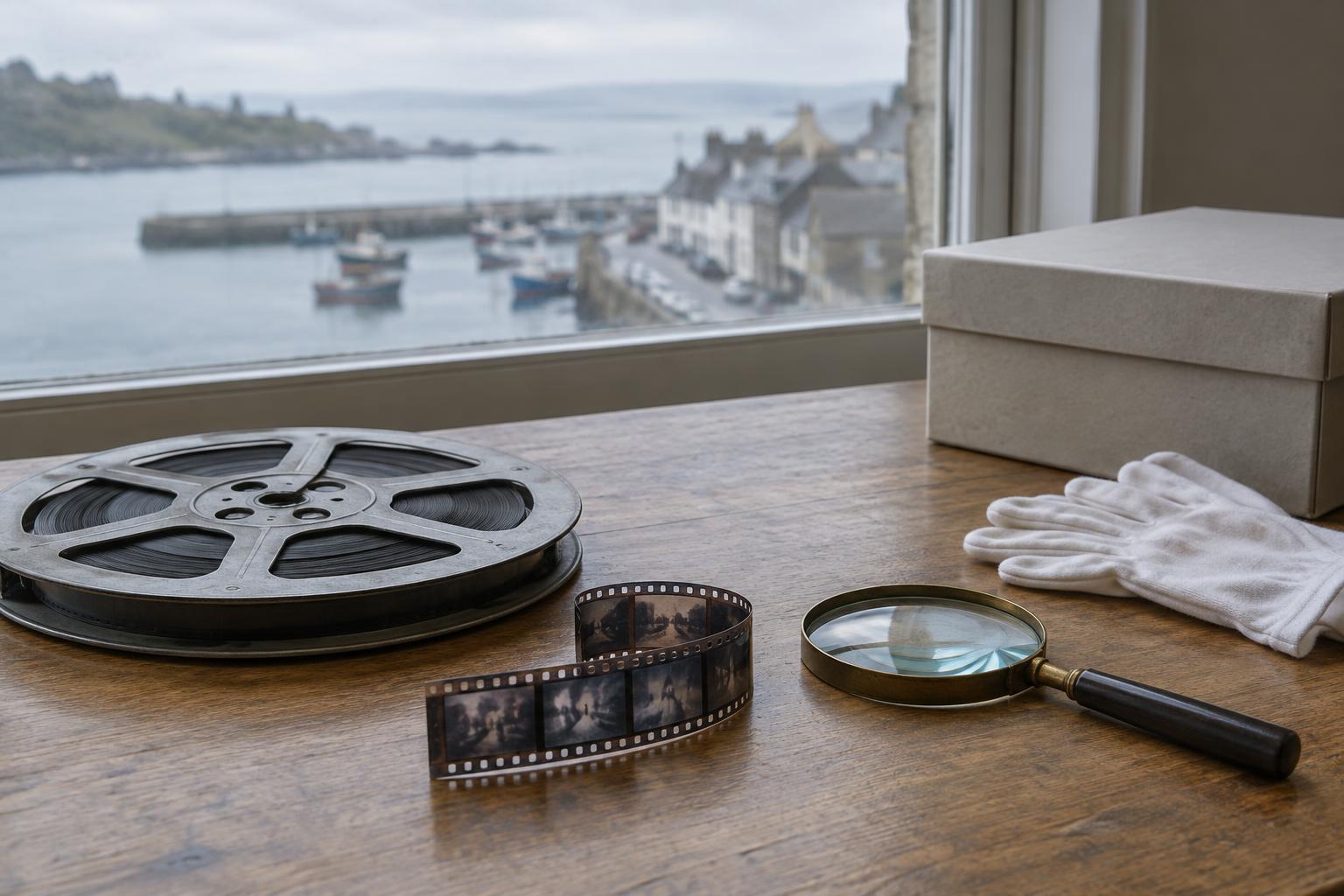
For film and sound recordings, note the format, any titles on containers and any available information about who made the recording. Keep original captions, envelopes and labels where practical: even a handwritten note may provide context. A simple, consistent catalogue is more useful than an elaborate system volunteers cannot maintain. Decide early how entries will be named and updated, and make sure more than one person understands the method.
Make storage a question of risk
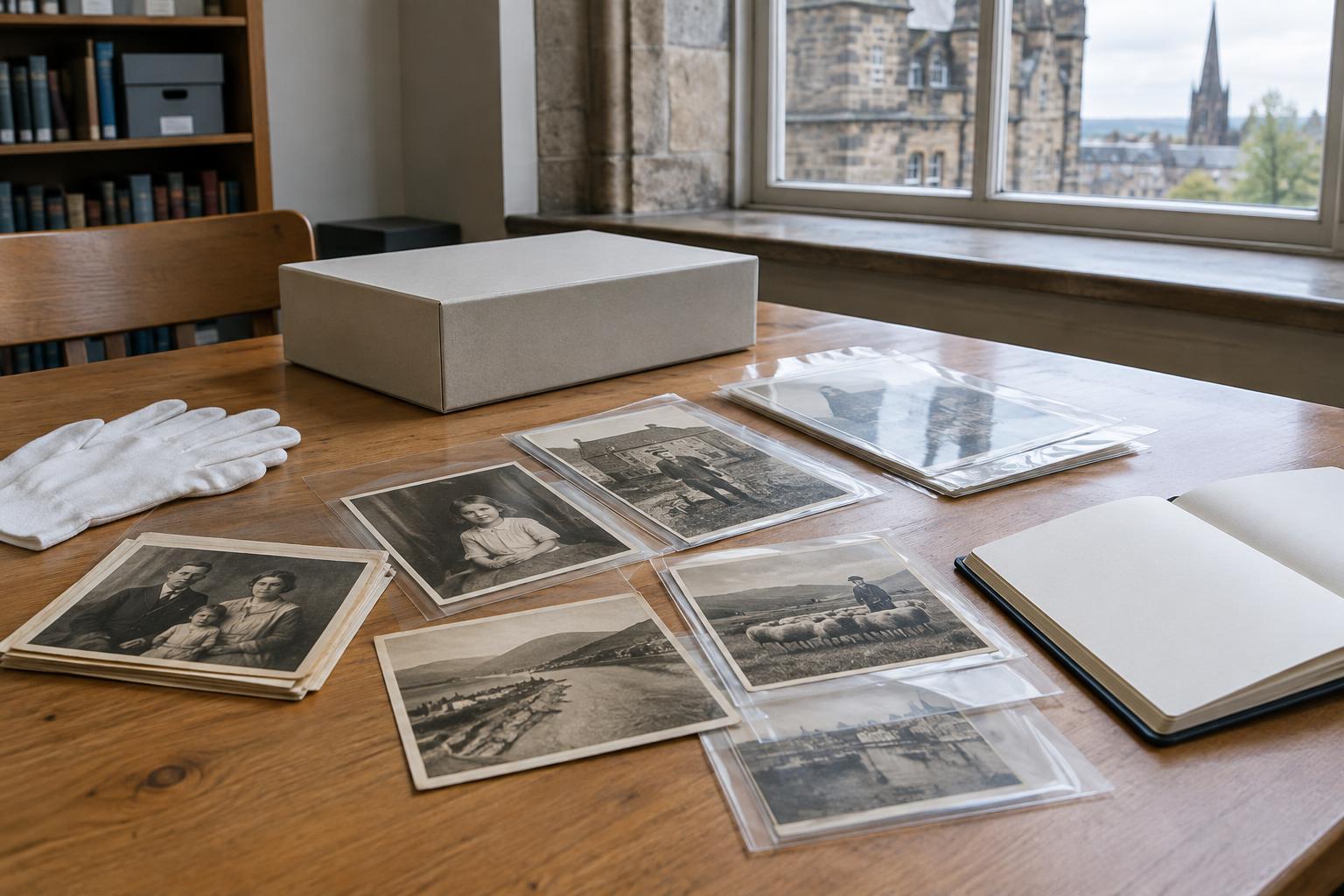
Physical material is vulnerable to damp, heat, light, handling and loss. Choose a secure space with conditions that are as stable as possible, away from leaks and direct sunlight. Use suitable folders or boxes when resources allow, avoid attaching new labels directly to original items, and keep food and drinks away from work areas. Film, magnetic tape and damaged photographs may need specialist assessment; do not assume that playing or cleaning an unfamiliar item is harmless.
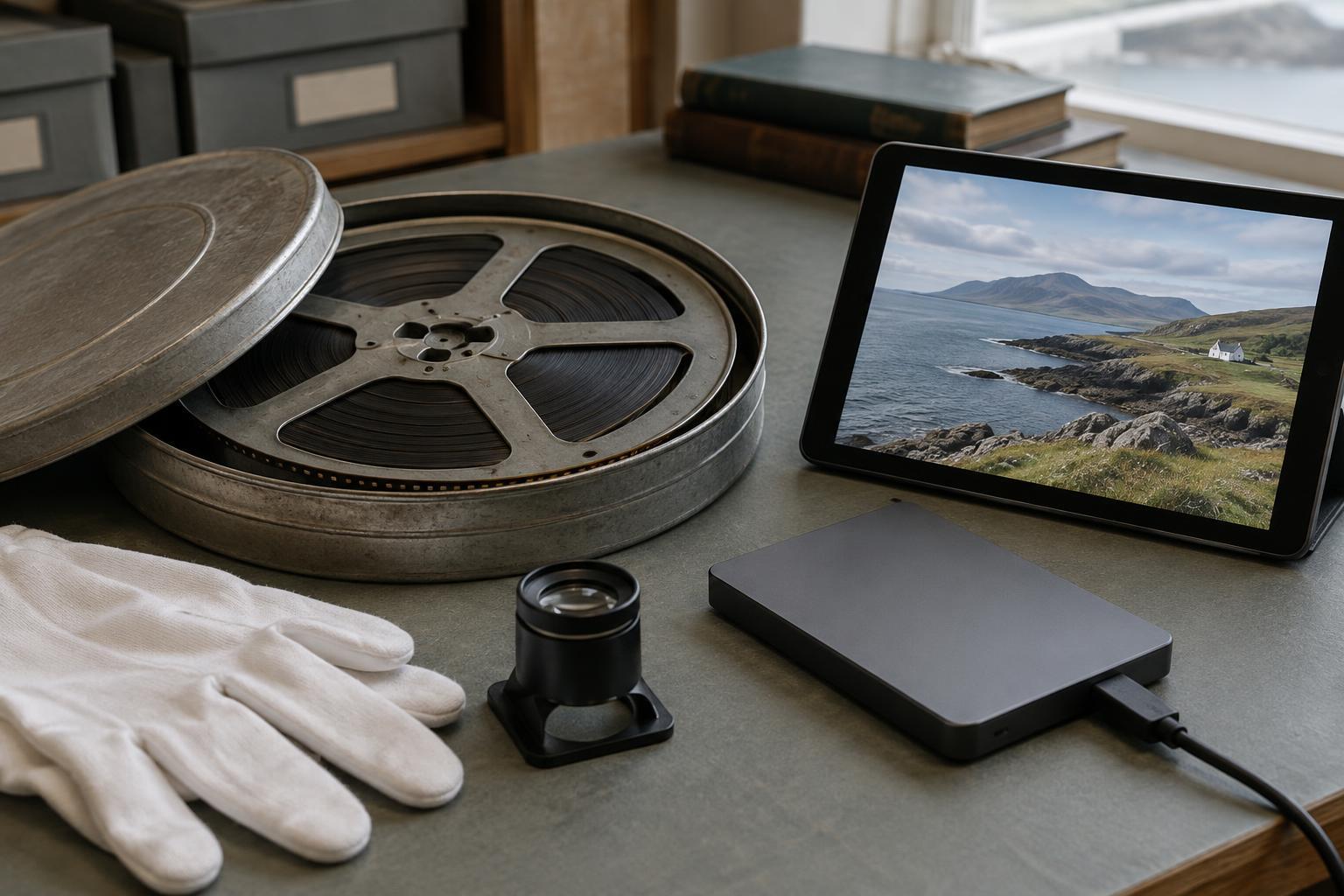
Digital files need their own storage plan. Keep original files unchanged and use separate copies for editing, exhibitions or sharing. Maintain more than one copy in different locations, check periodically that files still open, and record where each copy is held. A spreadsheet describing file names, formats and related physical items can prevent a folder of scans from becoming detached from its history. Digitisation can improve access and reduce handling, but a scan is not a reason to discard an original.
Plan access with care
An archive becomes more useful when people can find and understand its contents. Decide what basic catalogue information can be public and how visitors can request access to items that are not online. For visual storytelling, preserve the distinction between an original image and an edited version used in a film or exhibition. Captions should explain what is known, what is inferred and what remains unidentified.
Public access is not appropriate for every item. A recording may include personal information, a donor may have placed conditions on its use, or a photograph may raise concerns for people pictured in it. Record permissions and restrictions alongside the item, and agree on a process for reviewing requests before publication or reuse. Where rights or privacy questions are unclear, pause and seek appropriate guidance rather than promising unrestricted access.
Design the project to outlast its founders
Long-term care depends on people and routines as much as shelves and hard drives. Write down who can accept material, update records, manage access and check backups. Schedule modest, repeatable tasks: reviewing storage conditions, checking digital copies and looking again at material awaiting description. Train new volunteers using the same procedures, so knowledge does not sit with one person.
Finally, ask what will happen if the group can no longer run the archive. Identify a possible partner or future home, and document which materials the project owns, which are on loan and what commitments it has made to donors. Revisit the collecting statement as capacity changes. A smaller collection with reliable records and a credible care plan may serve a community better than a larger one whose contents cannot be found, understood or safely used.