Why the distinction matters
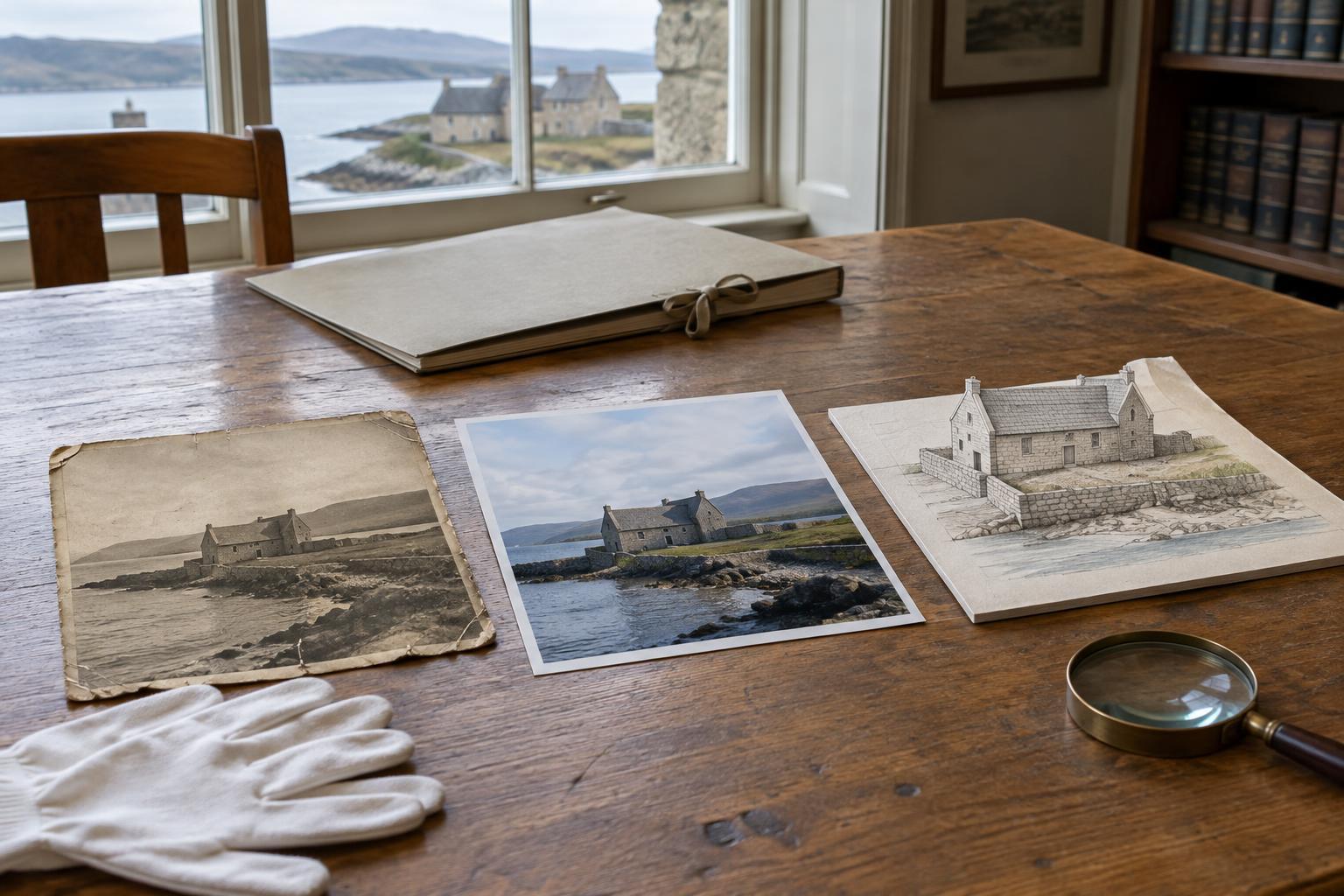
Imagine finding a striking image of a Scottish harbour in an archive catalogue. The description gives a place and a subject, and the image seems ready for a documentary. Yet the item you can view might be the photographer’s print, a later print from the same negative, a scan of a published postcard or a modern image made to show how the harbour once looked. All can be useful. They do not, however, support exactly the same claims.
An archive record describes an object in a collection. That object may be several steps removed from the scene it depicts. Identifying those steps helps you make better choices about captions, narration and visual treatment. It also protects an audience from mistaking a persuasive illustration for direct evidence of the past.
Start with the object, not the scene
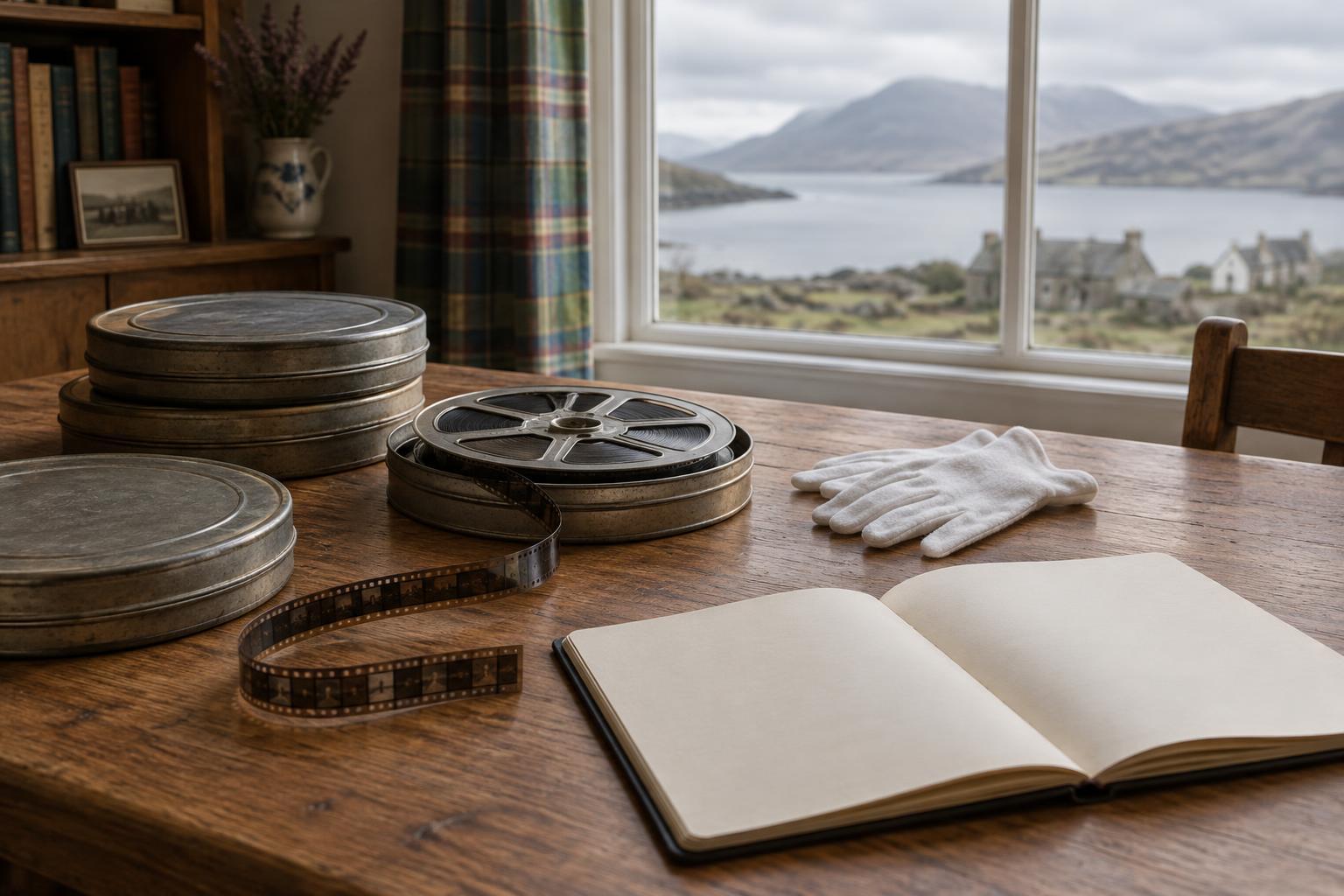
An original is not necessarily a perfect or unaltered view. It may be a camera negative, a print made around the time of an event, a handwritten document or a film element produced during filming. The person who made it could still have staged a photograph, selected a viewpoint or edited footage. “Original” describes the item’s relationship to its production; it does not guarantee that its contents tell the whole story.
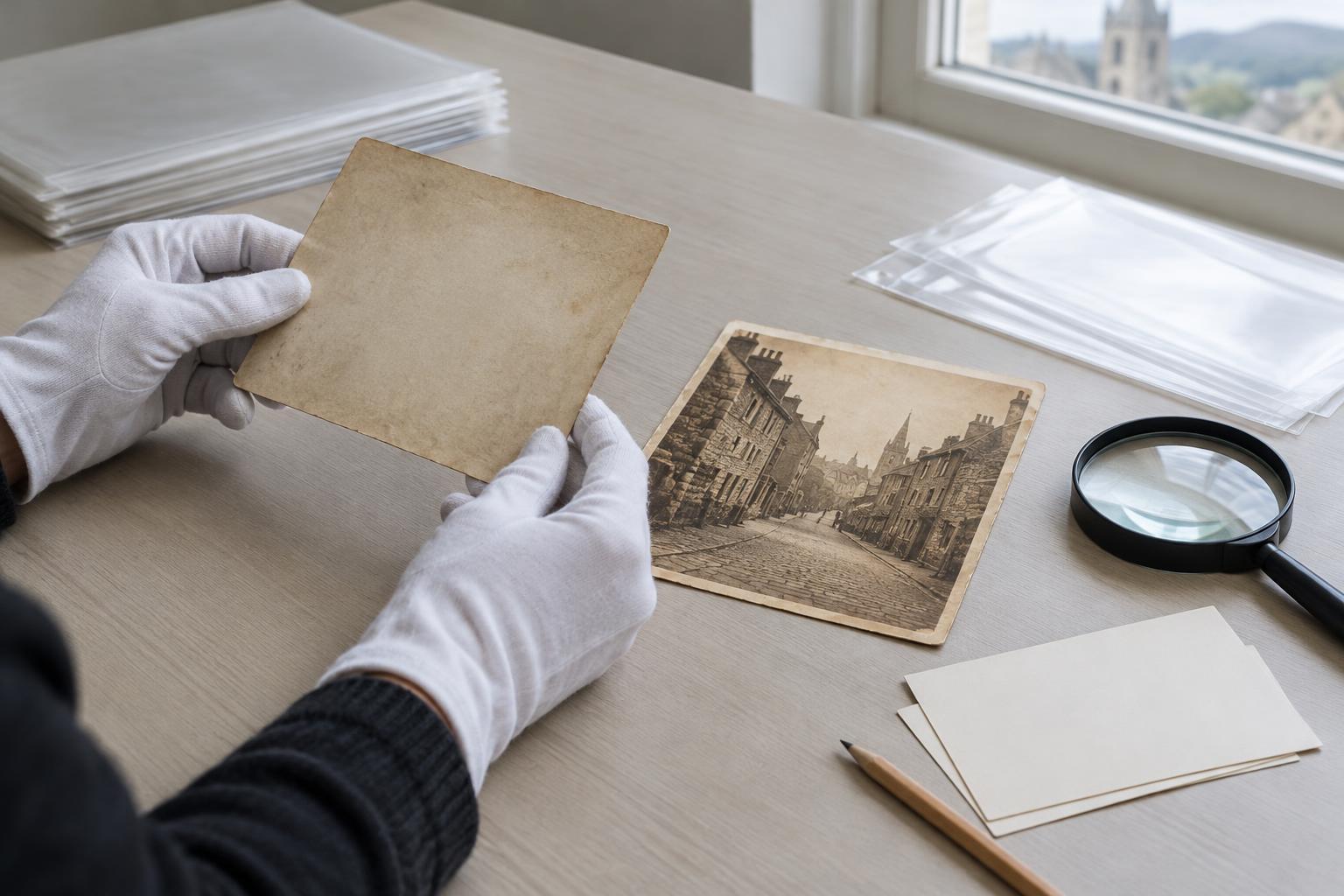
A copy reproduces another item. It might be a contact print, a duplicate film element, a photocopy or a digital scan. A copy can preserve information from an original that is fragile or no longer available, but the copying process may crop an edge, change contrast or leave out writing on the reverse. A high-resolution scan makes close viewing easier; it does not turn the scan into the physical object.
Ask two separate questions: What does this item show, and what is the item itself? A catalogue entry headed “High Street, Edinburgh” may answer the first while leaving the second open. Look for terms such as negative, print, duplicate, transfer, scan or reproduction, and check whether a date refers to the depicted scene, the surviving object or the copy that was made later.
Trace the path from source to archive
Provenance is the account of where an item came from and how it reached the collection. A useful record may name a creator, a donor or a previous collection, as well as identify related items. These details can help establish whether a photograph belongs to a photographer’s own series or arrived as a detached image with little context. Gaps are common, and they should remain visible rather than be filled with guesses.
Compare the catalogue description with any notes on the item or its container. A handwritten caption may be valuable evidence, but first consider who wrote it and when. Similarly, a date assigned by an archive may be an informed estimate rather than a date recorded at the time. If several prints or film versions exist, their differences may reveal later cropping, reordering or added titles.
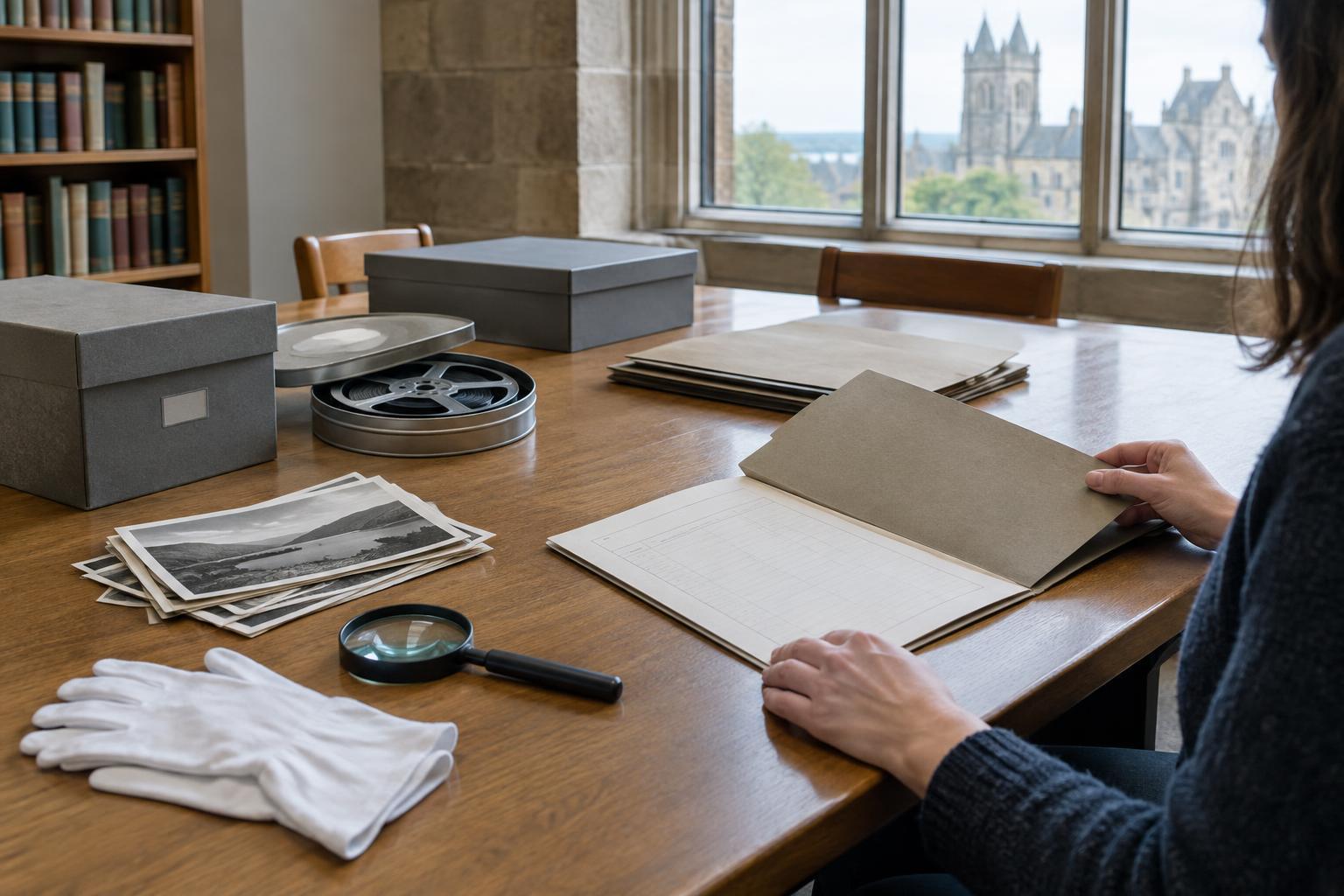
For a film or article, keep a short working note for each item: its collection reference, the format you viewed, the archive’s description, any uncertainty and the claim you intend to make with it. If the record is unclear, ask the archive what it can confirm. An honest caption such as “later copy of an undated photograph” can be more informative than a confident but unsupported year.
Recognise reconstructions and composites
A reconstruction is made after the fact to represent something no surviving record directly shows. It may be a filmed re-enactment, a drawing of a lost building or a digital model assembled from plans and photographs. A composite can combine elements from different sources into one image. These approaches can help audiences understand a place or sequence of events, provided their constructed nature is clear.
Look for clues in both the image and its documentation. An unusually complete view of a vanished streetscape may be an artist’s interpretation, while footage that appears to show a private conversation may have been staged for a documentary. Neither clue proves the status of an item on its own. Read production notes where available, check the catalogue’s medium and creation date, and distinguish the date represented from the date the image was made.
When using a reconstruction, label it in the film, caption or accompanying text. Explain the basis for it where that matters: for example, whether a model follows surviving plans or fills substantial gaps through interpretation. Avoid placing reconstructed footage among archival shots in a way that implies all the images were recorded at the time.
Let uncertainty shape the story
You do not have to resolve every unanswered question before an item becomes useful. A later copy may clearly show a street layout; an unidentified film fragment may convey how a place was represented on screen. Match the strength of your claim to what you know. If the source cannot establish when a scene was filmed, do not use it as proof of a particular day or event.
This approach can make Scottish heritage storytelling richer, not less vivid. Showing a print’s edges, noting a missing caption or explaining why a reconstruction was needed gives viewers a glimpse of how history is assembled. The aim is not to make every caption lengthy. It is to give the audience enough information to understand what survives, what has been copied and what has been imagined.