A crossing with a long history
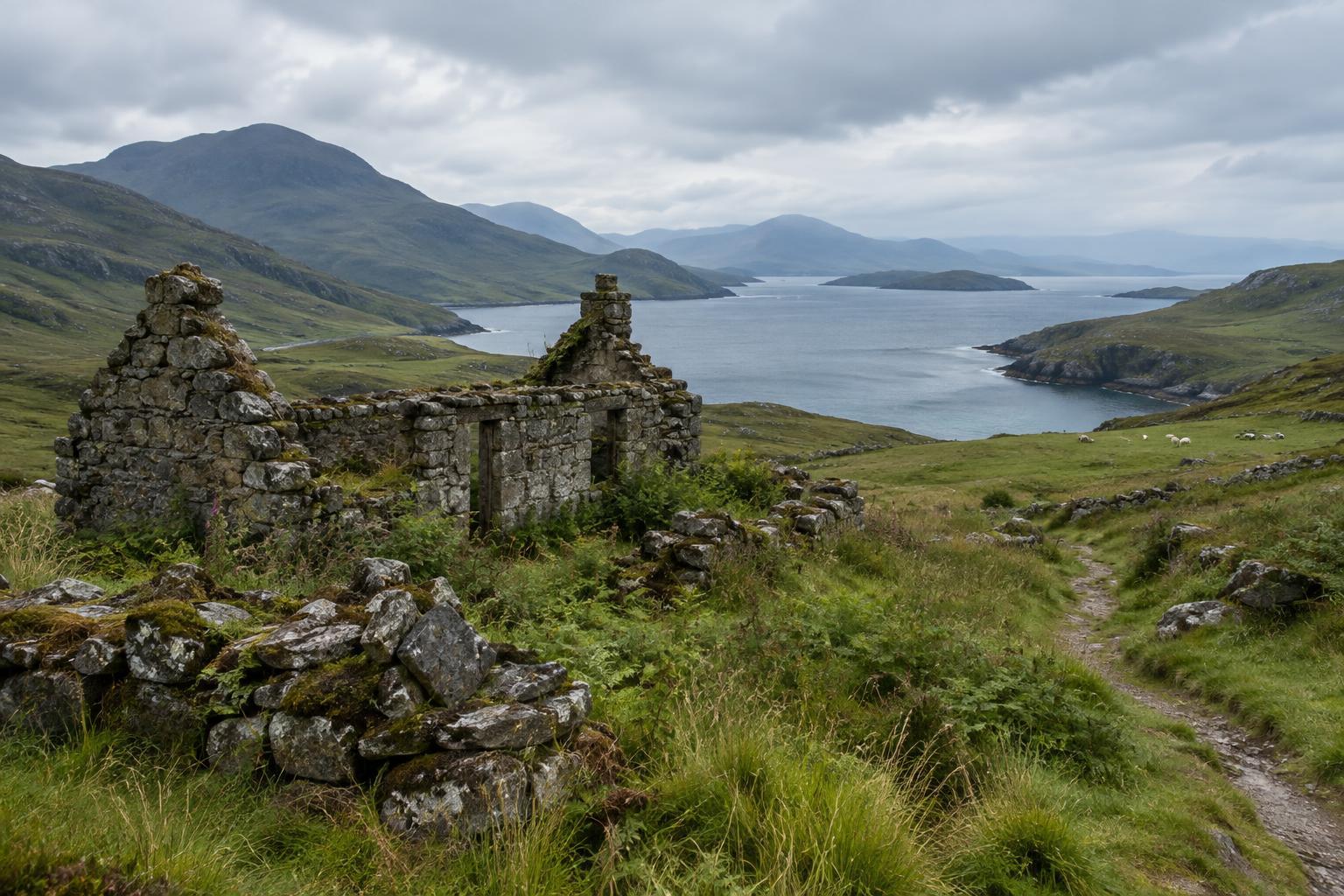
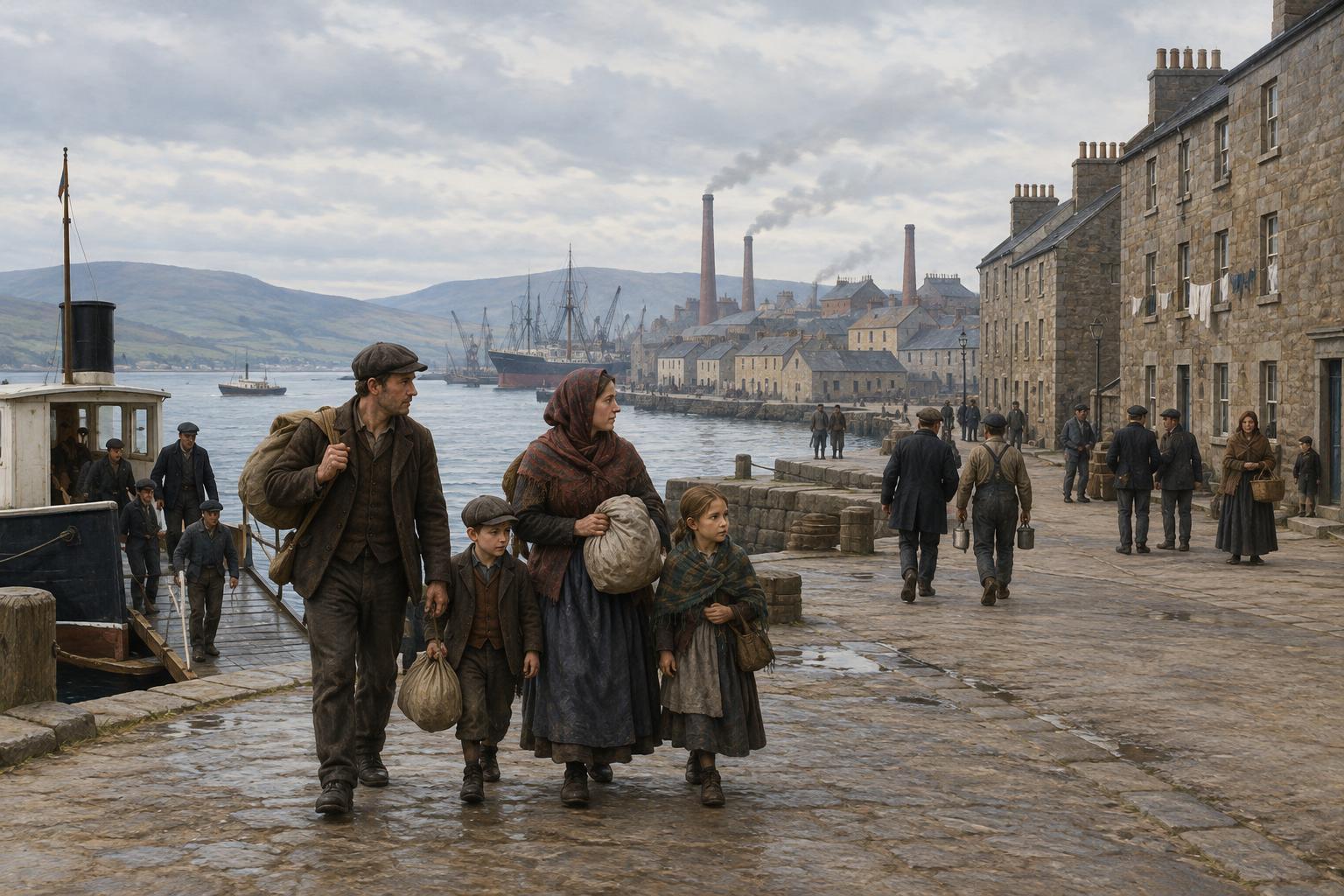
Movement between Ireland and Scotland did not begin with the Great Famine. The short sea crossing connected the two places through trade, seasonal labour and family ties long before the nineteenth century. People travelled for different reasons and stayed for different lengths of time. Some returned home after a period of work; others made Scotland their permanent home.
The Great Famine of the 1840s brought a particularly difficult period of migration. For many people leaving Ireland, the journey was shaped by hunger, poverty and the need to find work. Yet it would be misleading to treat every Irish migrant as a famine refugee, or to describe migration as one single wave. Movement continued through later decades, often following relatives, neighbours or opportunities already known to a family.
Where people settled and how they earned a living
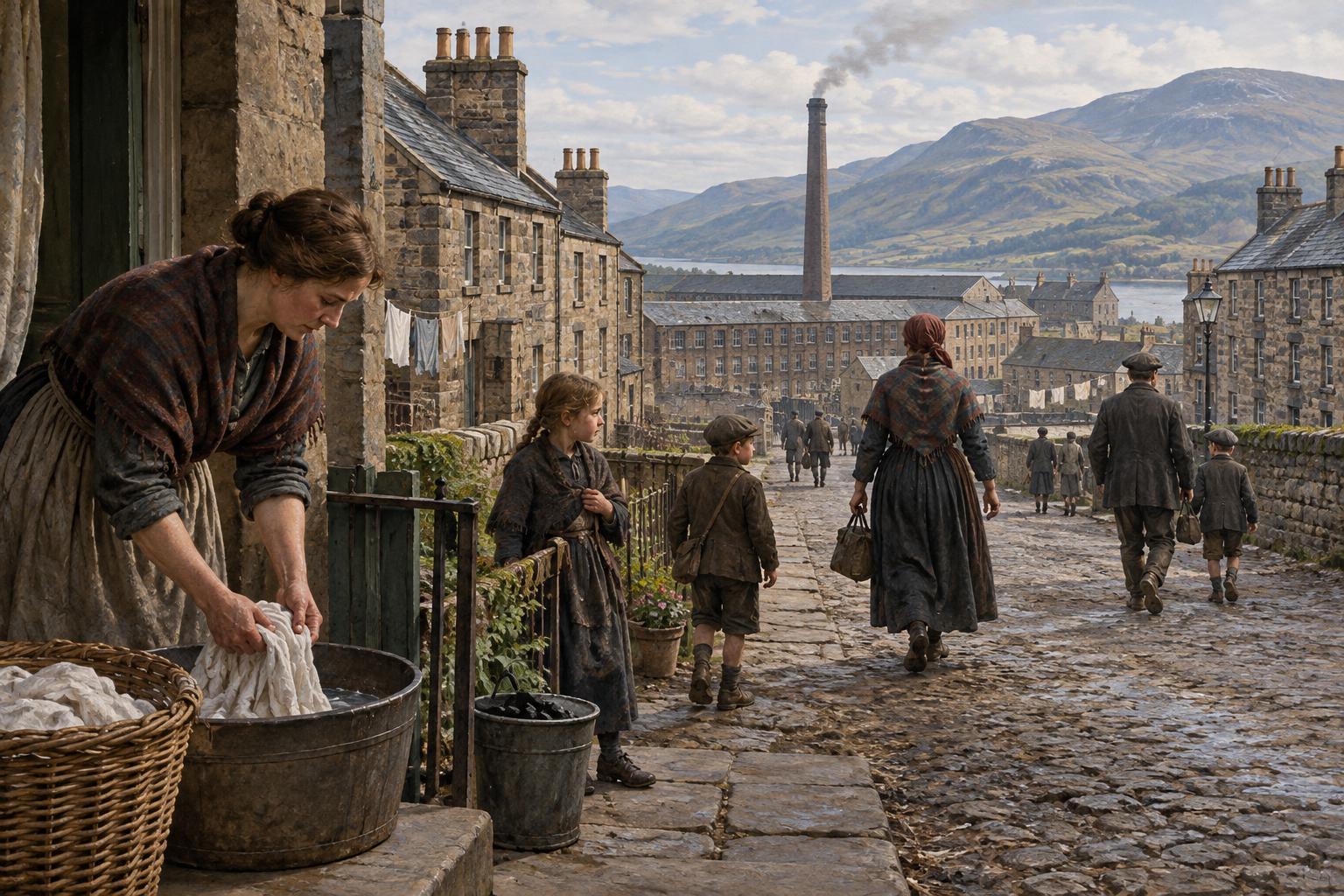
Glasgow and the west of Scotland became important destinations, but Irish migrants also settled in other towns, industrial districts and rural areas. Work helped determine where people went. Mines, factories, building projects, docks and shipyards offered possibilities, though jobs could be insecure and physically demanding. Agricultural work drew people to the countryside, sometimes only for a season.
The experience of migration also depended on age, gender and household circumstances. Women worked in domestic service, textiles, shops and other paid occupations, while unpaid care and household work helped families survive. Children grew up with experiences that differed from those of parents who had made the crossing. A family might move again within Scotland as work changed, making settlement a process rather than a single arrival.
Irish migrants were not entering an empty landscape. They lived and worked alongside Scots and migrants from elsewhere, often in places already under pressure from rapid industrial growth. Overcrowded housing and uncertain wages affected many working families. Those conditions could intensify competition, but they do not explain every response to newcomers.
Faith, institutions and belonging
Religion was an important part of this history, but Irish identity did not mean one faith. Many migrants were Catholic; others, including people from Ulster, were Protestant. Churches and associated organisations could provide worship, education, practical assistance and a place to meet people. For a newcomer, such networks might make an unfamiliar town easier to navigate.
Religious institutions also helped communities maintain traditions across generations. At the same time, visible differences in worship and schooling could become points of argument in wider Scottish society. It is important to distinguish between an institution’s role in supporting its members and the suspicion that outsiders might direct toward it. Neither a church record nor a public controversy can, on its own, describe everything about the people involved.
Tension without a single story
Anti-Catholic prejudice and sectarian hostility formed part of the environment in which many Irish migrants and their descendants lived. Religious labels could affect how people were perceived at work, in public debate or in neighbourhood life. Those tensions were real, but they varied by place, period and circumstance. An account focused only on conflict would miss friendships, shared workplaces, marriages, political cooperation and the ordinary business of living together.
It is also too simple to draw a fixed line between an Irish community and a Scottish one. People could feel attached to Ireland, to a Scottish town and to a religious community at the same time. Children and grandchildren inherited some traditions while developing their own sense of home. Looking at individual families can reveal those overlapping identities more clearly than broad labels alone.
How to read the visual record
Photographs, street scenes, maps and films can help make this history tangible, but each shows only part of it. A photograph of a crowded street cannot establish where every resident was born. Footage of an industrial workplace cannot tell us who was hired, who was turned away or what workers believed. Captions, provenance and the date of an image matter as much as the image itself.
For a documentary or family-history project, a useful starting point is to ask a narrow question: why did a particular family move, where did they live and what work was available nearby? Records of residence, employment, schools or religious life may offer pieces of an answer, though gaps are common. When an image illustrates a broader setting rather than the people in the story, saying so preserves the difference between evidence and atmosphere. That care leaves room for a richer account of migration: one shaped by hardship and tension, but also by work, family and lasting contributions to Scottish life.