Make the question part of the story
A historical documentary often begins with a compelling question: why did a community leave a place, how was a building used, or whose account of an event survived? The temptation is to answer it with a smooth sequence of images and a confident voiceover. But when Scottish historical evidence is incomplete, the search for an answer can be more revealing than a tidy conclusion. Viewers can follow a question even when the film cannot settle it.
Start by separating the central question from what is already established. A film about a former industrial site, for example, might be able to show where it stood and identify some of its uses while knowing much less about the daily experiences of its workers. Stating that distinction early gives the audience a way to judge later claims. It also creates room for discovery: each photograph, map or testimony can add something without being asked to prove more than it can.
Give each piece of evidence its proper weight
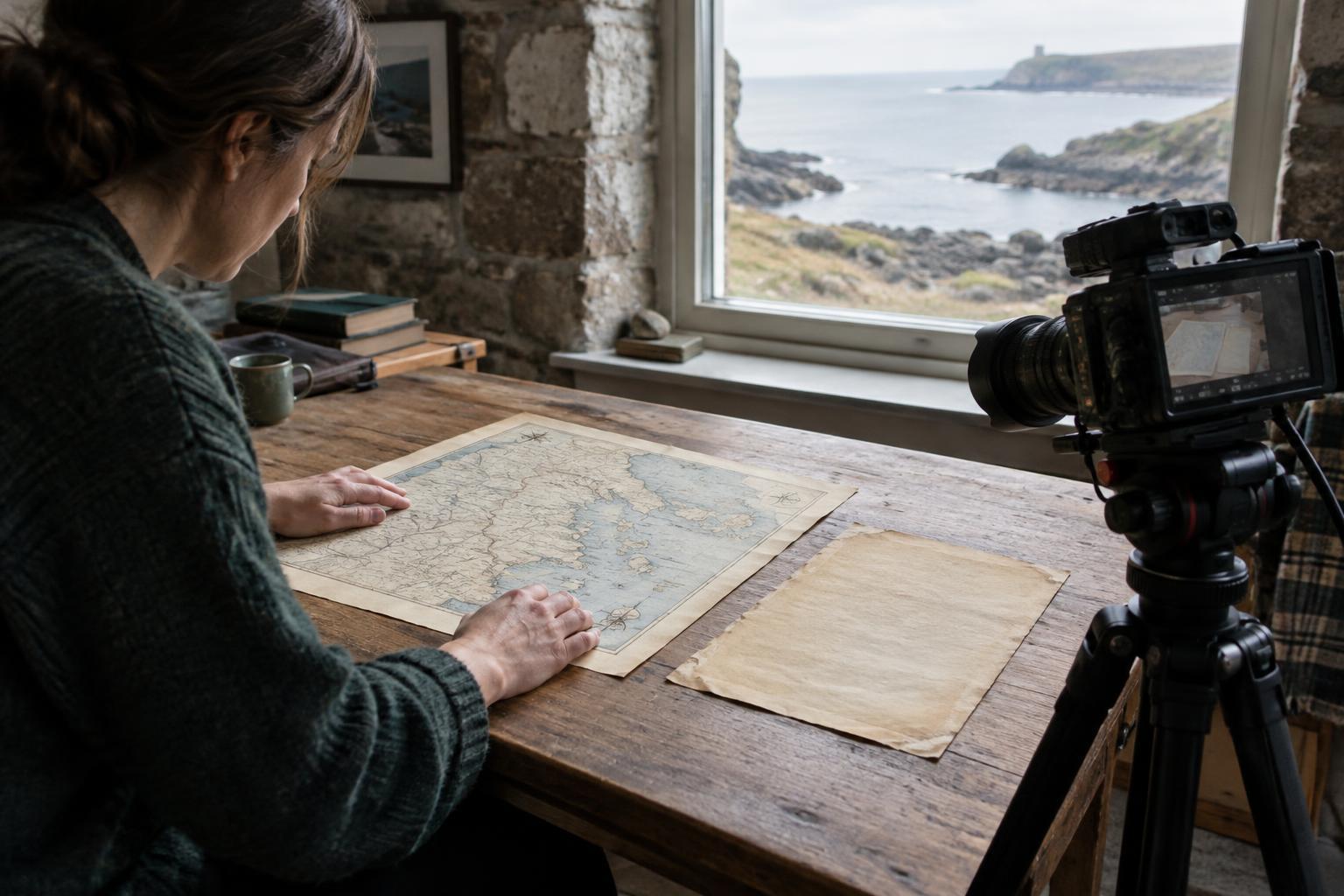
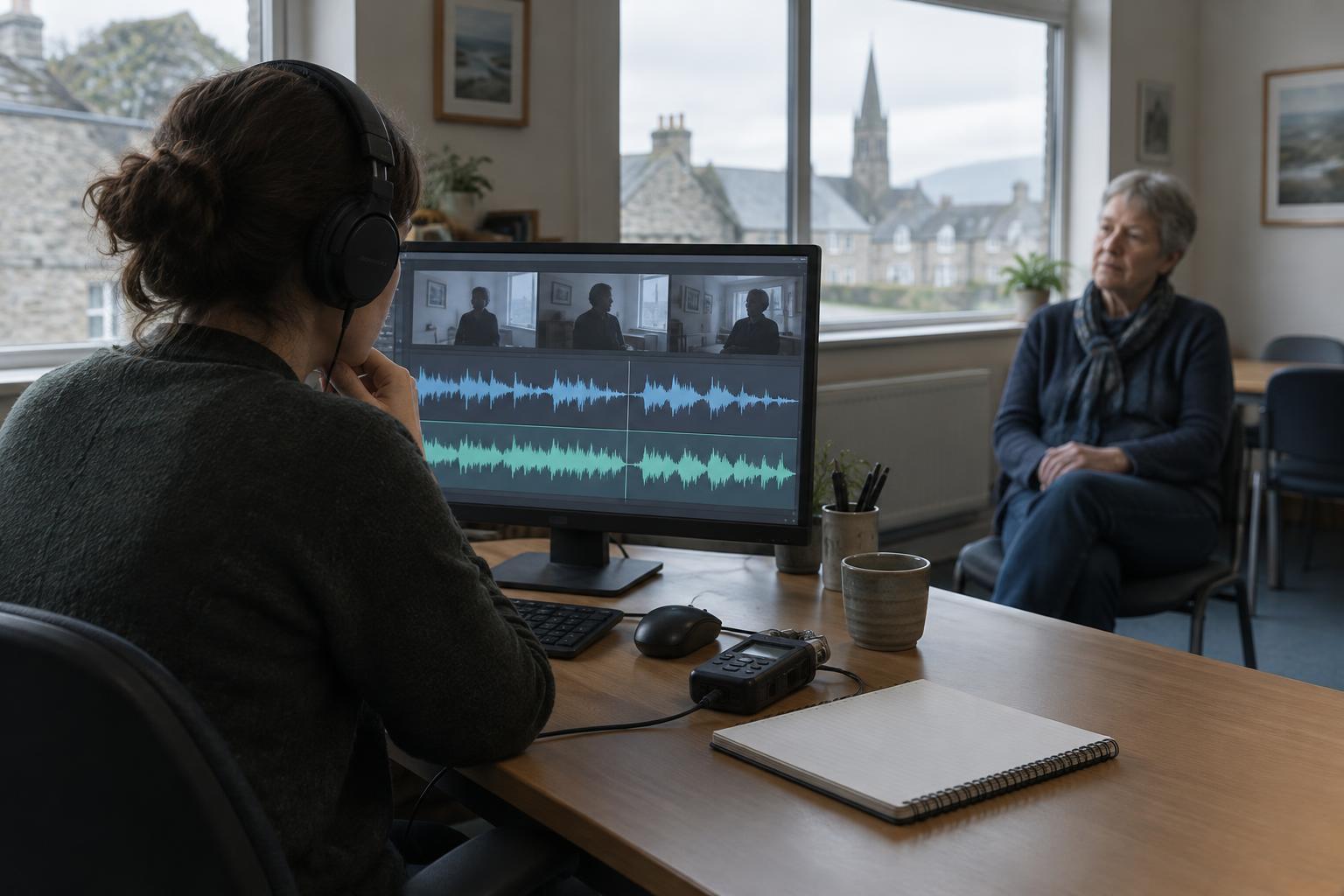
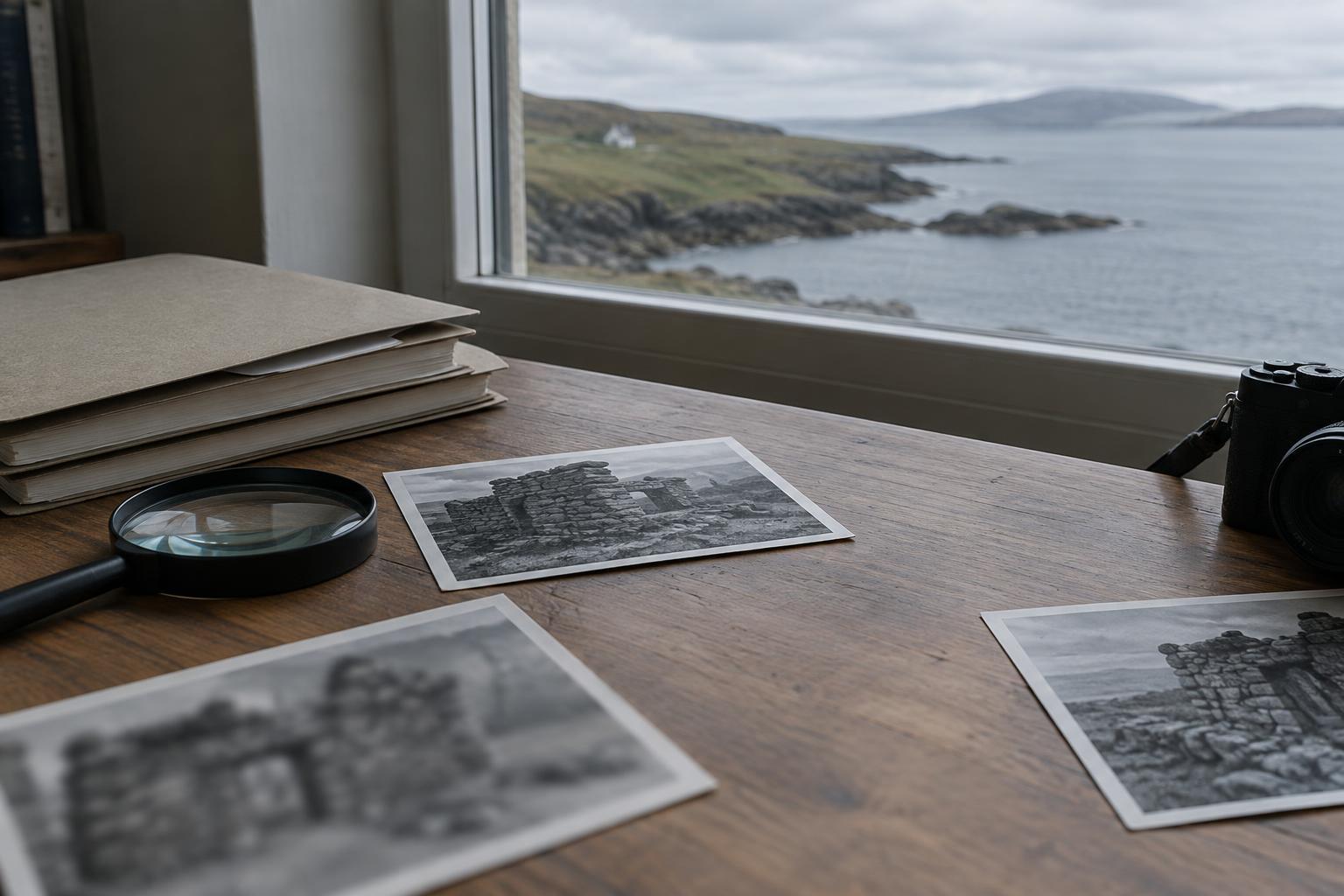
Sources answer different questions. A map may locate a structure but say little about who entered it. A photograph can show a moment without explaining what happened before or after the shutter closed. A later recollection may preserve a valuable perspective, yet memory and the passage of time can affect its details. Rather than treating these materials as interchangeable illustrations, explain briefly what each contributes and where its limits lie.
The wording of narration matters. “The records show” implies a stronger basis than “one account suggests” or “it is possible.” Use those differences deliberately, not as a string of hesitant disclaimers. Where interpretations diverge, name the point of disagreement: is it a date, a motive, an identity or the meaning of an image? A clear, specific uncertainty is easier to grasp than a general warning that historians do not know everything.
Keep images from claiming too much
On screen, an image can feel like direct evidence even when it is not. A modern landscape shot may help viewers understand the shape of a glen or the distance between settlements, but it does not show what that landscape looked like at an earlier time. An engraving, staged photograph or footage from another location may evoke a period while depicting something else entirely. Captions and narration should make those relationships clear at the point where the image appears.
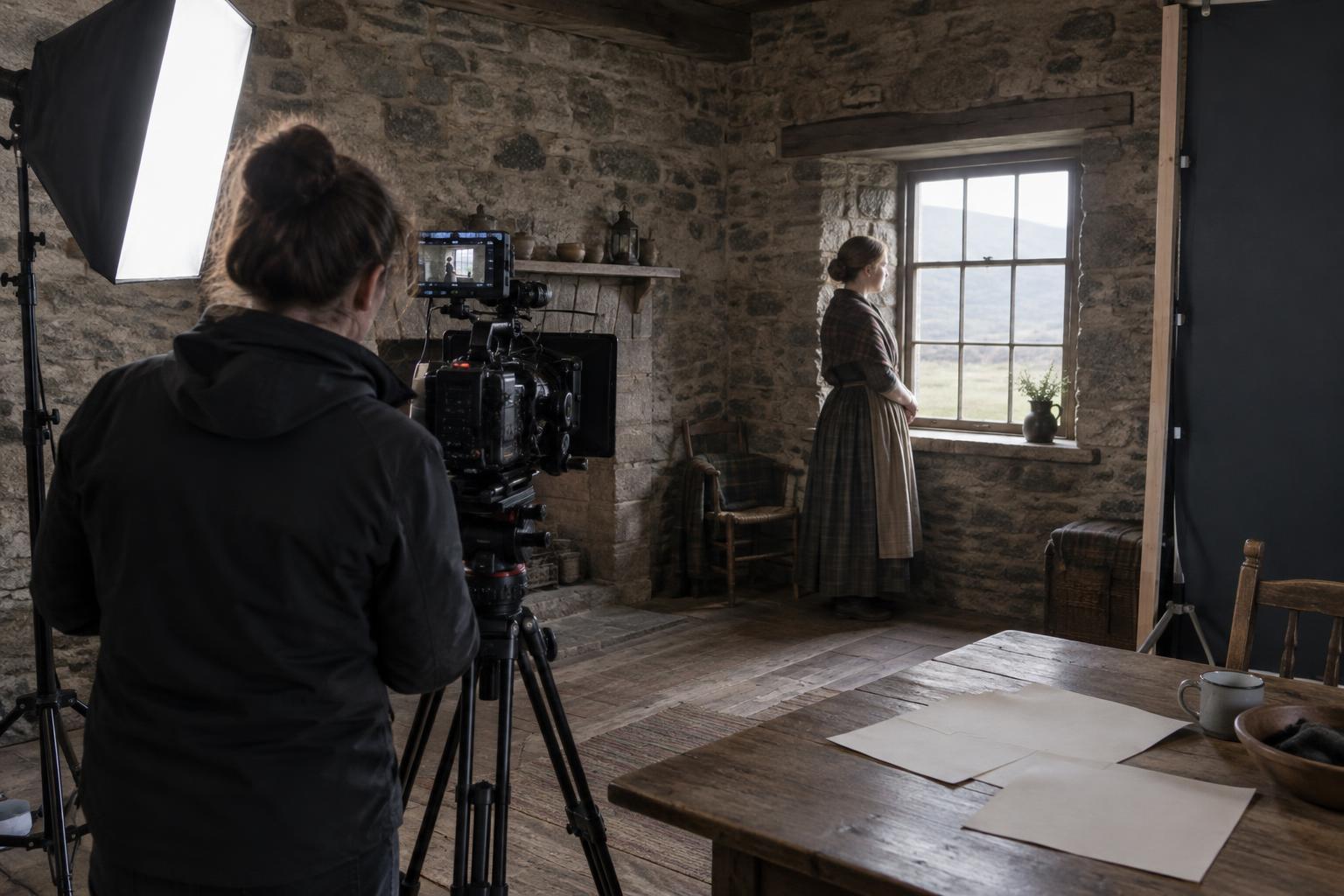
Reconstruction can be useful if its status is unmistakable. A close shot of hands sorting papers, for instance, can suggest the work of examining records without pretending to reproduce a documented encounter. Avoid invented archival pages, false-looking dates or dialogue presented as a recovered quotation. If an illustration is interpretive, call it an illustration. The aim is not to remove visual imagination from documentary craft; it is to prevent an evocative sequence from quietly becoming a claim of fact.
Let the edit leave space for doubt
Music, pacing and shot order shape how certain a conclusion feels. A dramatic swell beneath a tentative theory may make it sound solved. Cutting from a witness account straight to a related location can imply that the account has been verified there. To avoid accidental overstatement, consider what the audience is likely to infer from the sequence, not only what the script says. A short pause, a second perspective or a visible return to the source can restore the distinction.
Uncertainty need not slow a film to a halt. Give viewers firm points of orientation—a place, an object, a documented change—then identify the missing link. A simple timeline can distinguish a known sequence of events from an estimated period. A map can show the area under discussion without marking a disputed route as definite. These choices allow the story to keep moving while showing where its path rests on interpretation.
End with what the gap tells us
Missing evidence is not automatically evidence that an event did not occur. Records were created for particular purposes, kept unevenly and preserved by circumstance as well as choice. A film can ask whose experiences were likely to be recorded and whose may be harder to recover, without claiming to speak for people whose words are unavailable. That question is especially important when a polished narrative might otherwise make a partial archive seem complete.
Before finishing, review the film as someone unfamiliar with the material might. Can that viewer tell an original document from a modern illustration, a contemporary view from an older image, and a strong conclusion from a plausible reading? If not, a caption or a line of narration may do more good than another dramatic shot. An honest ending can leave a question open while still offering a meaningful result: what can be known, why it matters, and what remains beyond the surviving evidence.