Start with a question, not a founding date
A Scottish village may have grown around a farm, church, harbour, mill or road, then changed shape several times. Trying to find the moment it “began” can obscure that longer story. Start with a manageable question instead: When did a particular street appear? Why are the oldest-looking buildings beside the burn? What happened to a former school or workshop?
Set a clear area for your study and note its present-day place names. Older sources may use different spellings, refer to a nearby estate or parish, or place a settlement under a name that is no longer familiar. Keep a research log recording each source’s title, date, location and any uncertainty about what it shows. A simple timeline of confirmed observations will help separate evidence from plausible explanations.
Compare maps as snapshots, not complete portraits
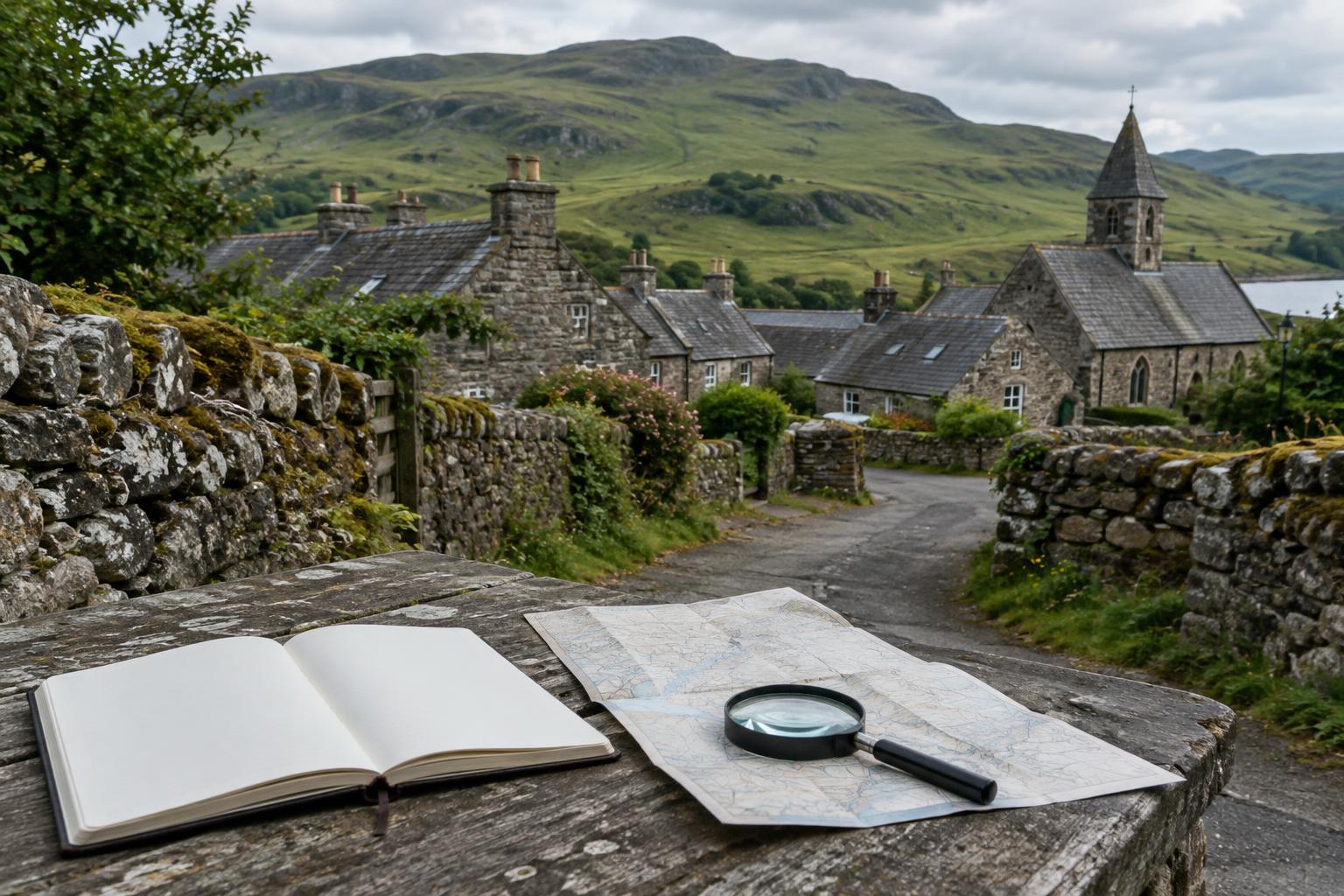
Historical maps are a useful first stop because they show relationships between roads, fields, watercourses and clusters of buildings. The National Library of Scotland’s map collections offer a way to explore maps from different periods. Begin with a modern map, then work backwards. Look for features that persist, such as a bridge or street line, before noting what appears to change.
Check a map’s survey or revision information where available; its publication date may not tell you exactly when every feature was recorded. A building missing from one map and present on another was not necessarily built in the intervening year. Mapmakers also chose what to label and how much detail to include. Compare maps at similar scales when possible, and treat an apparent disappearance as a question to investigate rather than immediate proof of demolition.
Sketch a working map of your own. Mark features you can locate confidently, and use a different notation for uncertain matches. This is especially helpful where roads have been realigned, shorelines altered or several buildings shared a name.
Read buildings carefully from the outside
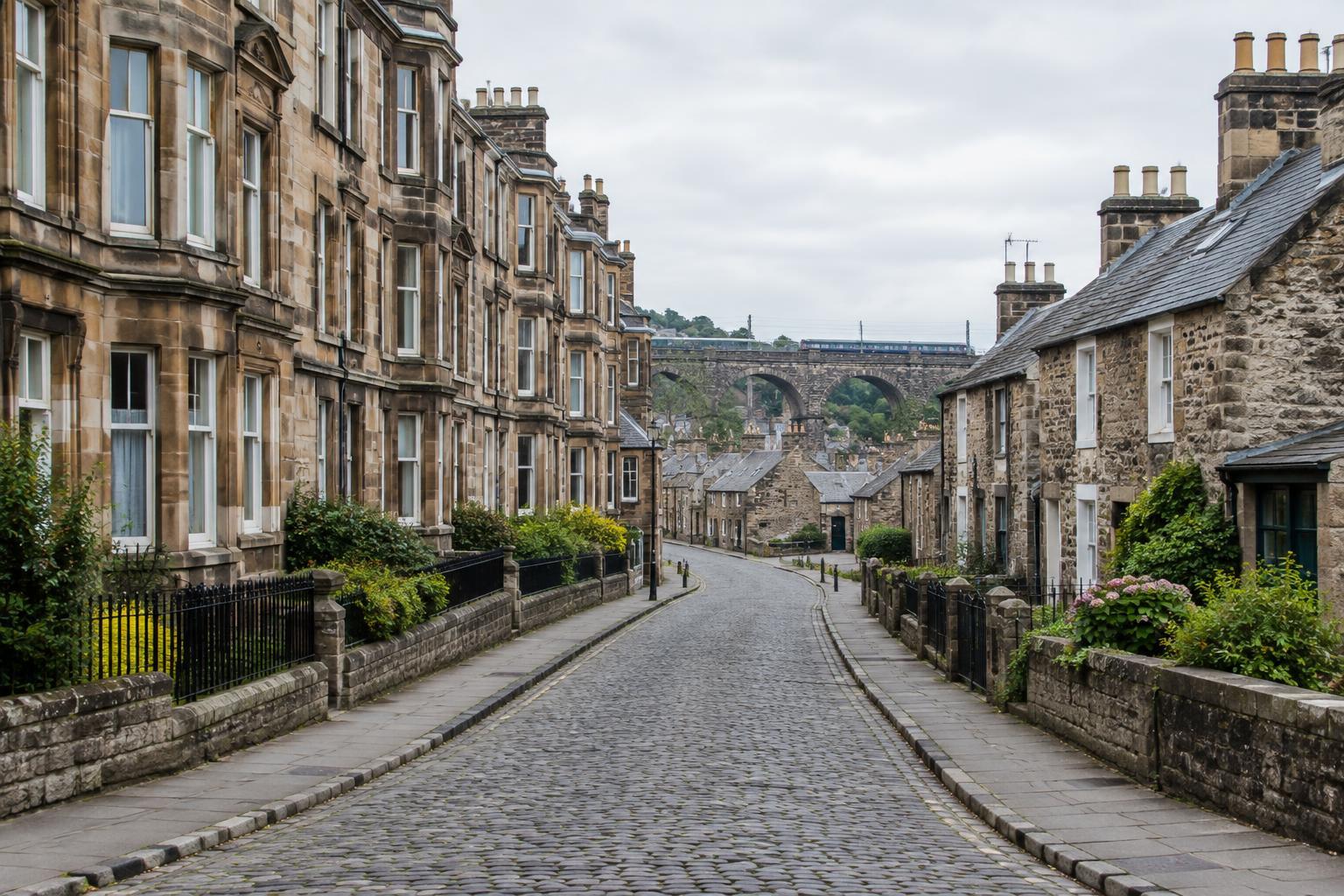
A walk through the village can test what the maps suggest. Notice building orientation, rooflines, extensions, blocked openings and the relationship between entrances and older routes. A row of cottages may suggest a shared phase of development, while changes in stonework may point to later alterations. Neither observation establishes a date on its own: materials can be reused, façades replaced and buildings adapted repeatedly.
Photograph details from public places and record where each image was taken. Street layouts, boundary walls and the position of a former yard can be as informative as a prominent building. If a building is listed or otherwise recorded by Historic Environment Scotland, its entry may provide useful descriptions and references. Read those details alongside what you can see: a designation is not a complete history of every part of a building.
Respect private property and active places of worship, work and burial. Ask permission before entering a site or photographing spaces that are not public. An exterior survey, made carefully, can still reveal plenty.
Use records to test the story suggested by the landscape
Local archives and libraries may hold photographs, newspapers, plans, school material or records donated by residents. Parish records, census returns and valuation rolls can help connect names, occupations and properties, though their coverage and accessibility vary. Estate papers may be valuable where an estate shaped land use or housing. Search by nearby farm, parish and estate names as well as the village name.
Ask what each record was made to do. A census captures households at a particular point, not everyone who ever lived in a house. A valuation roll concerns assessed property, not the full social life of its occupants. A newspaper report may describe an event vividly but leave out quieter experiences. Where an address is vague, compare several clues—neighbours, occupations, maps and building names—before attaching a person to a specific property.
Community memories can add detail that paperwork misses, particularly about how buildings were used within living memory. Record who shared a recollection and, with their consent, the circumstances in which it was shared. Memory is valuable evidence, but a remembered date or identification should be checked where possible rather than presented as certain.
Bring the evidence together without filling every gap
Choose one feature—a bridge, school, shop or group of houses—and trace it across your sources. You might have a building on a map, an occupation associated with its address in a record and a present-day wall that appears to match its footprint. Explain how those pieces fit together, but also where the connection remains tentative.
For a written account, film or walking route, distinguish clearly between what a source shows, what you infer and what local tradition says. Caption images with their known dates and origins; do not present a modern reconstruction or unidentified photograph as an archival view. A good village history does not need an answer to every question. Its strength lies in showing readers the surviving traces—and giving them a fair sense of what those traces can support.