What made a town a burgh?
A burgh was a town recognised through a grant of particular rights. In medieval Scotland, kings established royal burghs; other burghs developed under the authority of nobles or church institutions. Their rights varied, but might include holding a market, collecting certain dues or managing local affairs. Calling a place a burgh therefore tells us something about its legal position, not simply its size or the number of buildings on its streets.
That distinction matters when picturing Scottish history. A settlement could be busy without having the same privileges as a nearby burgh. Equally, two burghs might differ greatly in wealth, population and connections to surrounding districts. Rather than treating burgh status as a guarantee of prosperity, it is more useful to ask what rights a particular town held and how its inhabitants used them.
Markets connected town and countryside
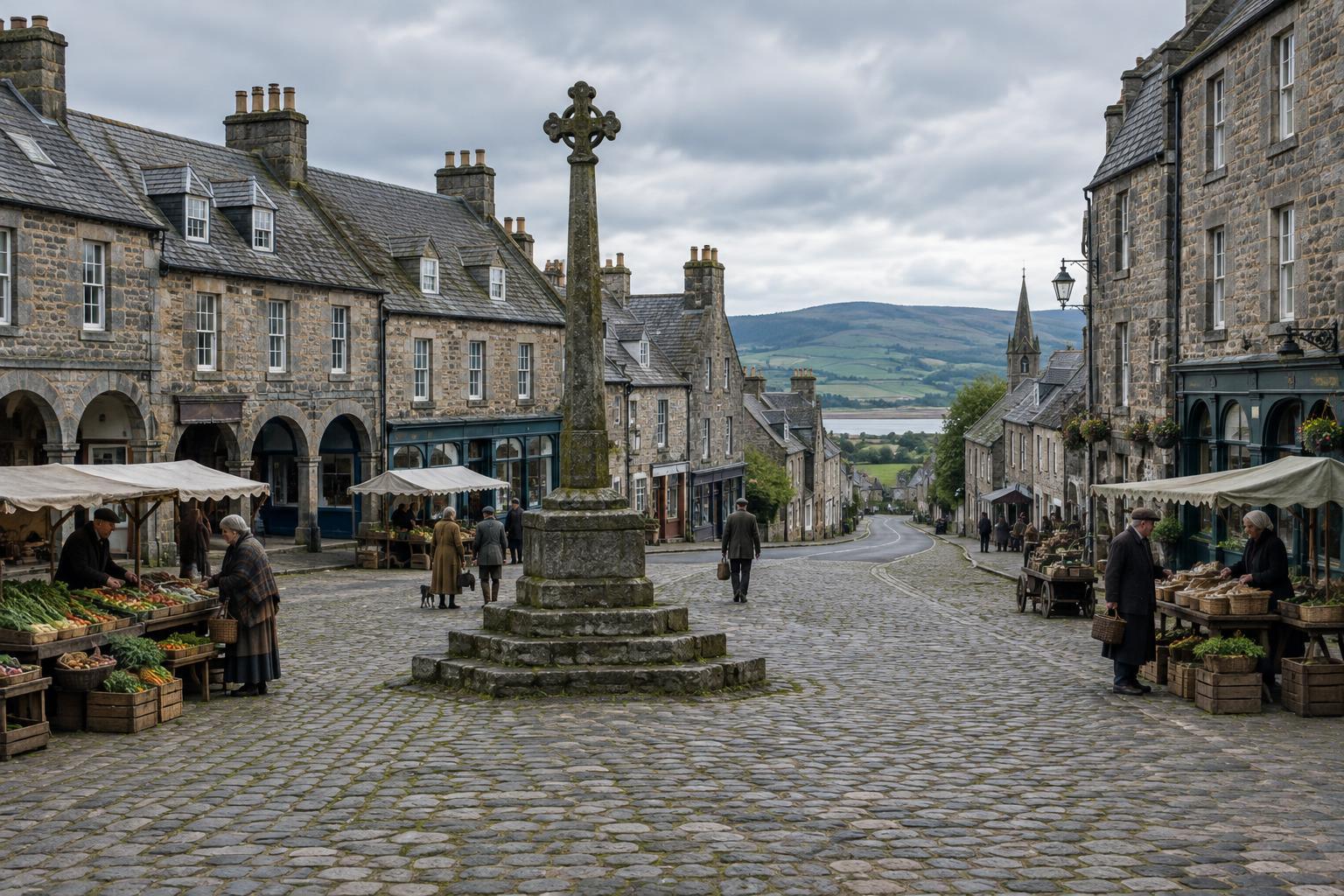
Market rights helped make burghs places of exchange. People from the surrounding countryside brought produce, livestock or materials into town, while townspeople supplied goods and services that were less readily available elsewhere. Streets, market spaces, workshops and places of storage were all part of this relationship. Town life depended on rural labour and resources just as rural households depended, to varying degrees, on access to town markets.
Rules about where and when goods could be sold could benefit those entitled to trade within a burgh. They could also frustrate people outside those arrangements. Markets were not simply open spaces where everyone met on equal terms: dues, regulations and established privileges affected who could sell, buy or profit. The details changed across places and periods, so a useful question for any town is not just what was traded, but who controlled the terms of trade.
A burgh’s location also shaped its possibilities. A port might connect local producers with trade beyond Scotland, while an inland market town could serve a different network of farms and settlements. Neither role was fixed forever. Changes in routes, demand and political circumstances could alter the importance of a town without erasing its older identity.
Who had a voice in the burgh?
Burgh government did not represent every resident equally. Councils and officeholders managed matters such as local order, property and aspects of trade, but formal authority was concentrated among people who held recognised civic standing. Merchants and craft workers could have organised interests, sometimes with competing priorities. The exact balance of power differed between burghs and changed over time.
Looking only at officeholders leaves much of the town out of view. Apprentices, labourers, servants and people living in poverty contributed to its daily work without necessarily sharing in its government. Women could be active in household businesses, buying and selling, and the wider economy, yet their opportunities and formal standing were shaped by local rules and social expectations. A record of a council decision can show what officials wanted to regulate; it does not, by itself, show that everyone complied or agreed.
Reading a burgh in the landscape and the archive
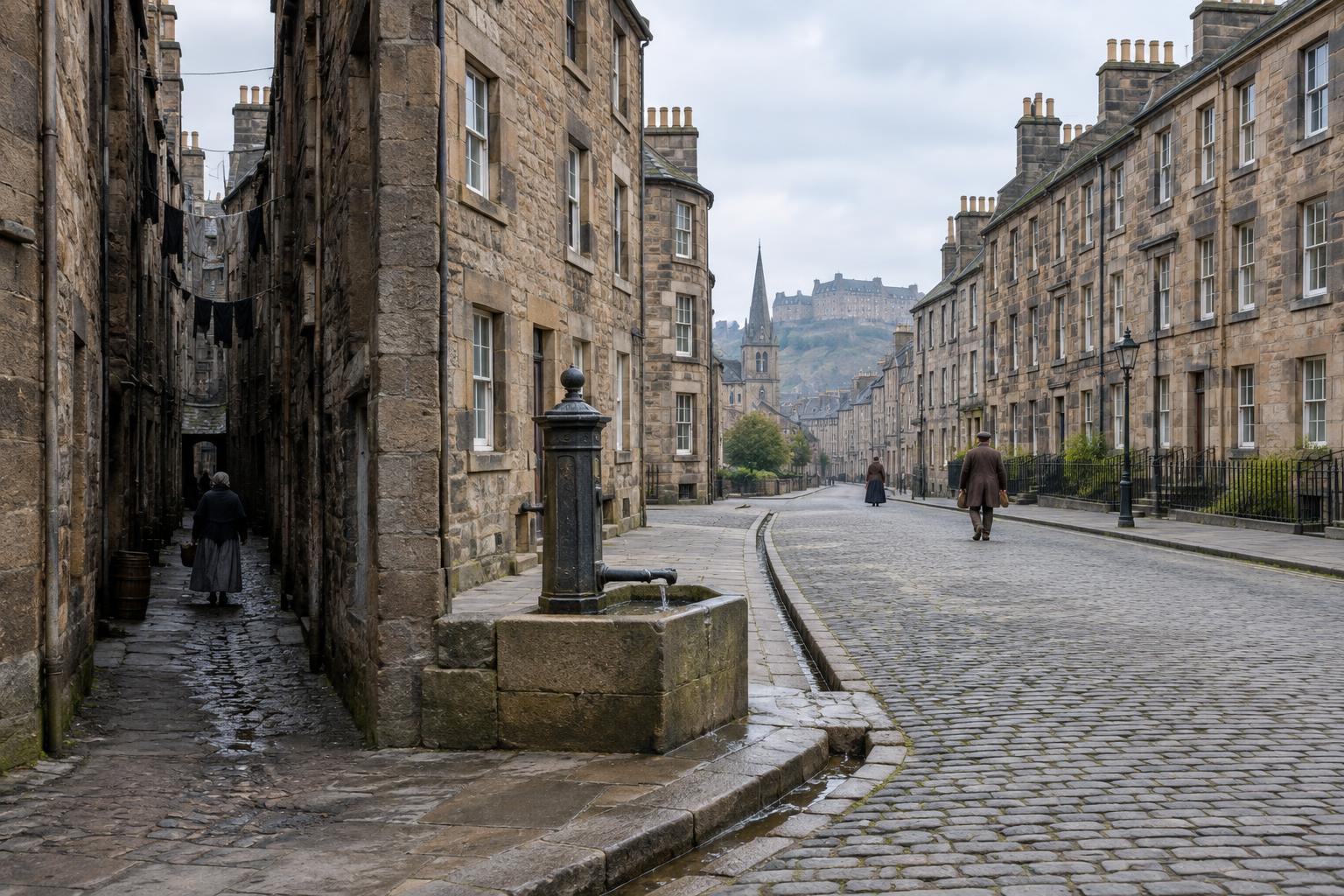
The built environment offers clues to a burgh’s past. A market place, a harbour, the alignment of streets or the position of a church can suggest how people moved and gathered. But surviving buildings rarely provide an untouched picture of one historical moment. Streets can be rebuilt, waterfronts altered and old structures given new purposes. A present-day walk is most revealing when it prompts questions rather than serving as proof on its own.
Written records can add another layer. Charters describe granted rights; council minutes record decisions; accounts may reveal payments and expenses. Each type of evidence answers different questions, and each has limits. A charter states an entitlement, not necessarily how effectively it was exercised. An account records a transaction, not the full experience of the person behind it. Comparing such records with maps, buildings and the geography around a town can produce a richer picture without pretending that every gap has been filled.
That approach makes burgh history more than a story of picturesque streets or powerful merchants. It shows a town as a set of relationships: between residents and governors, traders and customers, and urban spaces and their rural surroundings. To understand one Scottish burgh, begin with its particular rights and setting. Then ask whose work kept it going, whose interests its rules protected and which voices its surviving records leave hardest to hear.