A belief became a criminal charge
Witchcraft accusations did not begin with a single Scottish law. People already had ways of explaining illness, misfortune and conflict through beliefs about harmful magic. In 1563, the Scottish Parliament made witchcraft a capital offence. The law gave authorities a means to prosecute acts that some neighbours feared and that religious leaders could interpret as grave wrongdoing.
The trials were not one continuous campaign. Prosecutions rose and fell over the following generations, shaped by local circumstances as well as wider religious and political concerns. Cases associated with the North Berwick trials in the 1590s show how fears of a threatening supernatural conspiracy could reach the highest levels of government. Other accusations began much closer to home: a dispute between neighbours, a death that seemed difficult to explain or a person’s reputation built up over years.
From suspicion to prosecution
A suspicion did not automatically become a trial. Accusations could move through neighbours, local church authorities and officials before reaching a court. The route varied by place and period. Testimony might include reports of threats, claims that a misfortune followed an argument or accounts of an accused person’s supposed confession. Each step could change how a story was told and what was written down.
Women made up most of those accused in Scotland, but men were accused too. Gender mattered without providing a complete explanation for any individual case. Poverty, strained relationships or a reputation for unusual behaviour might leave someone exposed to suspicion; none of these circumstances made an accusation inevitable. Looking closely at a case means asking who brought the allegation, what had happened between the people involved and which authorities chose to pursue it.
Interrogation also matters. Some confessions were obtained under coercive conditions, including prolonged questioning and deprivation of sleep. A written confession can therefore tell us what an investigator wanted answered as much as what the accused believed or did. Outcomes differed: not everyone accused was convicted, though convictions could lead to execution.
What an accusation can—and cannot—prove
A trial record is evidence that an allegation was made and, where the record allows, of how people responded to it. It is not evidence that anyone caused a storm, harmed a neighbour through supernatural means or met the devil. That distinction is essential even when a document uses confident language. Courts and witnesses worked within assumptions that a modern reader need not accept as fact.
Nor should every allegation be dismissed as a simple lie. A witness might sincerely have feared an accused neighbour. An accused person might have offered remedies or used words that others understood as threats. The historian’s task is to distinguish such possible actions and beliefs from claims of supernatural power, while recognising that the surviving record may not settle exactly what happened.
The records also leave silences. They often preserve the words of officials and witnesses more fully than the accused person’s own account. A clerk’s summary is not a direct recording of a conversation. Treating these documents as accounts made for a purpose, rather than transparent views into the past, helps us read them with care.
How to tell this history on screen
Film can make a trial feel immediate, but its images can also imply certainty that the evidence does not support. A documentary might show a surviving document while clearly identifying it as an accusation or court record. If an actor reads its words, the film can explain who originally wrote them down and whether they represent testimony, an official summary or a confession. A reconstruction should be labelled as one, not presented as archival footage.
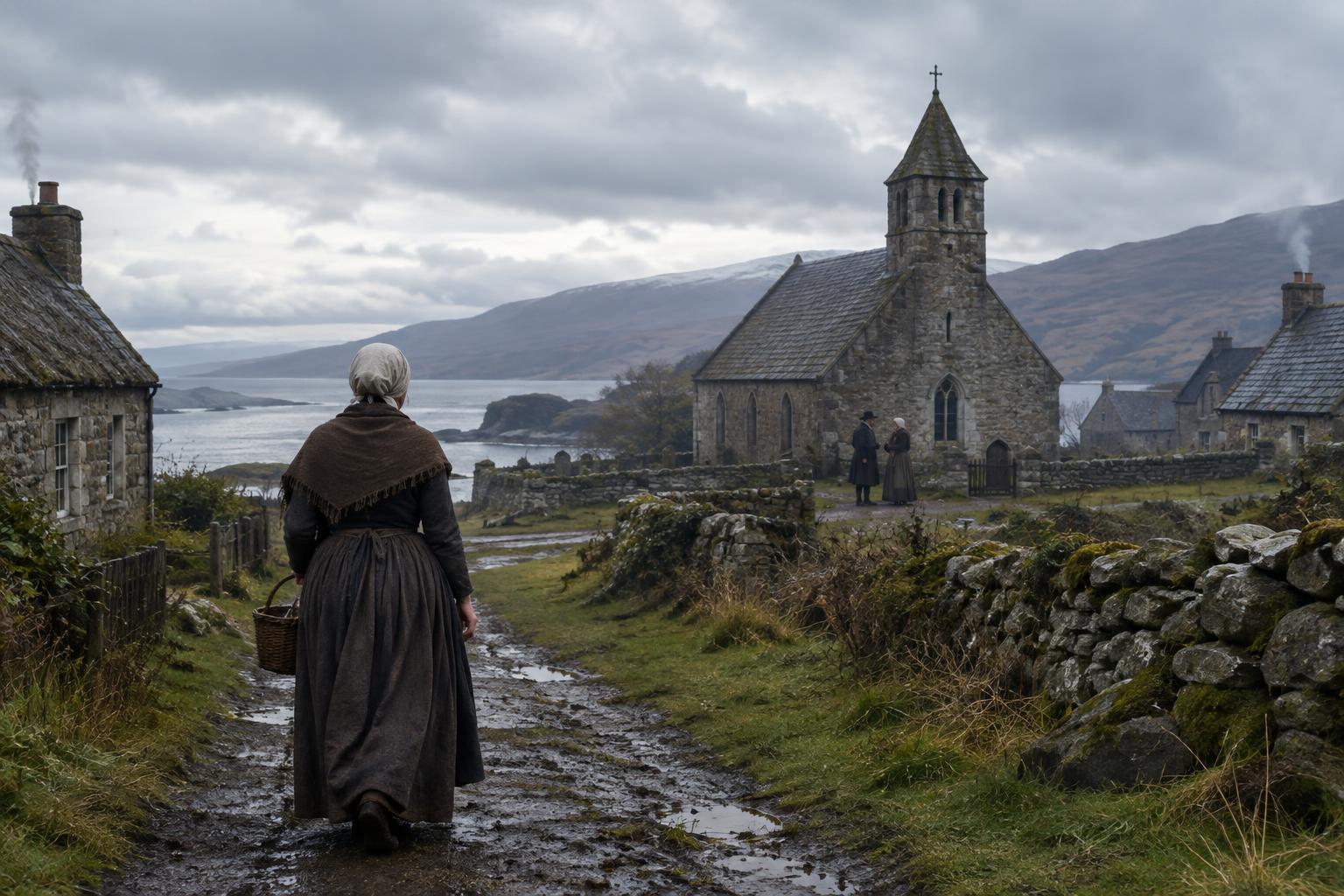
It is tempting to illustrate every case with the same imagery: a lonely woman, a hostile crowd and a dramatic courtroom. That shorthand can obscure the different paths by which cases developed. Maps, landscapes and carefully captioned documents can instead help viewers follow the relationship between local suspicion and legal action, without pretending to show an undocumented scene.
The most useful question to carry from a film into an archive is not “Was this person a witch?” It is “How did this person come to be accused, and what can the surviving evidence establish?” That question keeps attention on the people who lived through the trials while refusing to turn their accusations into proof of witchcraft.