Choose a source that can carry a question
A photograph, map, letter or timetable can anchor a scene, but its age alone does not make it interesting on screen. Begin with a question the source can help explore: What changed in this place? Who is visible in the record, and who is missing? What did a journey, a job or a public event require of the people involved? A focused question gives the scene direction without demanding that one item explain an entire period.
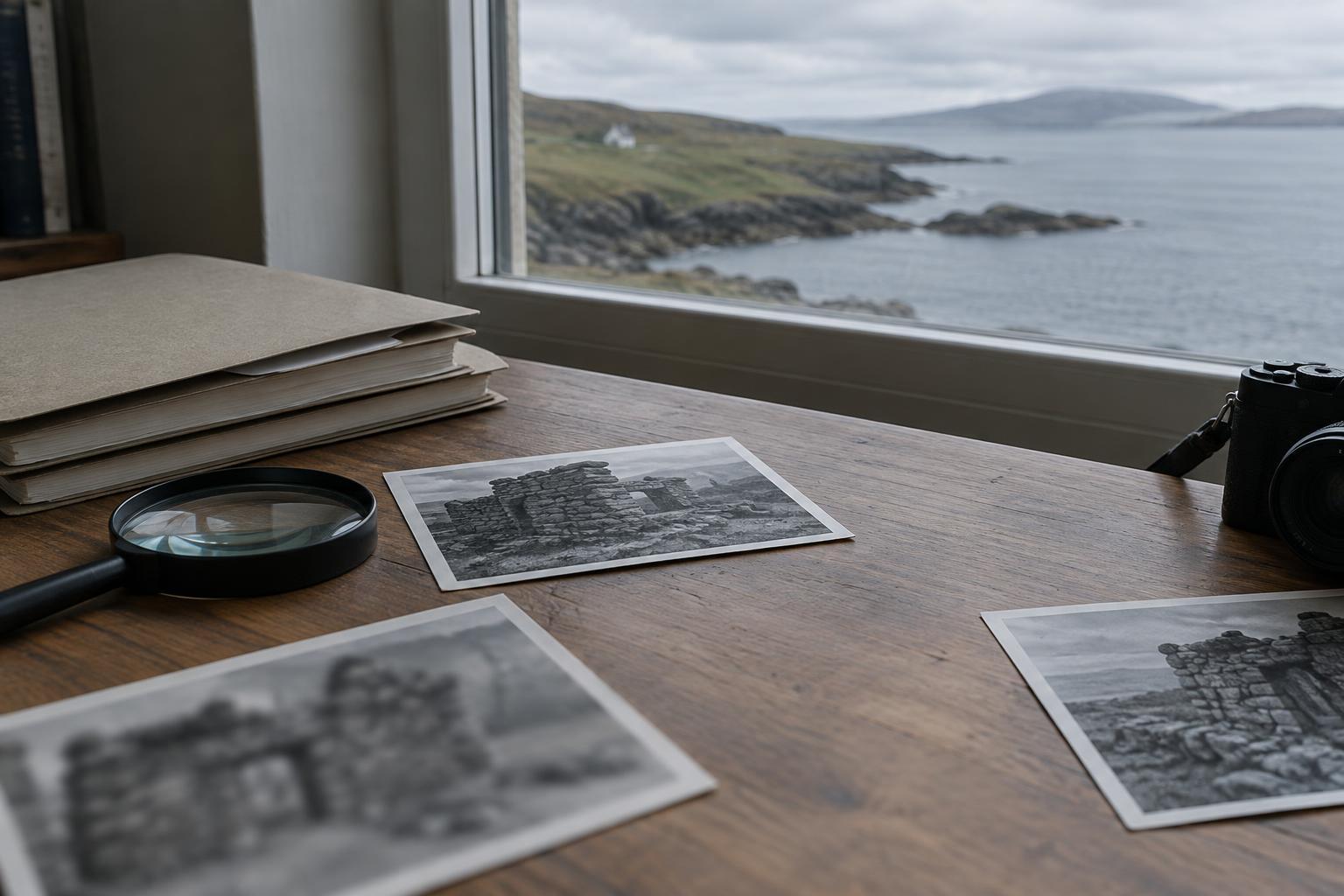
For example, imagine building a scene around a harbour photograph from a Scottish coastal town. Treat this as a hypothetical example, not an archival discovery. The photograph might show vessels, workers and buildings, yet it cannot by itself establish what a working day felt like or why a particular trade declined. Its strength lies in offering details to examine. Before scripting, identify where the item came from, how it is described, when it was made if known, and what other evidence you would need to interpret it responsibly.
Introduce the source before asking it to speak
Give viewers a moment to understand what they are looking at. Show enough of the whole item to establish its form before moving to a detail. A photograph may have a border, caption or reverse side that matters; a letter has a writer, recipient and purpose. On-screen text or narration can state what is known in direct language. If a date or attribution is uncertain, say so rather than smoothing over the gap.
The introduction should also explain why this source belongs in this scene. Instead of announcing that an image reveals life in the harbour, try a narrower invitation: it lets us look at how the waterfront was arranged at the time it was photographed. That phrasing makes room for investigation. It also prepares viewers to distinguish visible evidence from the broader historical account that will follow.
Let the camera examine, not invent
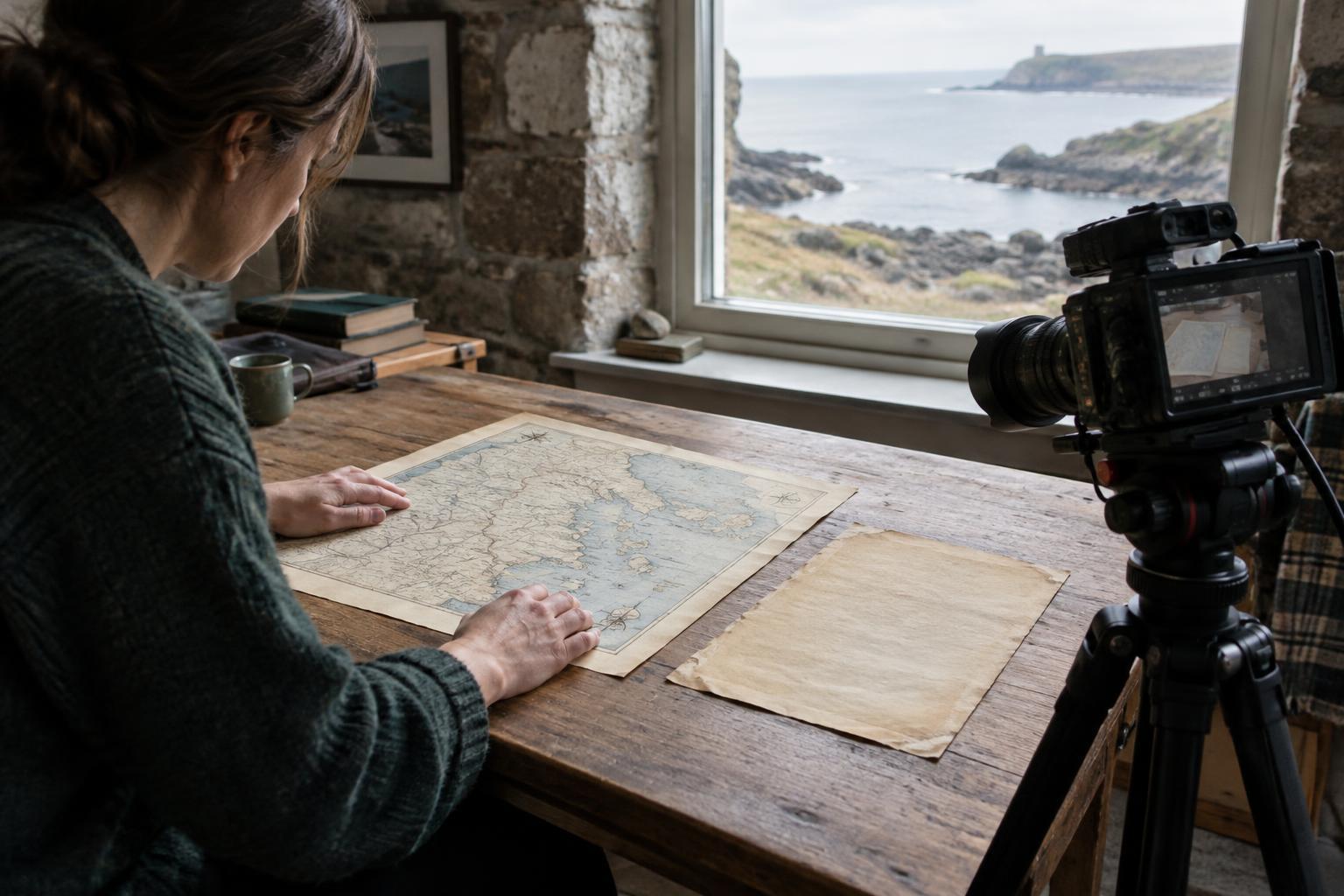
The middle of the scene can move from the whole source to two or three selected details. In the hypothetical harbour photograph, those might be the position of the quay, a group of people beside a vessel and a building at the edge of the frame. Explain why each detail matters to the question. A map or another independently identified record could then help clarify a location or suggest a line of further inquiry.
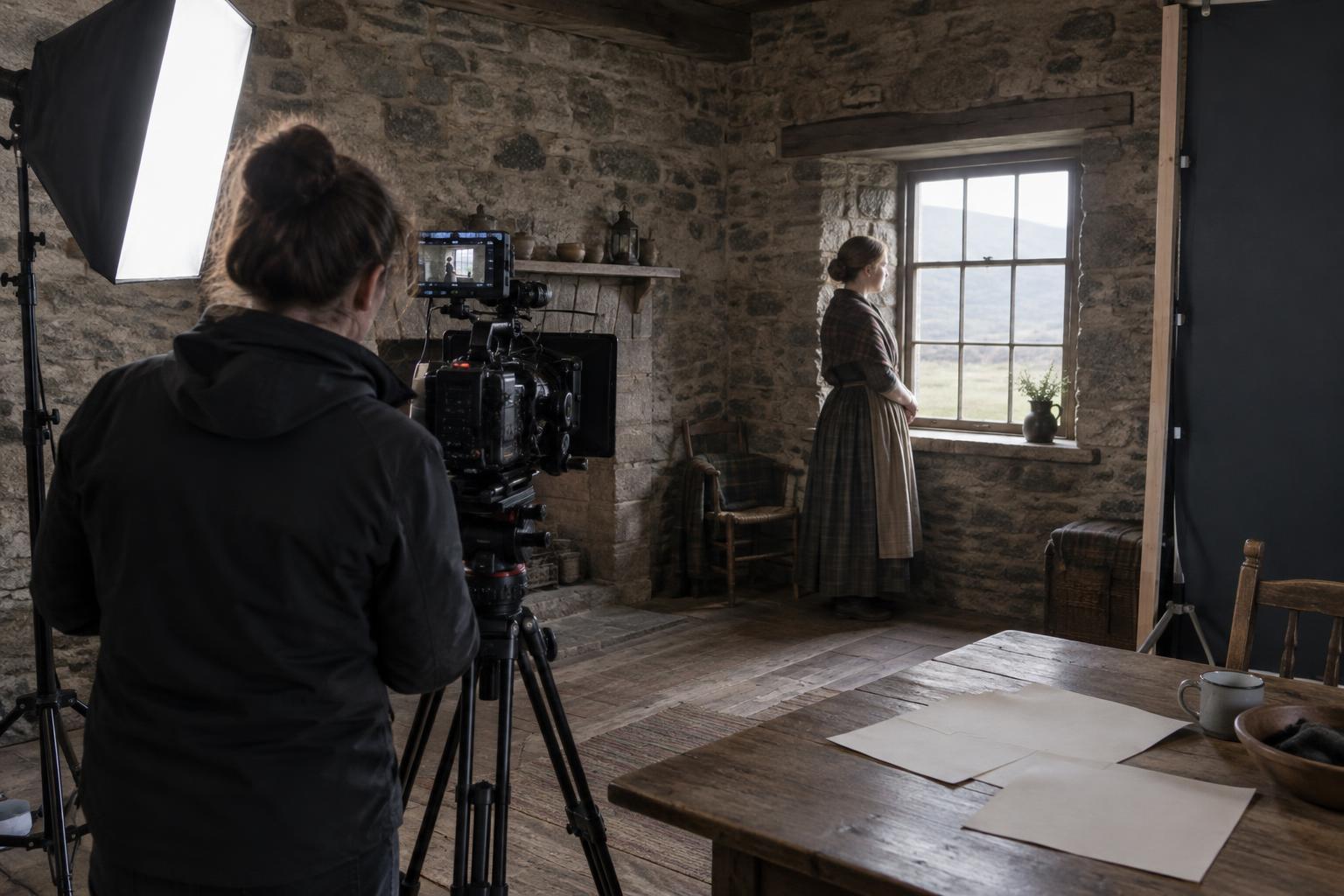
Editing choices affect what viewers believe. A tight crop can make an incidental figure seem central; a dramatic sound effect can imply an atmosphere the source does not record. Use movement, music and sound design to guide attention, not to pass off reconstruction as evidence. If actors, recreated documents or illustrative footage are used, label them clearly. Likewise, do not animate a still photograph so aggressively that the movement appears to have been captured by the original camera.
Build interpretation in visible steps
A useful scene separates three things: what the source shows, what can be established from other material, and what remains an interpretation. A harbour image might show a particular arrangement of boats and buildings. A dated map might support an account of where those buildings stood. An argument about how work shaped the town would require more context, perhaps from records, testimony or research already assessed for reliability. Narration can make those steps audible with phrases such as “the photograph shows,” “the map places” and “taken together, these suggest.”
Consider whose perspective produced the source. A promotional image, family snapshot and official survey could depict the same waterfront for different reasons. Each may leave out work taking place beyond the frame or people the maker did not think to include. Naming those limits does not weaken the scene. It helps viewers understand why interpretation involves choices and why an absence from one record is not proof that something did not happen.
Close with an insight the source can support
The ending should answer the opening question as far as the evidence allows. It need not deliver a sweeping conclusion. A strong close might show how the photograph, read alongside a map, changes our sense of the harbour’s layout while leaving the experiences of its workers open for further investigation. Returning to the full image after examining its details can help viewers see it with fresh attention.
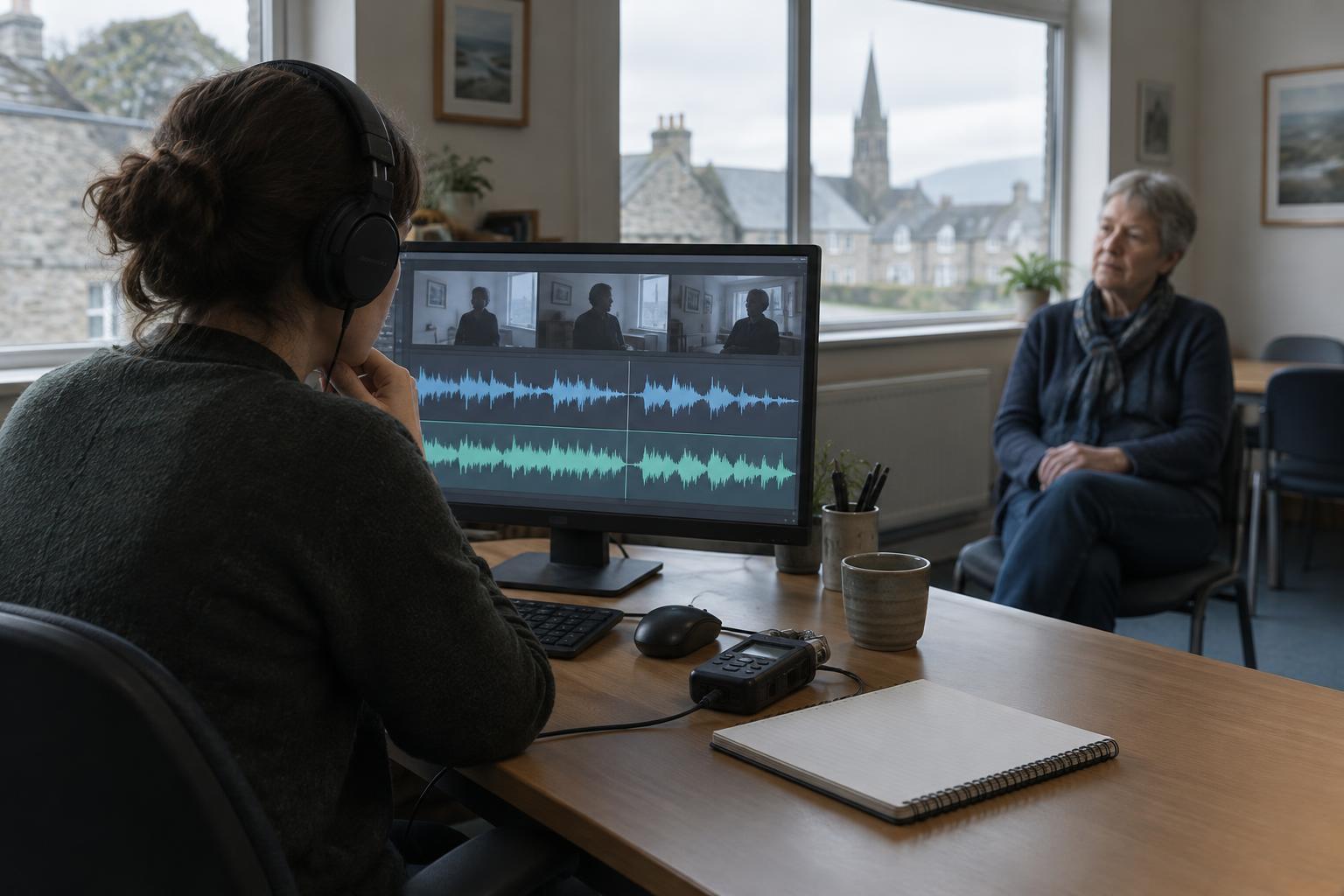
Before finishing, check the scene as a viewer would. Can someone tell which material is archival and which is illustrative? Are captions legible long enough to read? Does the narration acknowledge uncertainty where it matters? Have you credited and handled the source according to the conditions of its use? A scene built this way does more than display an old object. It shows how a historical account is made—and gives viewers enough of the process to think alongside it.