Start where the jute was made
Begin at Verdant Works, a former jute mill in Dundee’s Blackness area. It offers a useful starting point because it puts the scale and physical demands of textile production into view before you reach the waterfront. Check opening arrangements if you plan to go inside; the walk still works as an outdoor route if the museum is closed. Take time to look at the building as a workplace, not just as a picturesque survivor. Its walls and yards belonged to a system of machines, deliveries, shifts and skilled labour.
Jute connects Dundee to a much wider history. The raw fibre came from South Asia, particularly Bengal, through trading networks shaped by the British Empire. In Dundee, workers turned it into products used for purposes such as sacks and other industrial fabrics. Women formed a large part of the mill workforce, but a street view cannot tell you what any individual worker earned or experienced. Let the building prompt questions rather than stand in for every worker’s story.
Walk from Blackness towards the centre
From Verdant Works, make your way towards the city centre, using Blackness Road and the connecting streets that suit your route. This part of the walk is worth taking slowly. Look for the contrast between substantial former industrial buildings, smaller premises and later alterations. Dundee’s jute industry was not contained in one landmark: mills and the businesses that served them shaped whole working districts. Some buildings have found new uses, while others have disappeared or become difficult to recognise.
Resist the temptation to label every old brick building a jute mill. If you are curious about a particular site, note its location and investigate it afterwards through a reliable local collection or building record. That habit makes the walk more rewarding: you can enjoy what is visible without inventing a history for it. It also leaves room to notice present-day Blackness, which is a lived-in part of Dundee rather than an outdoor museum.
Cross the civic heart of Dundee
Continue towards the High Street and City Square. The change in setting helps connect factory work to the wider city. Shops, public buildings and gathering places belonged to a Dundee whose economy was closely tied to jute, even though their façades do not explain that relationship on their own. If you want an indoor pause, The McManus offers another way to encounter Dundee’s history and collections; check its current access arrangements before making it an essential stop.
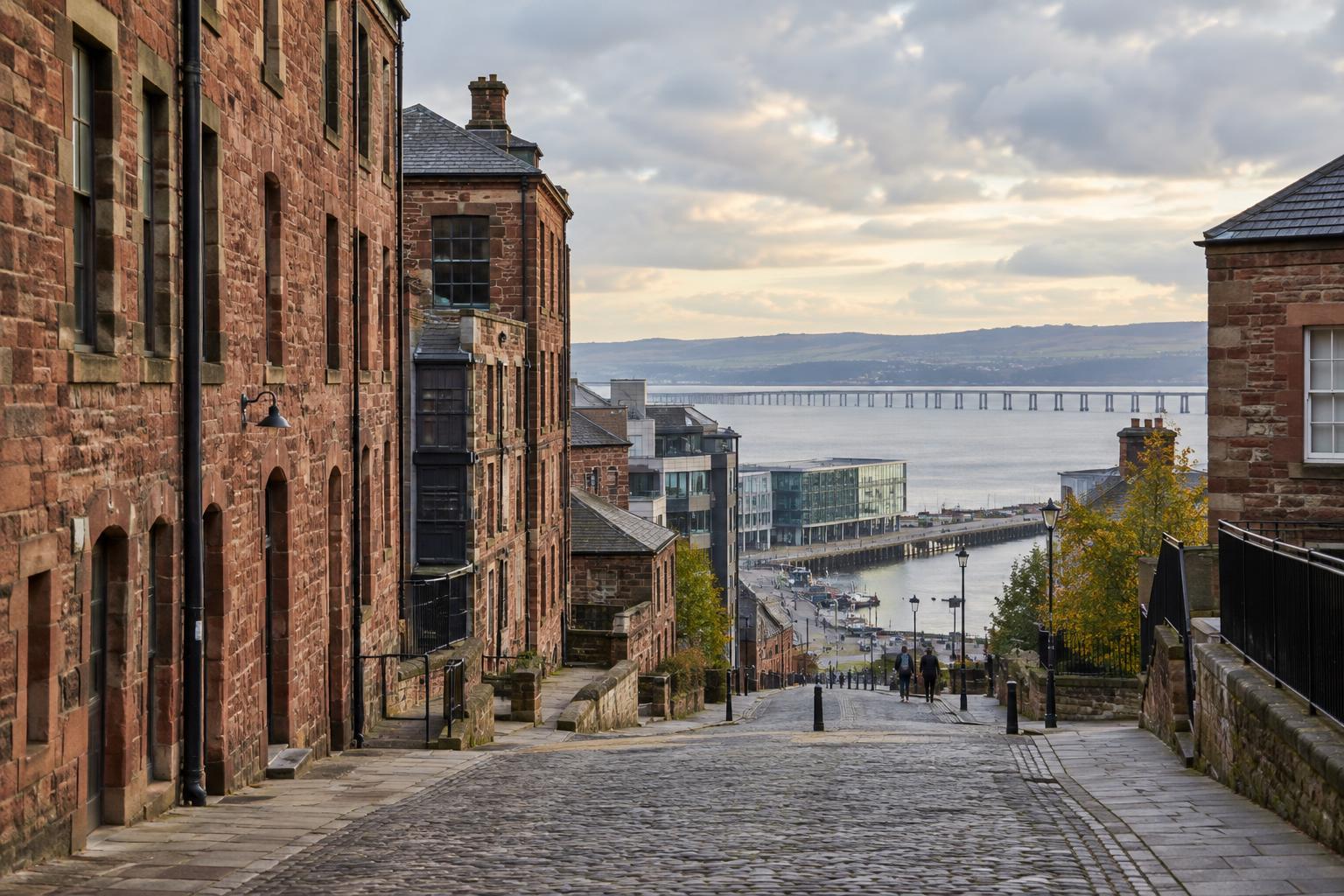
This is also a good place to think about how a city chooses to tell its past. A restored mill can make industrial processes tangible, while a civic square may draw attention to public identity and change. Neither view is complete. As you head downhill towards the Tay, carry both with you: the history of production and the everyday lives that surrounded it.
Arrive at the regenerated waterfront
Head towards the waterfront by a pedestrian route that feels comfortable on the day, allowing for crossings and any works along the way. The open space beside the Tay gives the walk a different scale. Here, new public areas and prominent cultural buildings make Dundee’s regeneration visible. At V&A Dundee, pause to look back towards the city as well as out across the water. The view links a contemporary visitor destination with the streets you have just crossed.
Nearby Discovery Point and RRS Discovery tell a different story of Dundee’s maritime connections. Discovery is associated with Antarctic exploration; it should not be treated as a jute ship simply because it stands by the waterfront. Instead, use the stop to consider how many histories meet at a port city: industry, shipping, exploration and the later decisions that shape what visitors can see today. Give yourself time to walk the public waterfront rather than rushing from one attraction to the next.
Make the route your own
This is a flexible city walk, not a promise that every historic site will be open or every stretch will be step-free. Check venue hours and an up-to-date walking map before setting out, and choose crossings and rest stops to suit your needs. You can keep the visit outdoors, add a museum, or reverse the route and finish among the former mill streets. Comfortable shoes and a layer for the exposed waterfront may make a leisurely visit easier.
The strongest connection between the mills and the waterfront is not a single surviving object. It is the chance to ask how Dundee’s work, trade and built environment changed together. Beginning at a place of manufacture and ending beside the Tay makes that question easier to see, while reminding you that regeneration adds a new chapter to the landscape rather than erasing the older ones.