Start with the film, not the label
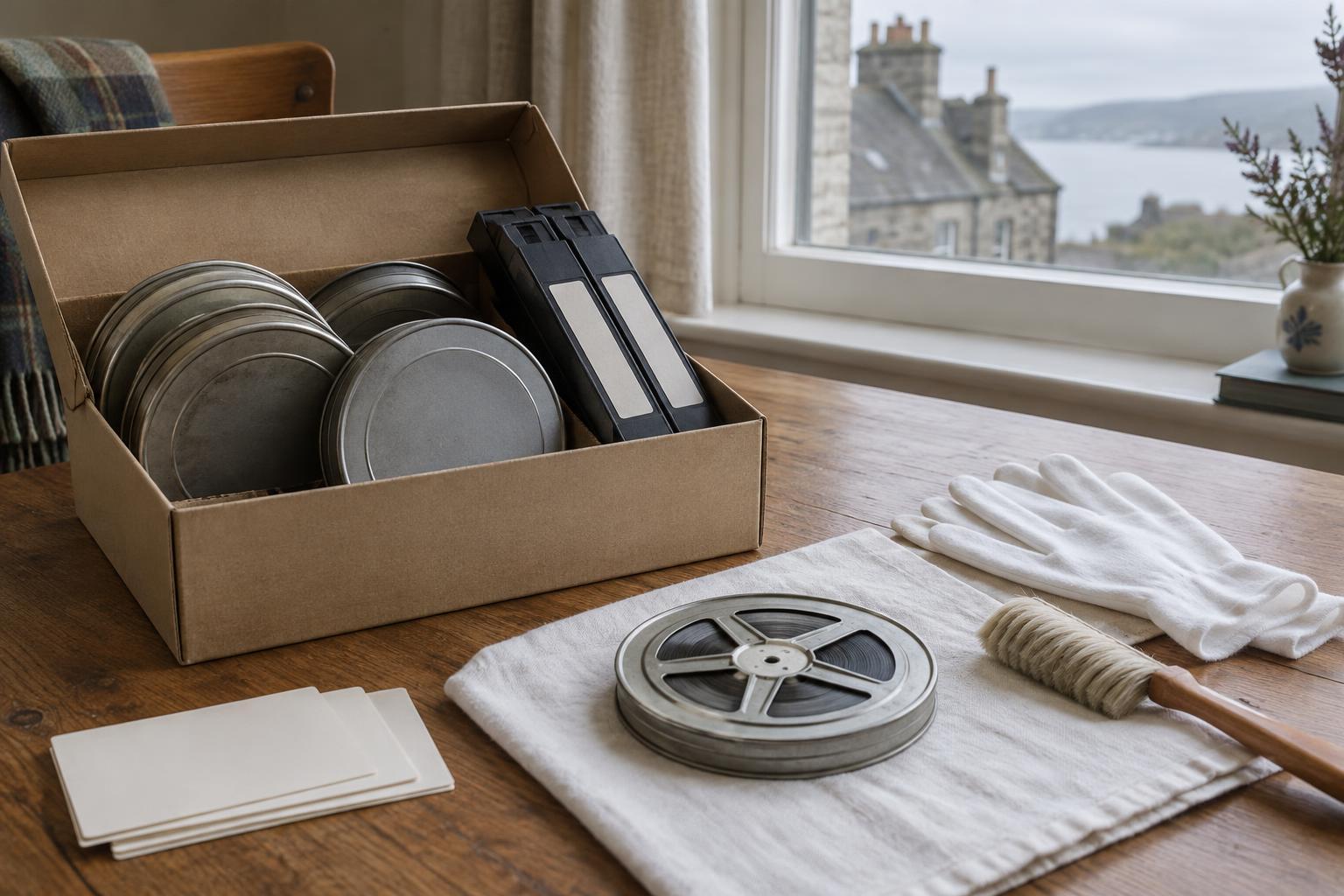
An old reel may be marked “8mm”, “Super 8” or “16mm”, but its box could have been reused. The reel itself is not conclusive either: film can be transferred onto a different spool. To identify a format, look at a short length of the film, ideally near its leader, rather than relying on handwriting, packaging or the projector found beside it.
For a family collection or a regional archive, getting this first step right matters. The format helps determine which equipment can safely view or scan the film. It does not, by itself, tell you when the footage was shot, where it was filmed or who made it. Keep any existing labels with the reel, even if they seem mistaken; they may still contain useful clues to its history.
Measure the width, then examine the perforations
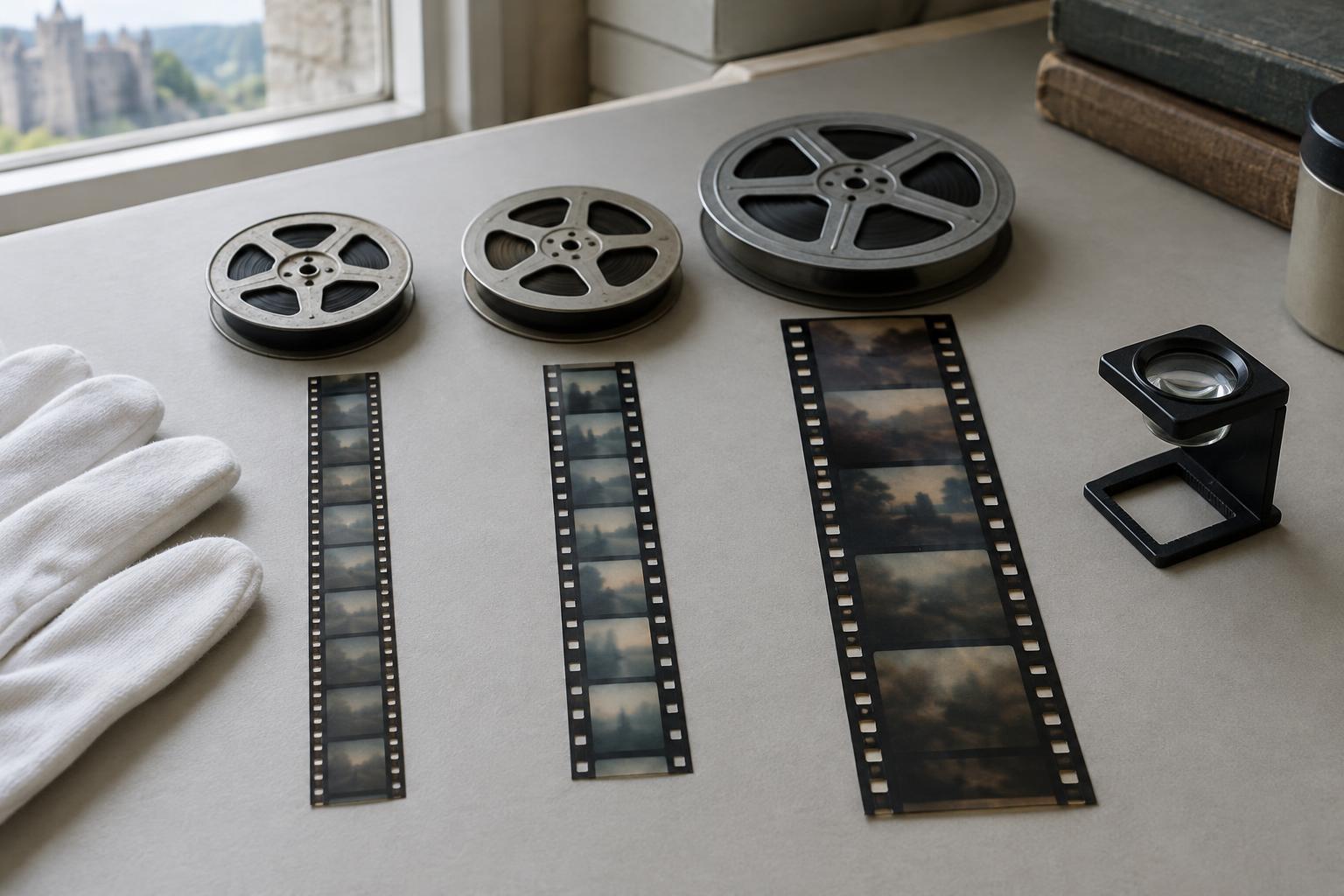
Film width offers the quickest distinction. Standard 8mm and Super 8 are both approximately 8 millimetres wide; 16mm film is approximately twice as wide. Measure the strip itself with a ruler rather than the diameter of the reel. If the film is tightly wound, do not pull out a length merely to check it. A visible leader or loose outer end may be enough.
Next, look along the edge for perforations: the regularly spaced holes that help equipment move the film. On 16mm film, they may run down one side or both sides. Standard 8mm has relatively large perforations for its narrow width. Super 8 has smaller perforations, leaving more room for the picture. A magnifier and a cool, diffuse light source can make these differences easier to see without running the film through a machine.
Tell standard 8mm from Super 8
Because the two 8mm formats have much the same overall width, the relationship between the holes and the picture is more useful than width alone. On standard 8mm, the perforations take up more of the edge and the image area is smaller. On Super 8, the smaller holes allow a visibly larger frame. Compare several frames if possible: a single damaged section can be misleading.
You may hear standard 8mm called “Regular 8” or “Double 8”. Double 8 describes a common way it was originally exposed on wider film before processing and splitting into 8mm strips. A finished reel is still identified by the film you have in front of you. Super 8 was generally loaded into a cartridge for filming, but processed Super 8 may arrive on an ordinary reel. Neither an 8mm reel’s centre hole nor its box is a dependable substitute for examining the film.
What soundtracks and image appearance can tell you
Some reels have a narrow stripe along an edge that may be a magnetic soundtrack. Some 16mm prints instead have an optical soundtrack: a patterned strip beside the images that equipment reads with light. These details can help describe a reel, but an apparent stripe does not guarantee that sound was recorded, and its absence does not identify the film format. Likewise, colour, black-and-white images, titles and handwritten notes are separate observations, not format tests.
If you can see the frames, note whether they appear as viewable positive images or as negatives with reversed tones. That distinction can matter when arranging a scan. Do not assume that every 16mm reel is a finished documentary print or that every 8mm reel is a home movie. Footage of a Scottish street, workplace or celebration might be an original recording, a copy or an edited compilation; the format alone cannot establish which.
Inspect and record without causing damage
Handle film by its edges with clean, dry hands, and support the reel so it cannot unwind onto the floor. Avoid forcing a tight coil, scraping the image area or using a projector simply to identify an unknown reel. Projectors can damage shrunken or fragile film. If a reel is brittle, warped, sticky or has a strong vinegar-like smell, limit handling and seek advice from a film archive or experienced film specialist before attempting playback.
A useful record needs only a few careful observations: approximate film width, perforations on one or both edges, the apparent frame size, any possible soundtrack, and the wording on the reel and box. Photograph the reel and a short, safely accessible section of film, keeping uncertain identifications marked as tentative. This modest record makes it easier to ask for an appropriate scan or preservation assessment while keeping the reel’s original context intact.