Begin with the histories, not a single story
The Highland Clearances were not one event carried out in one way. Across parts of the Highlands and Islands, especially from the late eighteenth through the nineteenth century, landlords reorganised estates and removed tenants from their homes. Sheep farming, changing ideas about land use and estate income all played roles. Some people moved to coastal settlements; others went to towns, the Lowlands or overseas. The pressures they faced, and the choices available to them, differed by place and family.
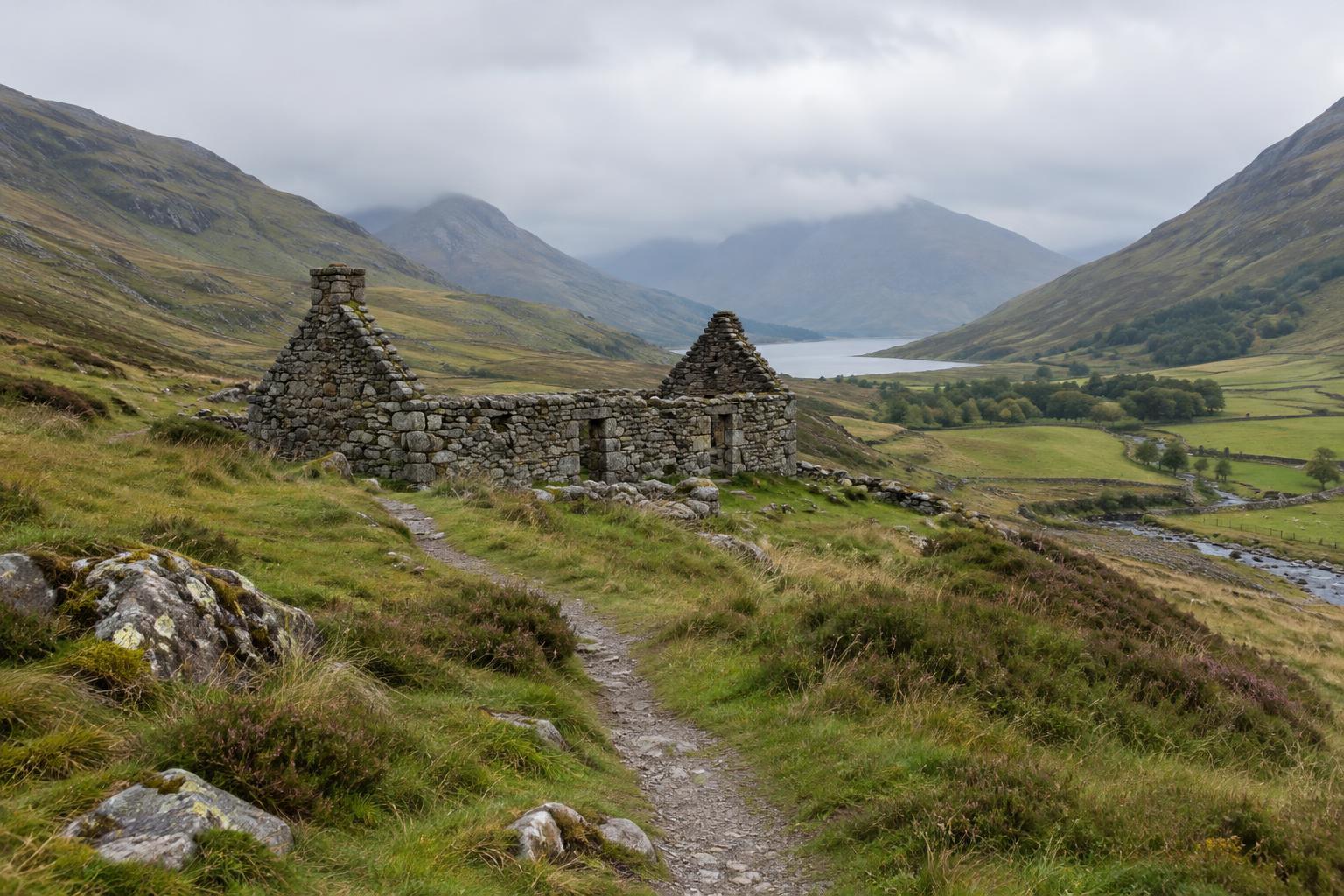
That variation matters when planning a journey. A deserted township may prompt questions about eviction, but an abandoned building alone cannot tell you when its occupants left or why. Nor should a landscape that looks empty today be imagined as empty of continuing connections: descendants, neighbouring communities and Gaelic place names may preserve relationships with it. Treat each stop as an opportunity to learn a local history rather than as an illustration of a single, universal account.
Let museums provide the first layer of context
A local museum can help you place what you see outdoors within a wider story. Exhibitions may explain estate changes alongside crofting, fishing, migration and community life, drawing on objects, maps, photographs or recorded memories where available. Strathnaver Museum in Bettyhill and Timespan in Helmsdale are useful places to investigate when considering a northern Highland route. Check their current exhibitions and visiting arrangements before travelling; collections and opening times can change.
Read displays with an eye to how evidence works. A later photograph of a ruined settlement, for example, shows what remained when the image was made, not necessarily what happened when residents departed. Maps can reveal former townships or altered patterns of land use, but may leave out everyday experience. If a display distinguishes documented events from family memory or interpretation, keep those distinctions in mind. They make the account more informative, not less compelling.
Read memorials as acts of remembrance
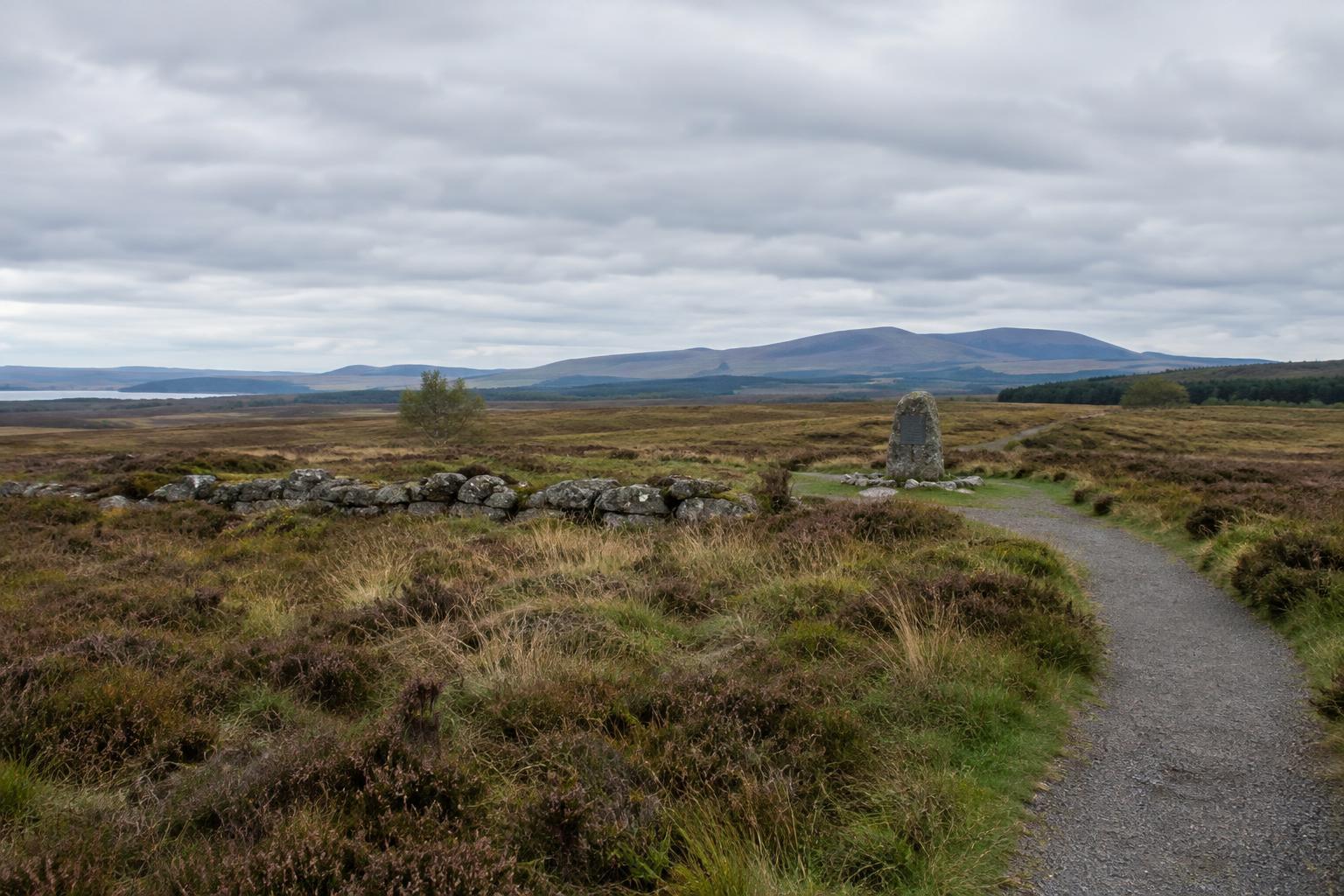
Memorials offer a different kind of encounter. They can name people, mark departures or acknowledge harm, giving visitors a place to pause that a museum case cannot provide. Their words, design and location also reflect the concerns of the people who created them. Ask what the memorial commemorates, whose voices are present and whether its account speaks to a particular district or to the Clearances more broadly.
Give yourself time to look beyond the inscription without treating the surrounding ground as a stage set. A memorial may stand near a road, harbour or village that remains part of daily life. Quiet attention is usually more appropriate than posing among graves, entering enclosed spaces or moving stones for a photograph. If you want to record your visit, photograph the memorial and its setting without disturbing them, and note any wording you may want to check against a museum display later.
Look closely at the landscape, but do not ask it to prove too much
Paths, field boundaries, building remains and place names can help you imagine how a community used land. They do not, by themselves, establish the date or cause of a settlement’s decline. Weathering, later farming and reuse can change what is visible. A map or locally produced trail guide can connect features to documented histories while helping you avoid mistaking every stone arrangement for a house.
Plan walks around marked routes and local guidance, particularly where remains are fragile or the ground is working farmland. Leave structures and objects as you find them, keep a respectful distance from homes and livestock, and be prepared for uneven ground and changeable conditions. You need not reach a remote ruin to understand the history. A view from a public path, paired with a museum account of the families who lived nearby, can offer more than an unsupported guess made on site.
Make room for the communities that followed
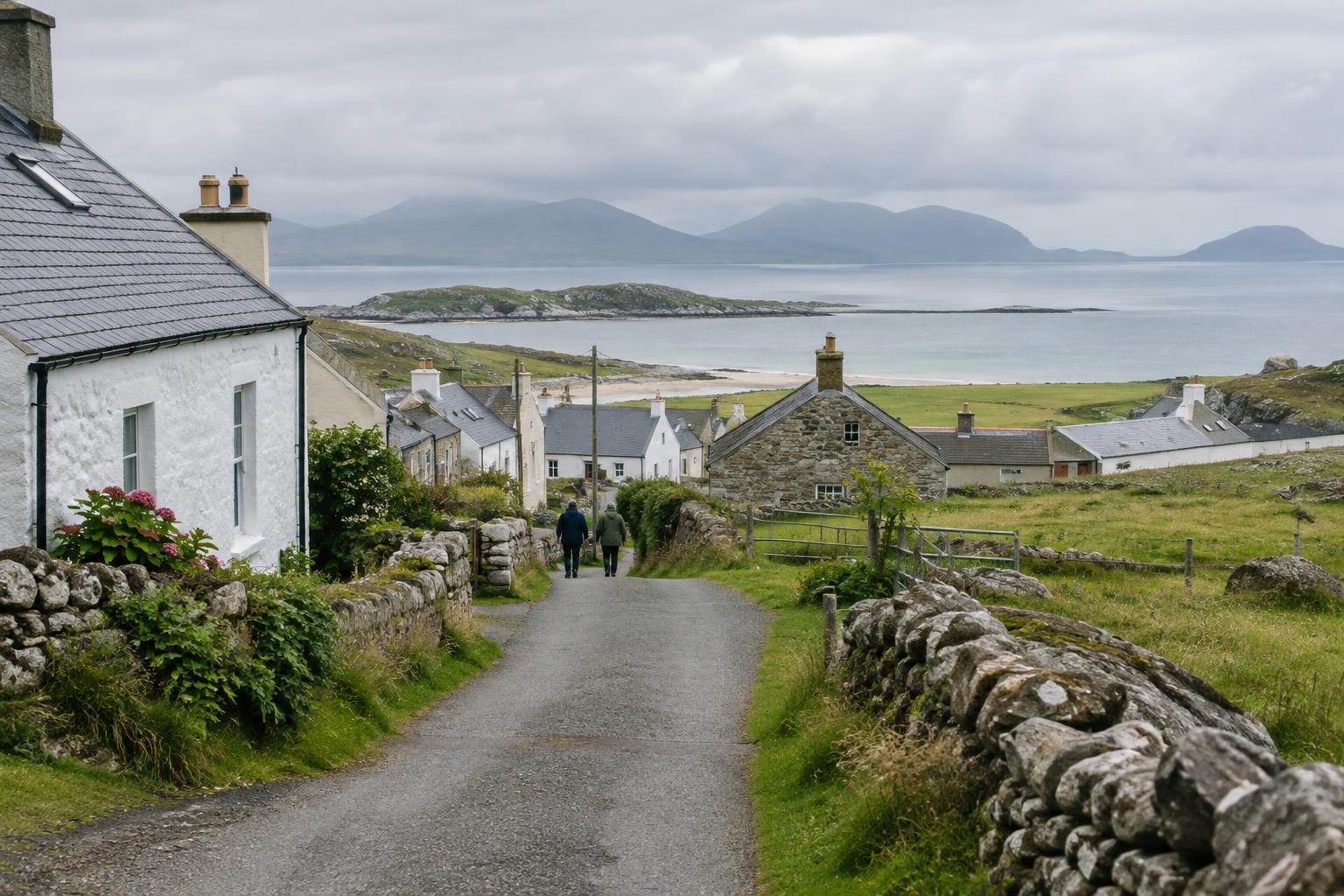
A Clearance-focused itinerary can unintentionally make the Highlands seem frozen at the moment of departure. Build in time to learn what happened afterward: how coastal settlements developed, how people sustained livelihoods and how families maintained ties across distances. Local heritage centres and community-led interpretation may bring those later histories into view. They also remind visitors that these places are not solely destinations for looking backward.
One practical approach is to choose a single district rather than rush between distant sites. Visit its museum first, then a memorial or interpreted trail, and return to the exhibits or your notes with new questions. If you make a film or photo essay, label present-day footage as present-day footage and avoid implying that a modern ruin directly records a particular eviction unless reliable local interpretation supports that link. The most useful journey leaves space for uncertainty as well as remembrance.