Start with the river, not a single shipyard
The Clyde is a useful starting point for exploring Glasgow’s industrial past, but it helps to think of it as a connected working river rather than one continuous shipyard. Ships were built and repaired at different sites in and beyond the city, supported by trades that supplied engines, steel, fittings and skilled labour. The river carried the results of that work outward and brought materials and people in.
Begin around the central waterfront and look at the space between the water and the streets. Quays, bridges, roads and redeveloped plots reveal how the river’s uses have changed, even where little of a yard remains visible. This is also a good place to set expectations: a waterside walk will not recreate the sound or scale of shipbuilding at its height. Its value lies in asking how work shaped places now used for other purposes.
Spend time in Govan
Govan, on the south bank, is an essential stop. Fairfield was one of its major shipyards, and the area’s industrial history is tied to generations of local workers and their families. As you move through the streets near the river, consider the distance between home, workshop and waterfront. Shipbuilding depended on communities as well as slipways: people needed places to live, learn trades, shop and gather.
Fairfield Heritage Centre, housed in former shipyard offices, can add context to an outdoor visit when it is open. Check current access before setting out rather than building a day around an assumed opening time. Outside, avoid treating every old-looking wall or building as a shipyard remnant. Signs, collections and clearly identified sites are better guides than appearances alone; much of the working landscape has been altered or replaced.
Use the Riverside Museum as a change of perspective
Across the river, the Riverside Museum brings transport and maritime history into a setting close to the Clyde. Its displays can help put an outdoor walk in context: a finished vessel represents only one part of a much larger story of design, construction, movement and use. If you visit the tall ship Glenlee nearby, remember that she is a surviving vessel, not a stand-in for every ship built on the Clyde.
This is also a good point to compare the museum view with the riverbank itself. What can an object or photograph show that the present-day landscape cannot? What becomes clearer when you stand beside the water? Neither view is complete on its own. Museum interpretation can identify people and processes that have left few visible traces, while the river gives a sense of the distances and spaces those stories occupied.
Add Clydebank for the scale of shipbuilding
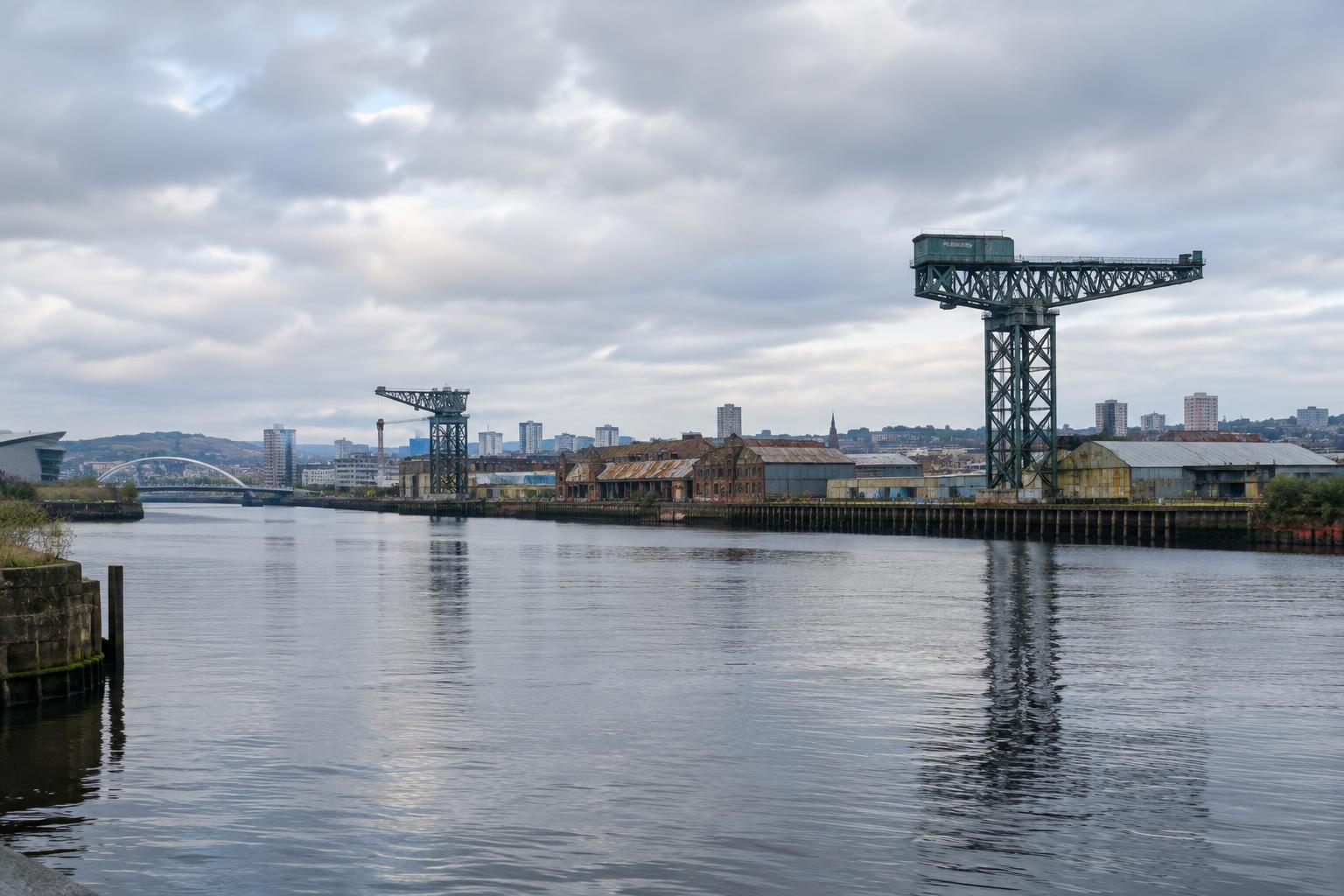
If you have more time, make Clydebank a separate leg of the trip rather than assuming it is a short extension of a central Glasgow stroll. The former John Brown shipyard there built major ocean liners, including Queen Mary and Queen Elizabeth. Titan Clydebank, a surviving cantilever crane associated with the yard, makes the physical scale of shipbuilding easier to grasp even when other features of the site are gone.
The crane is worth viewing as part of a wider industrial landscape, not simply as a landmark for a photograph. Imagine the coordination needed to move heavy components and fit them into a ship under construction. Then look for what the site no longer makes obvious: the many trades, routines and neighbouring businesses behind such work. If you hope to enter an attraction or take a tour, check its current arrangements in advance.
Make the journey manageable—and read it carefully
Choose a small number of stops and allow time to linger. Central Glasgow, Govan and the Riverside Museum can form one outing; Clydebank works well as an additional trip using public transport. Check pedestrian crossings, routes and any river crossings before leaving, since the most direct-looking line on a map may not be the easiest way to walk. Stay on public paths and respect barriers around working or restricted areas.
Bring a map or a few reliable site descriptions, and note where a detail comes from if you plan to share photographs later. A former yard, a museum object and a preserved structure each tell a different part of the story. Label them accurately rather than suggesting that a modern view shows the river exactly as shipbuilders knew it. That care makes a visit more rewarding: the Clyde’s history becomes visible not only in what survives, but in the questions its changing banks encourage you to ask.