Begin with the limits of the evidence
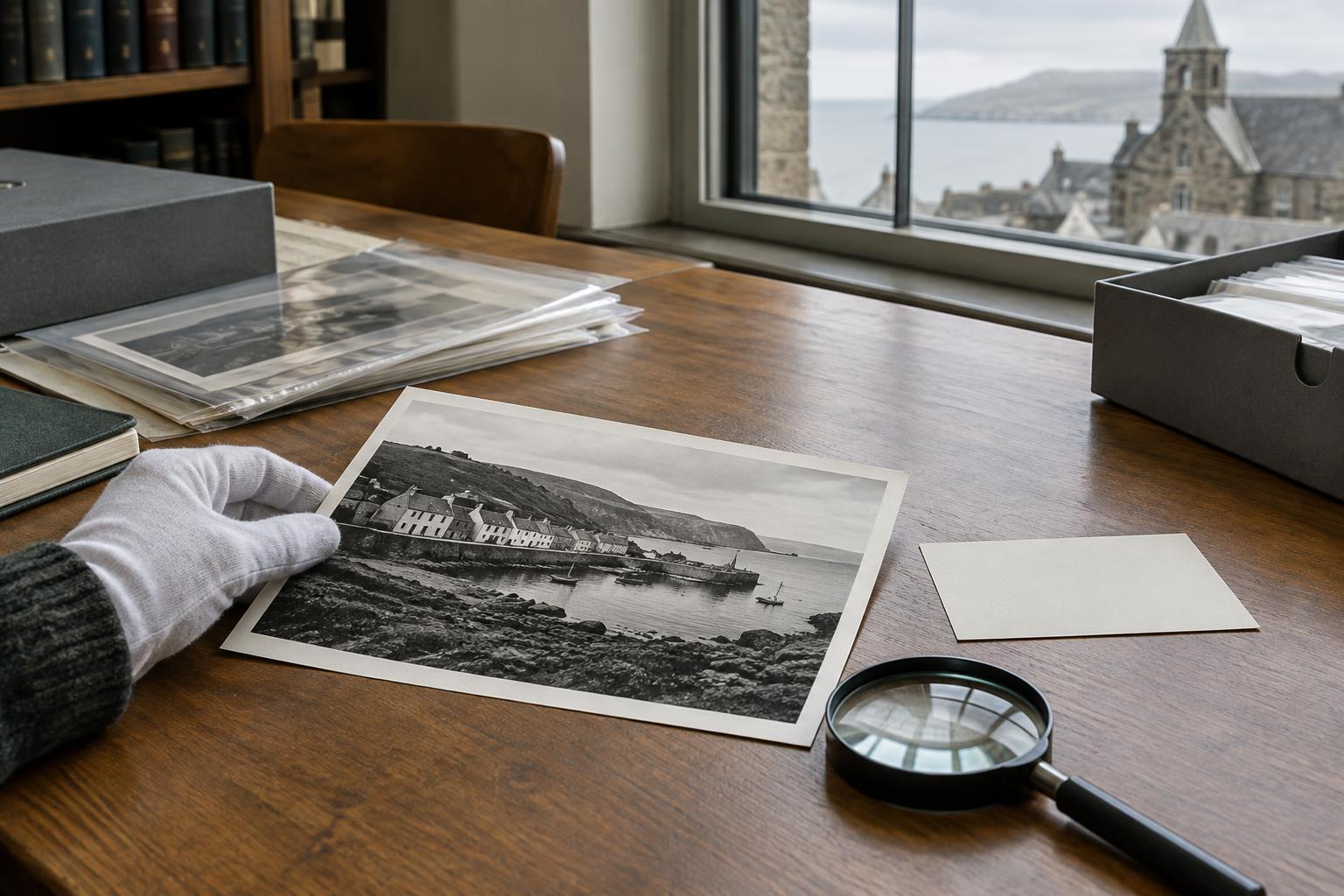
A photograph of a Scottish harbour can show boats, buildings and people, but it cannot tell us exactly what that moment sounded like. Even a written account may describe only the sounds its author noticed. Before building a soundtrack, separate what the evidence supports from what the film needs to suggest. A visible bell, a documented type of work or the physical setting may offer useful clues. None gives you a recording of that particular day.
This distinction matters because sound feels immediate. Viewers may recognise a reconstructed voice or a busy street ambience as an interpretation when told so, yet absorb the same sounds as fact when they appear without context. The aim is not to eliminate imagination. It is to give imagination a clear role, rather than allowing it to impersonate an archive.
Build a sound palette from the scene
Start with the environment before adding dramatic detail. Ask whether the scene is indoors or outdoors, sheltered or exposed, crowded or sparse. A coastal setting might call for wind and water; a workshop might suggest tools and movement. Then ask which sounds belong to the period being portrayed. A plausible location is not enough if a modern engine, alarm or recorded announcement quietly places the listener in another era.
Work in layers rather than assembling one continuous wall of noise. A low bed of air or room tone can establish space. A small number of distinct sounds can direct attention to the activity on screen. Leave room for narration and for the texture of an interviewee’s voice. If every image arrives with footsteps, gulls, machinery and music, the soundtrack may overwhelm the historical question the film is trying to explore.
Use specificity carefully
Regional character can help a scene feel grounded, but it is easy to turn familiar sounds into shorthand. Gulls do not make every Scottish coastal image more informative, and bagpipes do not explain every gathering. Choose details because they suit the place, activity and story, not because they signal a broad idea of Scotland.
The same caution applies to reconstructed speech. An accent, a phrase of dialogue or a shouted instruction can imply knowledge of how particular people spoke. Unless the words are documented, consider whether a narrator can convey the information more honestly. When recreated voices are essential to the form of the film, distinguish them from recorded testimony or a reading of a surviving text. Performances can illuminate an experience without being presented as the voices of the people pictured.
Let absence do some of the work
A scene does not need a fully imagined soundtrack to hold attention. Silence, a restrained musical passage or the present-day sound of a location can make the distance between past and present part of the story. Holding on a still image with very little sound may invite viewers to examine what it reveals rather than treating it as a window they can step through.
Transitions are useful places to explain the choice. A narrator might note that no recording of the event survives before the film introduces an interpretive soundscape. Alternatively, the film can keep the historical image quiet and move into contemporary location audio as it considers what remains. Neither approach is automatically more authentic; the better choice is the one that helps viewers understand the evidence and its gaps.
Make the reconstruction legible
Keep a simple record of the sounds used and why. Note which elements come from an archival recording, which were captured at a location today and which were created or selected to evoke an earlier setting. This record helps the editing team avoid accidental mislabelling and makes later revisions easier, especially when a new source changes the interpretation of a scene.
The finished film should give viewers a fair chance to understand those distinctions. A brief on-screen label, a line of narration or a clear production note can identify recreated audio without interrupting every moment. Accuracy in historical filmmaking is not only about whether a sound is possible. It is also about whether the film is honest about how it knows what the audience hears.