A landscape shaped by more than farming
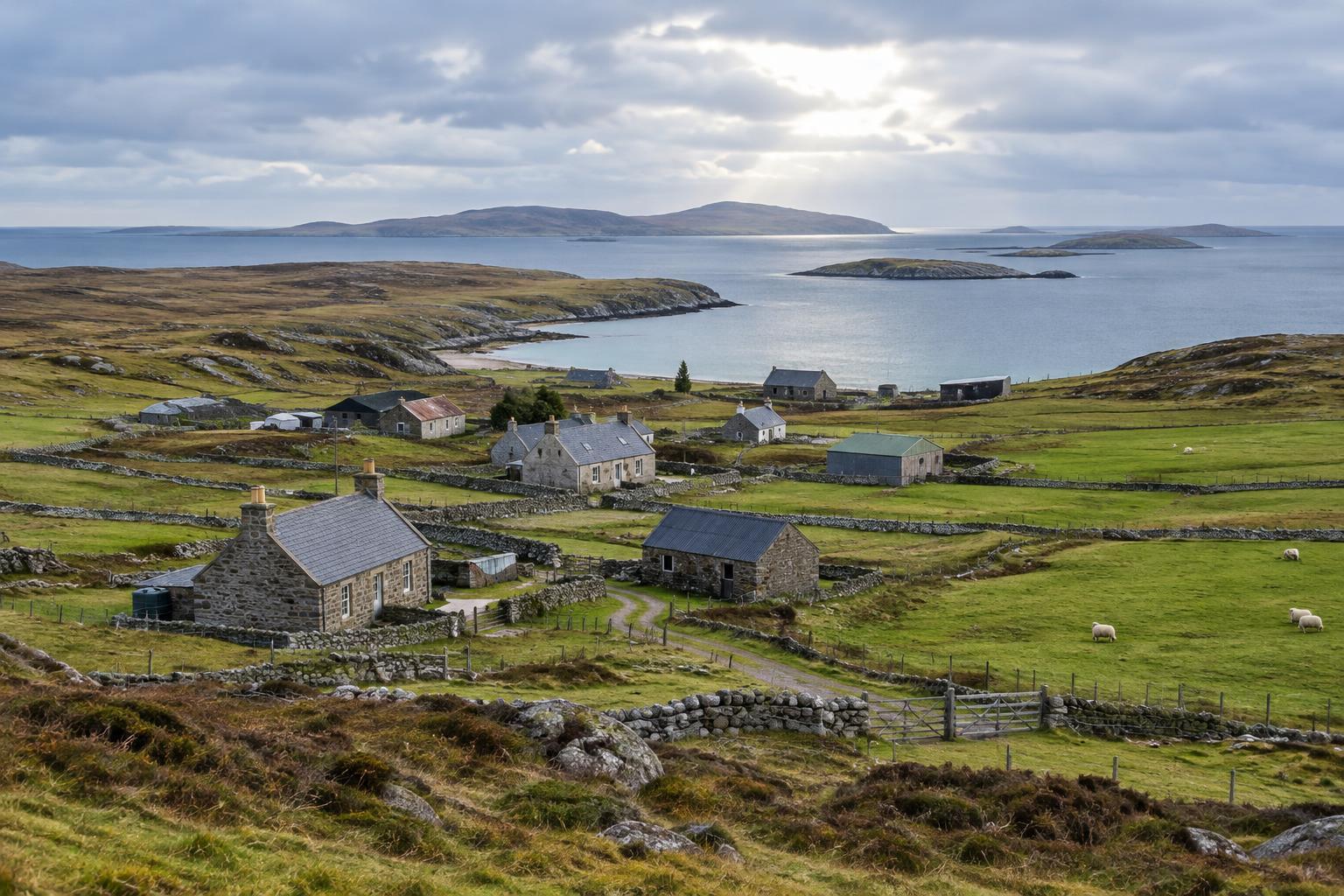
Across the Western Isles, a line of houses beside a road, narrow fields running towards the shore and open hill ground beyond can tell a story about how land is held and shared. That story is not identical from Lewis and Harris to the Uists and Barra, but crofting has influenced settlement across the islands. It is a way of using land, a system of tenure and a continuing part of community life.
A croft is generally a small agricultural holding governed by crofting law. It may be worked by a tenant or owned by the crofter, so “croft” does not simply mean a rented plot. A holding might include cultivated or enclosed ground, while the crofter may also have rights to use common grazing land. Fishing, other employment and seasonal work have long been important alongside crofting; the appearance of a croft on a map does not reveal how a household made its living.
How tenure shaped the township
Crofts are often grouped in townships. A township is more than a row of houses: it is a local pattern of holdings and shared land use, though its layout varies from place to place. Individual crofts may sit beside one another on ground suited to cultivation, with grazing extending over less enclosed land. Roads, shorelines, soil and terrain all help explain why one settlement looks different from another.
Tenure matters because it affects what a household can do with land and how secure that household may feel in doing so. Crofting law developed in response to disputes over land, rent and security. Its protections and obligations have changed over time, and present arrangements differ between holdings. When looking at a township, it is therefore worth asking not only who lived there, but also who owned the wider estate, who held each croft and what rights people had over shared ground.
Common grazings are especially easy to misread as empty land. They may be used collectively under rules governing access and management. The practical work of maintaining boundaries and managing animals has helped connect neighbouring crofts. A film that shows only the enclosed field and house risks leaving out this larger landscape of use.
Settlement and historical change
Many present-day settlement patterns reflect periods of substantial change rather than an unbroken ancient arrangement. Estate decisions, population pressure and changing agricultural practices all affected where people lived and what land they could use. During the Highland Clearances, people in parts of the Hebrides were displaced or moved onto smaller holdings, sometimes on land less suitable for cultivation. The timing, causes and experiences differed between islands and estates, so a single account cannot stand for every township.
Later land struggles and reforms also form part of the story. Demands for access to land and more secure tenure challenged the idea that an estate owner’s plans alone should determine a community’s future. Crofting’s history is therefore neither simply a tale of hardship nor a picture of timeless rural harmony. It includes adaptation, conflict, cooperation and choices made under unequal conditions.
Reading living heritage with care
Crofting remains a living practice, even where the work looks different from earlier generations. Some holdings are actively cultivated or grazed; others may be used less intensively. Homes, sheds, fences and tracks can be altered as households’ needs change. A maintained croft is not necessarily a preserved historical scene, and an overgrown field should not automatically be taken as evidence that a community has disappeared.
The best way to understand a particular place is to connect its visible features with its own history. A boundary on an old map, a place-name, a family account and a view of the ground today may each answer different questions. None should be made to prove more than it can. Oral memories can illuminate everyday work and belonging, while maps and records can help trace holdings and changes in layout; both benefit from careful attention to dates and context.
Showing a crofting landscape on film
Visual storytelling can make the relationships between a croft, its township and its wider grazing ground easier to grasp. A sequence might begin at a house and enclosed field, follow a track past neighbouring holdings, then widen to show the open ground beyond. Clear captions can distinguish what the camera records today from what a historical map or account describes. If boundaries or uses have changed, that difference is part of the story.
Filming a working landscape also calls for respect. Homes and crofts are not open-air exhibits, and access, privacy and livestock need consideration. Conversations with residents can reveal how a place is used now, without asking anyone to represent every crofter or every island. Treated this way, crofting becomes neither a picturesque backdrop nor a relic: it offers a way to see how land rights, settlement and daily life continue to meet in the Western Isles.