Assuming every photograph belongs in the same archive
A family photograph may matter deeply to its owners without fitting every collecting policy. A local archive might focus on one town, a regional museum on particular industries, and a community collection on the lives of a specific group. Before packing anything, contact the organisation with a short description of the photographs, their approximate dates, places and subjects. Ask what it collects, whether it accepts originals or digital copies, and how it prefers to review a proposed donation.
Avoid sending an unannounced box of prints. An archive may need time to assess their relevance, condition and storage needs; it may also be unable to take them. If one collection includes several places, ask whether it should stay together or whether different repositories would be more appropriate. That conversation is part of caring for the photographs, not a judgement on their family value.
Separating the images from their stories
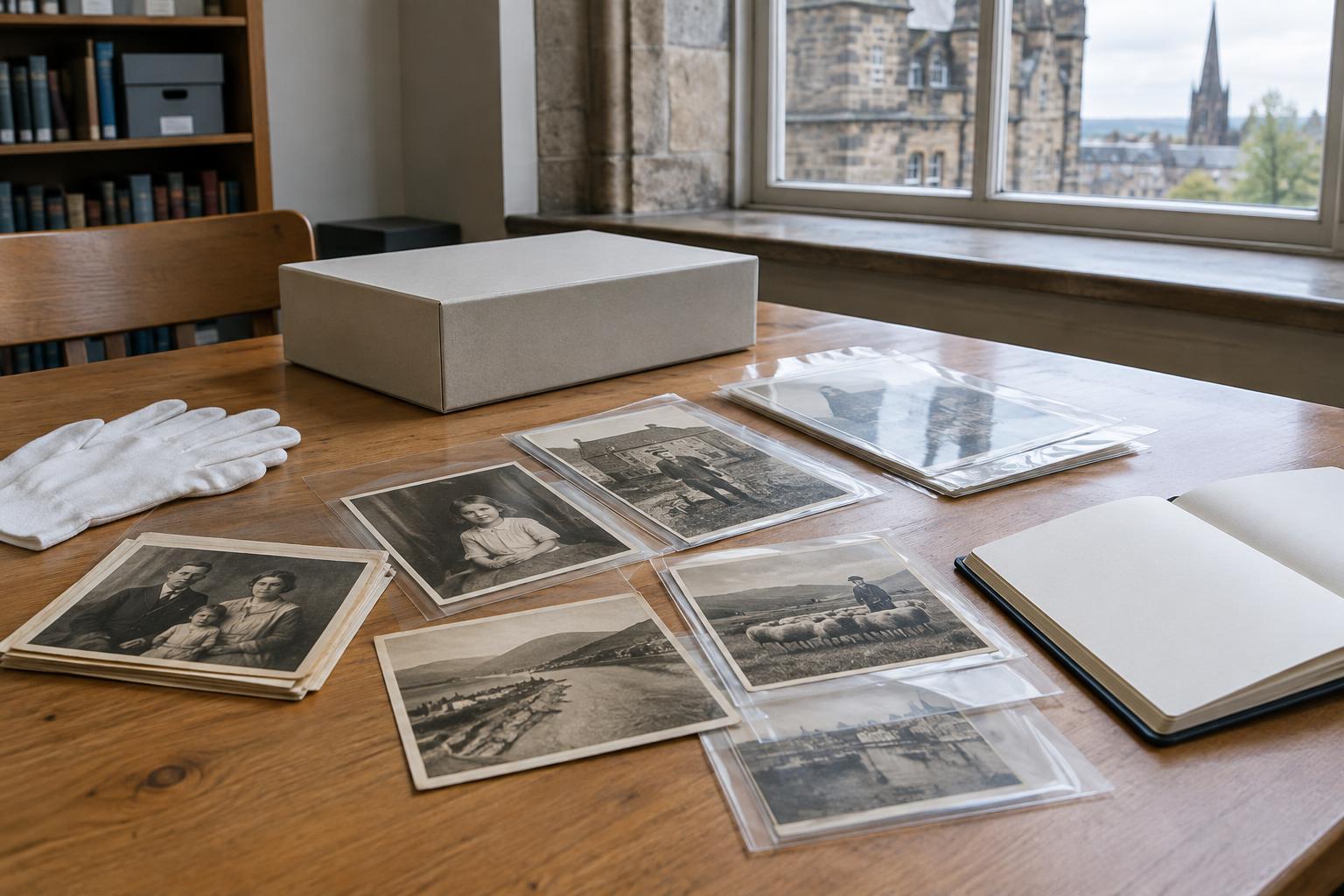
One common mistake is to select the most striking pictures and discard the envelopes, album pages or notes that explain them. A faded snapshot of a street can become far more useful when its sleeve names the street, the photographer or the occasion. Keep existing labels and groupings with the photographs while discussing the donation. If an album is fragile, do not dismantle it simply to make the pictures easier to sort.
Write down what family members know before memories become harder to recover. Record names, relationships, locations, approximate dates and the reason for an identification, where possible. Distinguish between “written on the back,” “remembered by my aunt” and “possibly taken in Dundee.” An archive can preserve uncertainty; it cannot recover context that has been silently replaced with a confident guess. Note who supplied each recollection so that later viewers can understand how the information was gathered.
Trying to improve the originals before handing them over
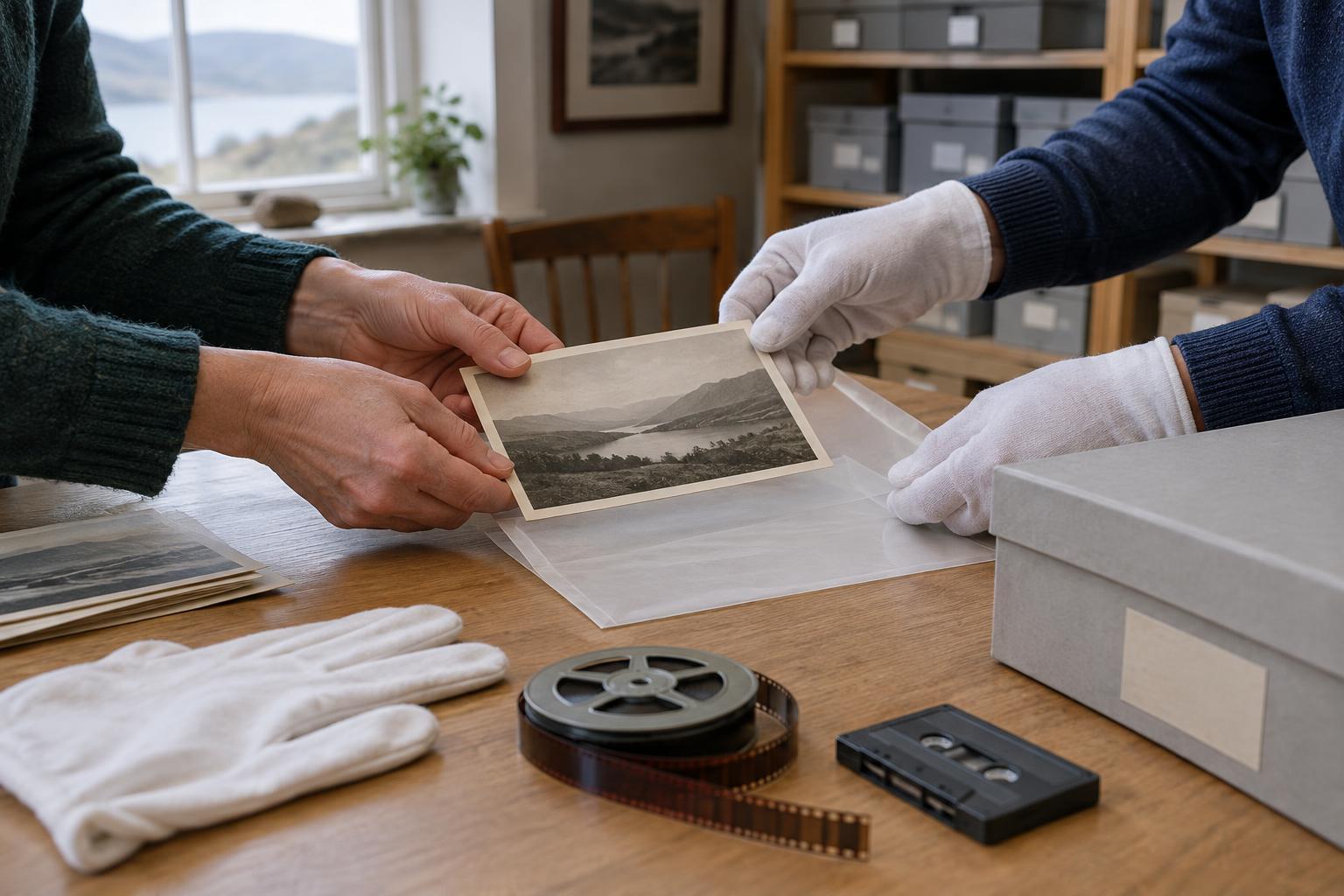
It is tempting to make a donation look tidy by removing photographs from albums, peeling off tape, flattening curled prints or writing names directly on the backs. Such work can damage an image or erase clues about how it was kept. Leave difficult attachments and repairs to people equipped to assess them. Handle prints with clean, dry hands, support them when moving them and keep food and drink away from the work area.
If you need to pack photographs temporarily, keep their order and use clean, appropriately sized enclosures if available. Do not force a large print into a small sleeve or press objects against a delicate surface. A useful preparation task is making an inventory: number groups or containers, then describe what each contains without sticking new labels onto the images. Tell the archive about mould, water damage or other concerns before delivery so staff can advise on safe handling.
Treating scans as a complete substitute for context
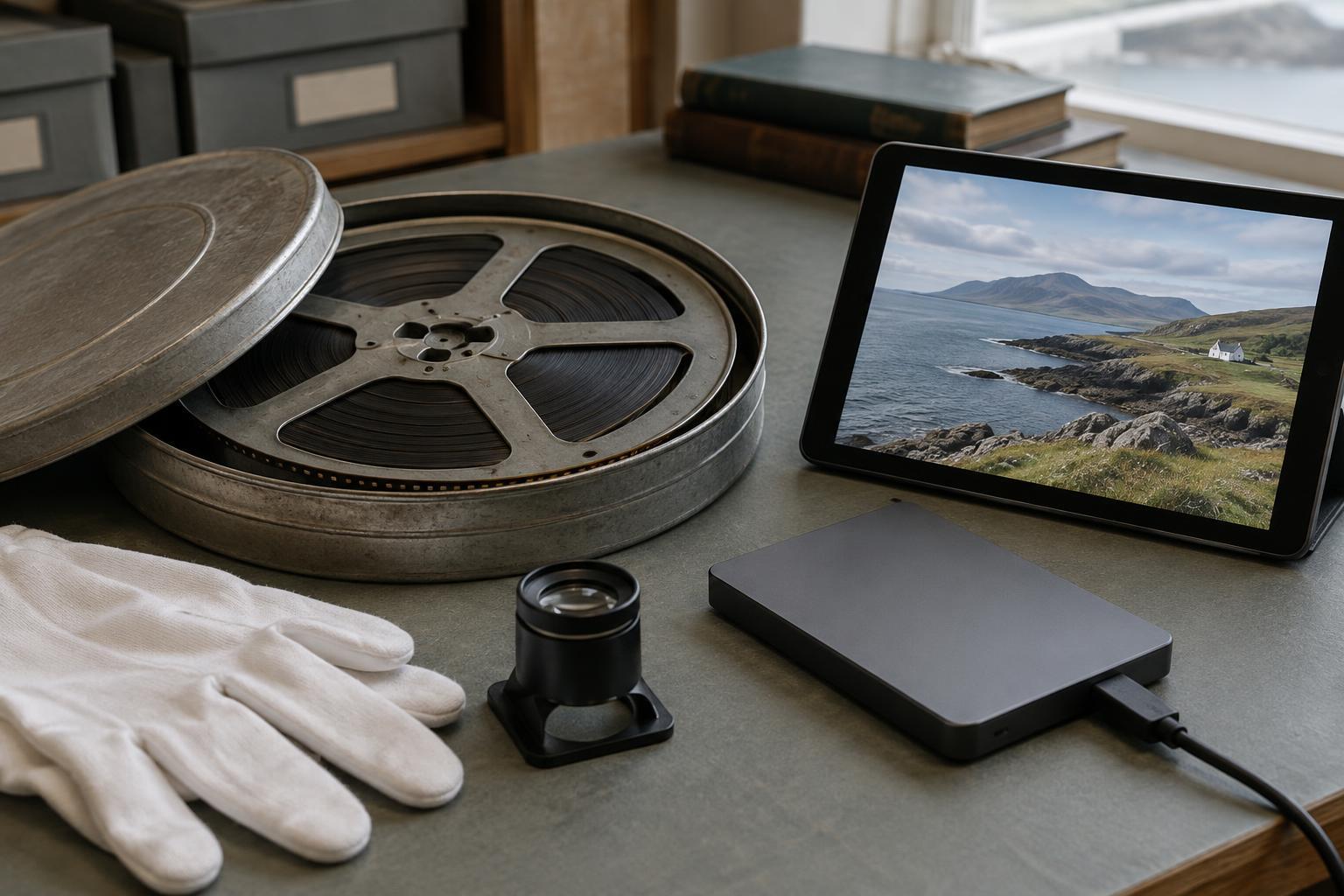
Digital copies can improve access and reduce handling, but a folder of files named “scan1” and “scan2” leaves much of the work undone. Use consistent filenames and keep a simple list connecting each file to the print, album page or negative it came from. If you scan both sides of a photograph, identify the pair clearly: a studio stamp or handwritten note may be as informative as the image itself.
Avoid making an edited, colourised or sharpened version the only surviving digital file. Keep an unaltered scan alongside any version prepared for sharing, and label the edited version as such. For photographs already born digital, retain the best available original files rather than relying only on copies downloaded from social media. Ask the receiving archive which file formats and transfer methods it can accept; its capacity and procedures may differ from those you use at home.
Leaving ownership and access until after the donation
Possessing a print does not necessarily settle who holds copyright in its image, and family photographs may show people who are still living. You do not need to resolve every question alone, but you should tell the archive what you know about the photographer, previous publications and any concerns about sharing particular images. Avoid promising relatives that a photograph will be kept private or placed online until you have discussed what the archive can actually offer.
Before transferring material, read the proposed donation agreement and ask what will happen to the originals, whether digital copies may be displayed, and how descriptions might be made searchable. Also ask whether the archive can accept restrictions and whether it may decline items after assessment. A clear record of what you have given, what you know and what you remain unsure about gives future custodians a better starting point. The aim is not a perfect collection; it is one whose images and stories can be cared for and understood together.