Start with the story, not a Scottish sound
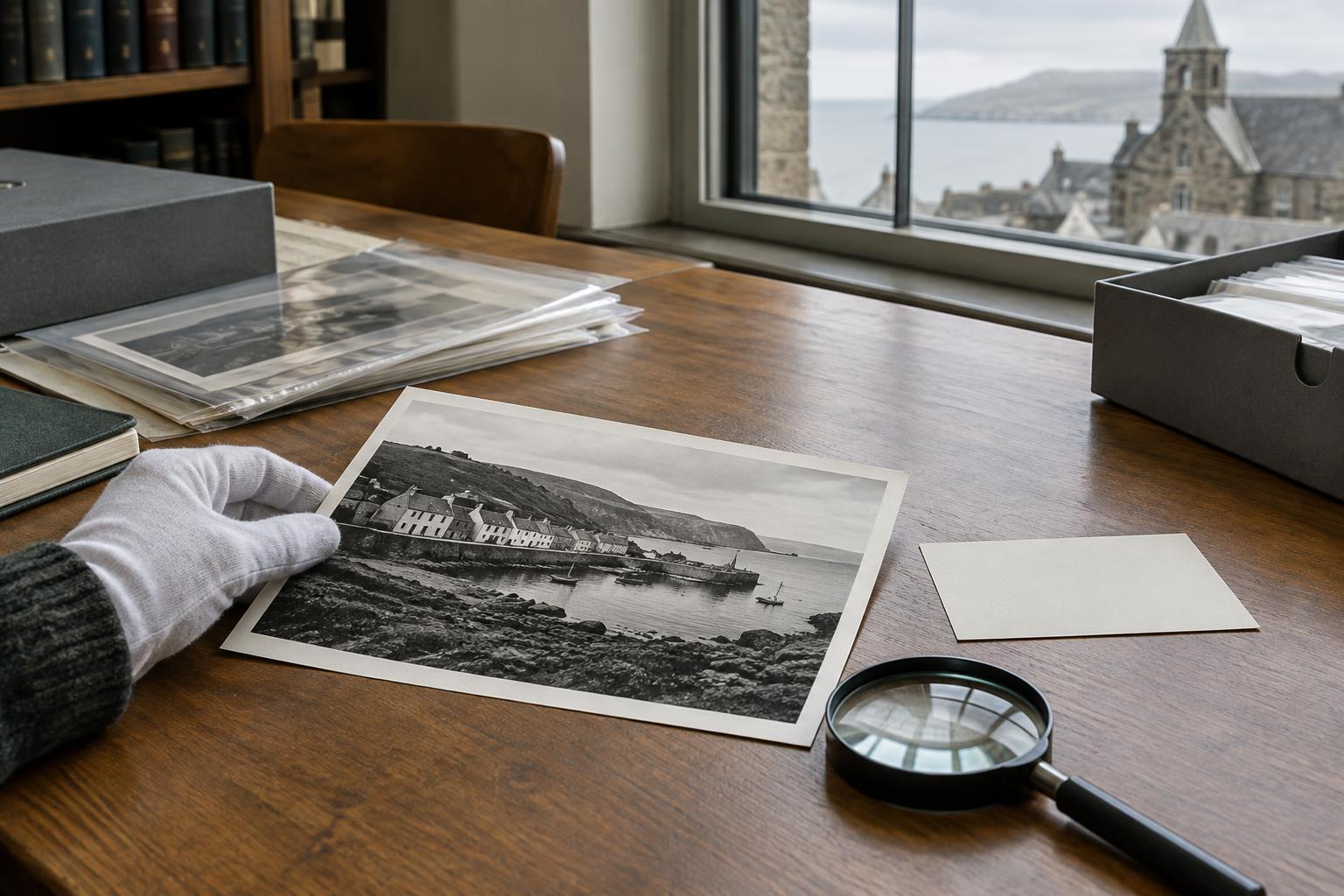
A fiddle, a pipe melody or a sweeping orchestral cue can establish a mood quickly. Speed is not always an advantage. If a film opens on a photograph of a fishing community, familiar music may lead viewers to expect nostalgia before they know whose lives the photograph records. Begin by asking what each scene needs the audience to understand. Does the music clarify a transition, connect two places or help make a pause bearable? If its main purpose is to announce that the subject is Scottish, it may be doing too little—and saying too much.
Scotland does not have one historical sound. The musical choices that suit a film about a city street may feel out of place in a story about an island, a factory or a family archive. Period matters too, though a historically plausible instrument is not automatically the right accompaniment. Listen for the distance between the music and the material: is the cue helping viewers attend to a particular life, or replacing that life with a broad idea of heritage?
Let the evidence set the emotional limits
Historical images often arrive without the voices, sounds and circumstances that once surrounded them. Music can make that absence less noticeable, but it cannot fill it with certainty. A slow lament beneath an unidentified group portrait suggests loss; a buoyant tune suggests celebration. Either reading might be possible, yet neither follows from the image alone. When a source is ambiguous, consider a quieter cue, a less insistent rhythm or no music at all. Give the narration or on-screen context room to say what is known and what remains unclear.
This does not mean a history film must sound emotionally neutral. Music can express the filmmaker’s response, provided that response is not passed off as the feeling of the people pictured. A contemporary score may be more candid than a track designed to sound like a recording from the past. The distinction can be simple: present music as part of the film’s interpretation, not as an audible reconstruction of a moment you cannot document.
Use regional and traditional music with specificity
Traditional music offers rich possibilities, but an instrument or tune should not stand in for an entire region. Before choosing one, ask where the film is set, what communities it follows and whether the musical tradition has a meaningful connection to the story. A tune associated with one place or occasion may change the implications of a scene set elsewhere. If you cannot establish that connection, there is no obligation to use the tune simply because it sounds evocative.
The same care applies to performance style. A polished studio recording can give an archival sequence a grandeur that its everyday subject does not call for. A restrained new composition might better leave space for speech, environmental sound and the texture of the images. Try several options against the same cut, including an option with silence. Watch without looking at the music credits, and note what each version seems to claim about the people on screen.
Make room for voices, places and silence
Music is only one part of a soundtrack. Interview voices, a room’s natural quiet and recorded sounds of a place can help viewers orient themselves without directing their emotions so firmly. Present-day location sound can be valuable, but it should not be mistaken for evidence of what that place sounded like in an earlier period. If sound has been recreated or added to an otherwise silent image, make that choice clear where viewers can readily understand it.
Silence also has a purpose. It can mark a change in the available evidence, allow a difficult statement to settle or give viewers time to examine a document for themselves. Resist filling every gap left by a silent archive. A brief passage without music may do more to preserve the uncertainty of the record than a cue chosen to make the sequence feel complete.
Check the cut for unintended claims
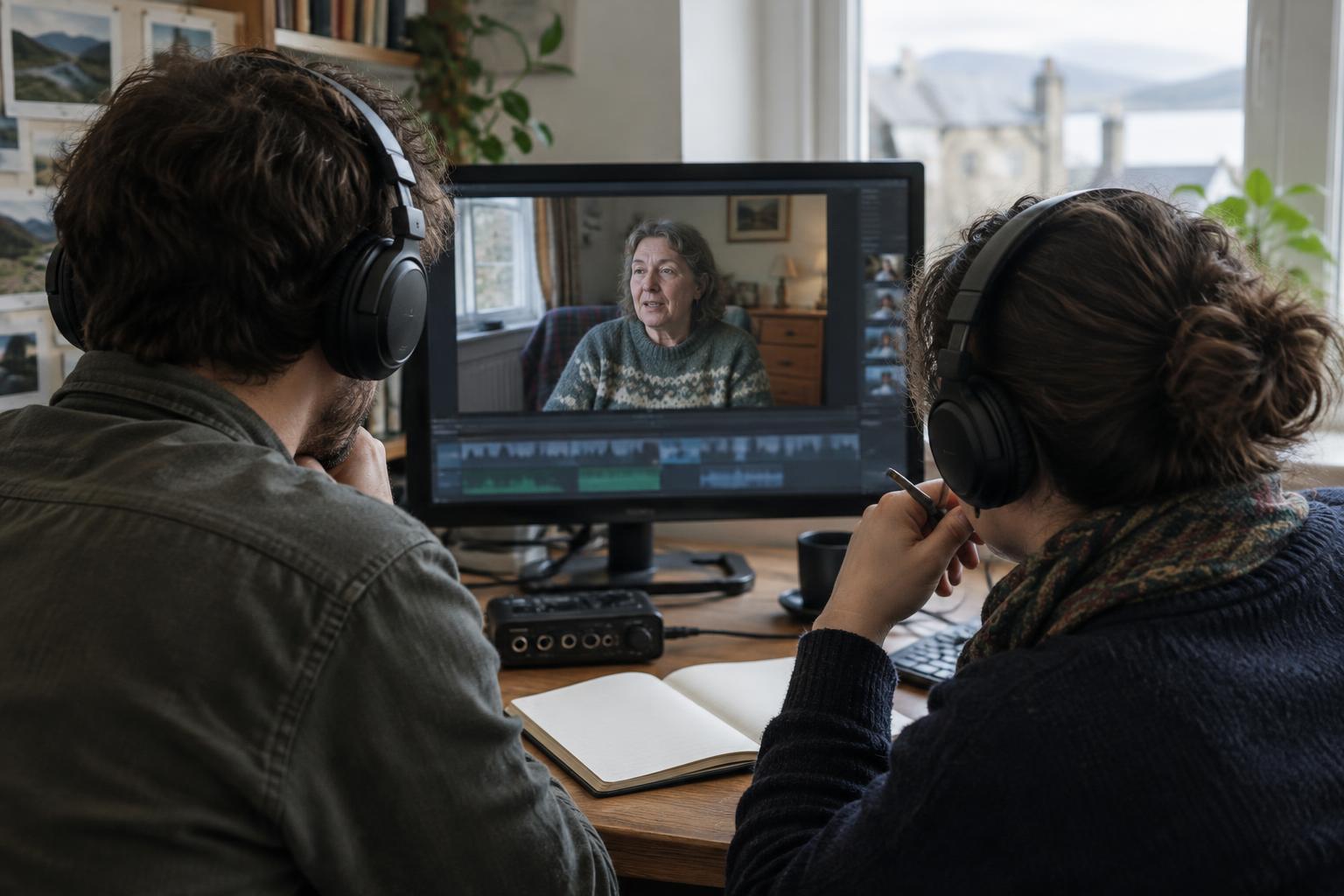
Once the film is assembled, review it specifically for what the music implies. Play a scene with the soundtrack, then without it. Does a neutral image become tragic? Does a complex account begin to feel triumphant? Ask a viewer unfamiliar with the project what they inferred before explaining your intention. Their answer can reveal where a cue is carrying an argument the narration has not earned.
Keep a simple record of why you chose each piece and what you know about it. Confirm that you have permission to use the recording and composition, and credit performers and composers appropriately. These practical checks support an editorial one: music should be chosen with the same care given to photographs and testimony. The goal is not to remove feeling from Scottish history, but to let feeling grow from the particular story the film can responsibly tell.