Plan for the first hour, not every possible disaster
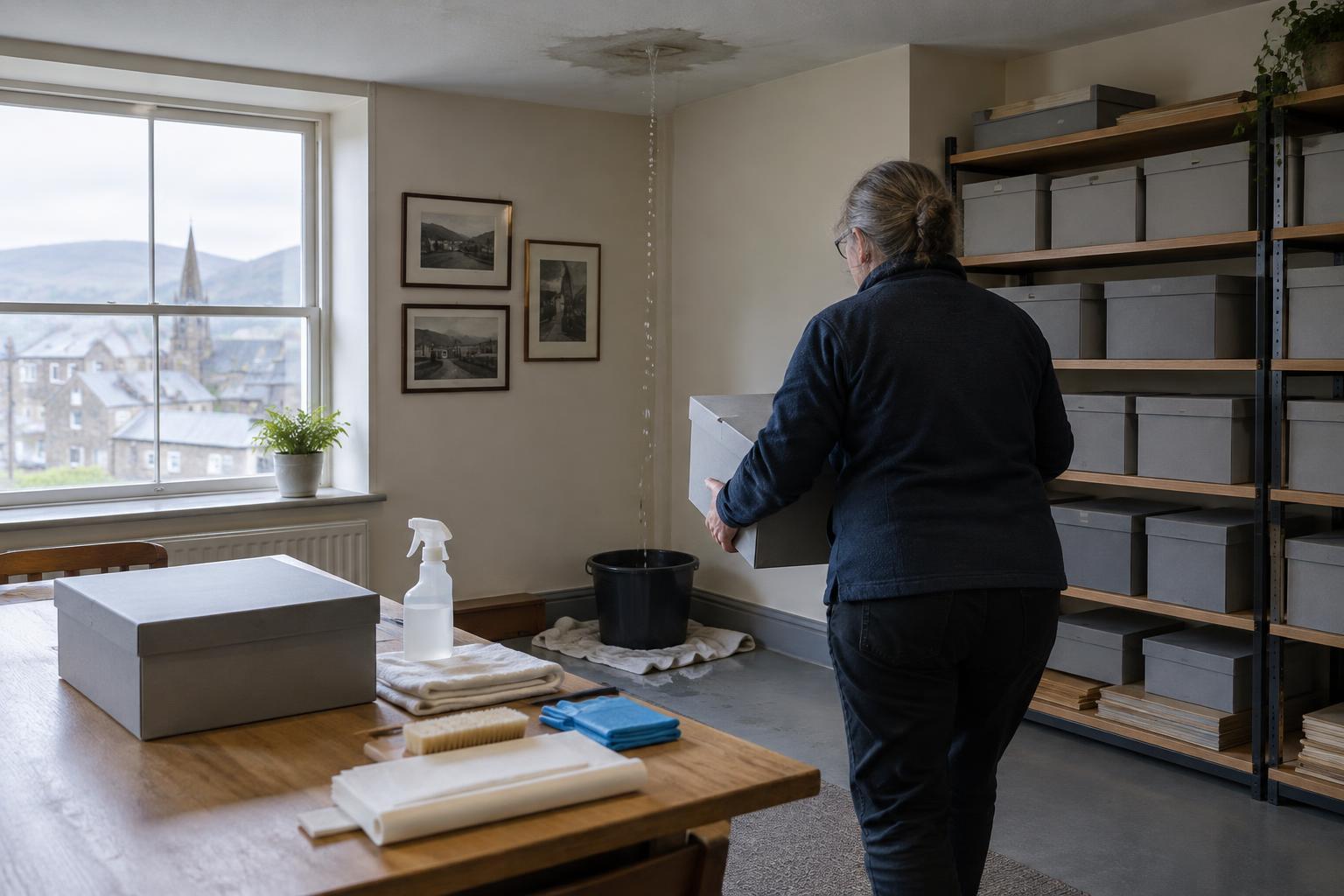
A community collection may hold photographs, paper records, film reels, tapes and digital files in the same room. Each needs different care, but an emergency plan does not have to predict every accident. Its first job is to help someone make sensible decisions when a leak, power cut or building closure interrupts normal work.
Start with people and premises. Write down who can be contacted, who has access to the building and who can make decisions about the collection. Include the location of any building procedures, but do not assume a volunteer should enter an unsafe space or handle electrical hazards. If conditions are dangerous, leave the area and follow the building’s safety procedures. Collection recovery comes later.
Keep the plan short enough to use under pressure. A page of immediate actions, followed by contact details and a simple collection map, may be more useful than a long document no one can find.
Know what is where
An emergency is a poor time to discover that the only list of holdings is on a computer in the affected room. Make a basic map showing shelves, cabinets, boxes and digital equipment. It need not describe every photograph. It should let someone locate collections, identify their usual storage places and notice when material has been moved.
Mark material that would be especially difficult to replace, such as original home movies, unique oral history recordings or records that explain who created a collection. This is a planning priority, not a reason to take physical risks. Note any items with special handling requirements or restrictions, and keep a copy of the map and contact list somewhere separate from the collection space.
For digital material, record where the working files and separate backup copies are kept, who can access them and which equipment is needed. A backup that depends on the same room or the same single account may not be available during a disruption. Test occasionally that an authorised person can locate and open a sample of the files.
Decide what to do when damage is found
Once the space is safe to enter, record what has happened before moving things, if doing so will not delay necessary protection. Take clear photographs of affected areas, note where items were found and keep a brief log of actions and decisions. These records help a team avoid losing context while it responds. Use a consistent temporary label for any box or item moved from its normal location.
Do not treat wet photographs, paper, film and magnetic tape as though they need the same treatment. Avoid pulling apart stuck surfaces, unspooling damaged reels or playing damp recordings to see whether they still work. If specialist material is affected, seek advice from a qualified conservator or an appropriate heritage organisation before attempting treatment. In the meantime, record the material’s condition and keep track of where it is.
Assign one person to maintain the action log and another, if available, to coordinate calls and updates. A small team can otherwise repeat tasks or give conflicting instructions. Record uncertainties plainly: if no one knows whether a box was wet before it was moved, say so rather than filling the gap with a guess.
Make the plan usable between emergencies
A plan only helps if people know it exists. Give relevant staff and volunteers a brief walkthrough: where the plan is kept, whom to contact, where the collection map is and what they should not attempt. Include a simple handover procedure so changes in volunteers do not leave access details with just one person.
Review the plan when rooms, storage arrangements, contacts or digital systems change. A short tabletop exercise can reveal practical gaps: what happens if the keyholder is away, the internet is unavailable or a backup cannot be reached? Update the document after the exercise, and keep older incident logs with the collection’s administrative records.
The aim is not to make a small archive immune to disruption. It is to make the next decision clearer while protecting the people, objects and information that give a collection its meaning.