Start with a small, flexible plan
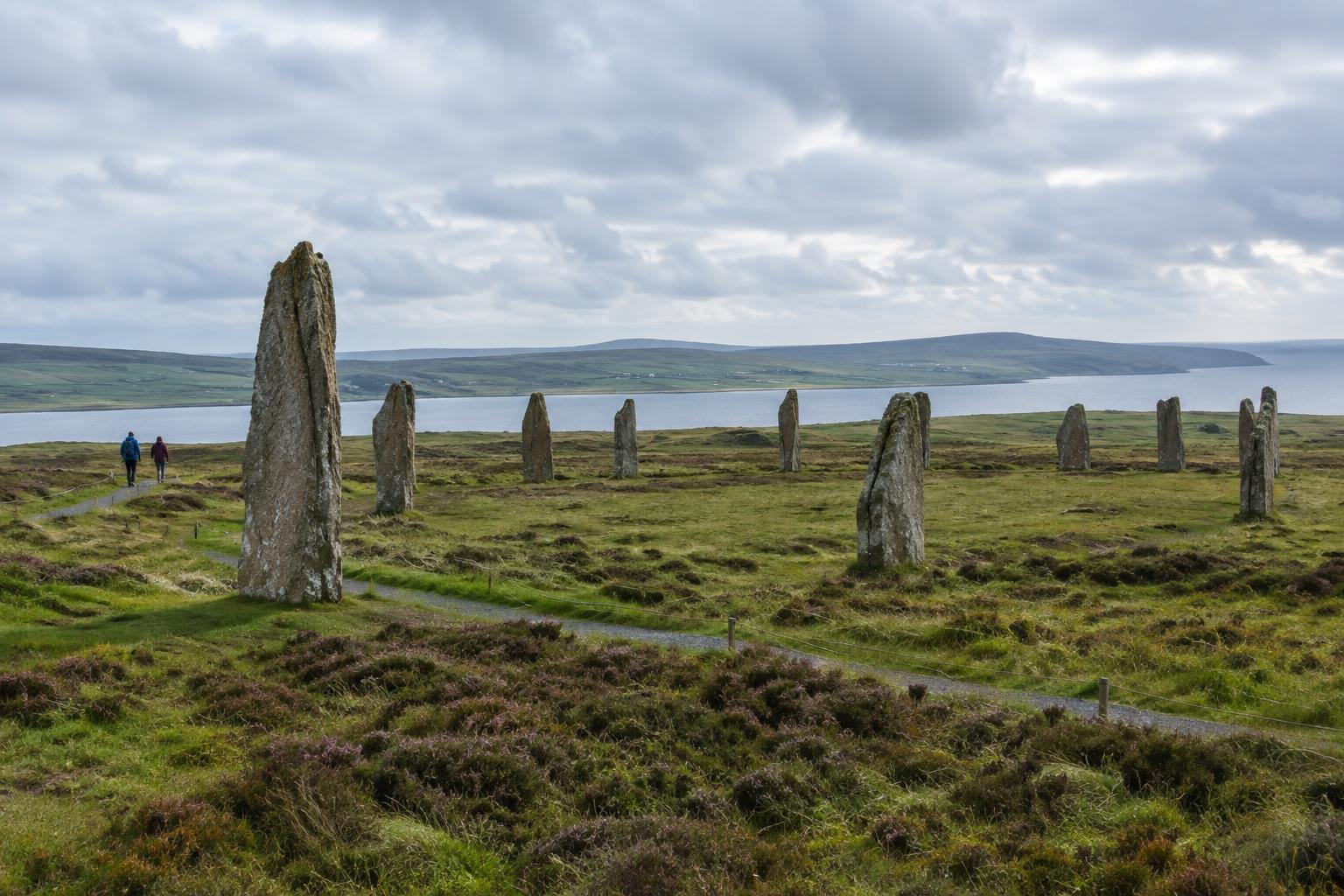
Orkney’s prehistoric sites are often introduced through a handful of remarkable names: the village of Skara Brae, the Ring of Brodgar, the Standing Stones of Stenness and the chambered tomb of Maeshowe. They make a useful starting point, but they are not interchangeable stops on a checklist. A settlement, a stone circle and a tomb each invite different questions about how people lived, gathered and marked the landscape.
For a first visit, choose fewer places than you think you can fit into a day. Leave time to read interpretation, notice the setting and absorb changes in light and weather. Some places have managed entry or guided access, while conditions at outdoor sites can affect a visit. Check the relevant site information before travelling rather than assuming every monument can be entered or approached in the same way.
Build flexibility into transport plans, too. Distances can look short on a map, but stopping safely, walking from an entrance and sharing narrow roads all take time. If you travel without a car, arrange connections before setting out and avoid relying on a last-minute lift from an isolated site.
Understand why small actions matter
Prehistoric remains have survived for thousands of years, but that does not make them indestructible. Repeated footsteps can wear ground around stones and earthworks; touching vulnerable surfaces can cause gradual damage; moving a loose stone can disturb evidence even when the change seems minor. The responsible approach is simple: use marked routes, keep behind barriers and leave every object where it is.
Treat a site as both a historical place and a working landscape. Close gates as you find them, give livestock space and keep dogs under close control in accordance with local signs. Do not climb stones or walls to improve a view. If a path is muddy, walking around it can widen the damaged area, so follow the designated route or turn back when conditions make that impossible.
Avoid leaving anything behind, including small offerings or stacked stones. What may feel like a personal gesture can create extra work for caretakers or confuse the appearance of a place for the next visitor. If you notice something that appears to need attention, report it to the site operator rather than attempting a repair.
Read the landscape without forcing a single story
A visit becomes richer when you look beyond the most recognisable structure. At a settlement, consider shelter, storage and daily movement. At a stone setting, notice sightlines, nearby water and the distance between monuments. These observations can help you form questions, but they are not proof of exactly what prehistoric people believed or intended.
Interpretation changes as archaeologists examine evidence and reconsider earlier ideas. It is fine to encounter more than one possible explanation for a monument’s purpose. Keep a useful distinction in mind: a surviving feature is something you can observe; an account of what it meant is an interpretation. Visitor displays and guided visits can help connect the two without pretending every question has been settled.
Give yourself time for less dramatic details. The shape of the ground, an opening in a wall or the relationship between one site and another may be more revealing than a quick photograph of a famous stone. Equally, remember that the visible monument is only part of a wider history. Today’s communities live and work among these places; Orkney is not an open-air museum set apart from ordinary life.
Make photographs and video with care
Photographs can help you remember how a site felt, but a compelling image is not a reason to cross a boundary or enter a fragile area. Work from permitted paths and viewpoints. Take a wider frame before moving in for details: it can show how a monument sits in the landscape and provide more context than a tightly cropped image alone.
If you are filming, keep equipment modest and avoid blocking paths or lingering where others need to pass. Check site-specific rules before using a tripod or drone; permission to visit does not automatically mean permission for every kind of recording. Be considerate when other visitors appear in a shot, especially during a guided visit or in an enclosed space.
Captions deserve the same care as camera position. Name a place accurately when you can, and describe reconstructions or interpretive ideas as such. Do not present a staged scene, an edited image or a modern object as authentic prehistoric evidence. Honest visual storytelling can convey wonder without making the past seem more certain than it is.
Leave room for Orkney beyond the monuments
Responsible cultural travel also means supporting the places that make a visit possible. Follow parking guidance, respect private property and use local services when they suit your plans. A museum visit or a conversation with a guide may add context that is difficult to gather while standing in the wind beside a monument.
Before you leave a site, take one last look without the camera. Ask what you learned, what remains uncertain and how the place relates to the wider island around it. That pause turns a stop on an itinerary into an encounter with history—and helps ensure the next visitor can have one too.